
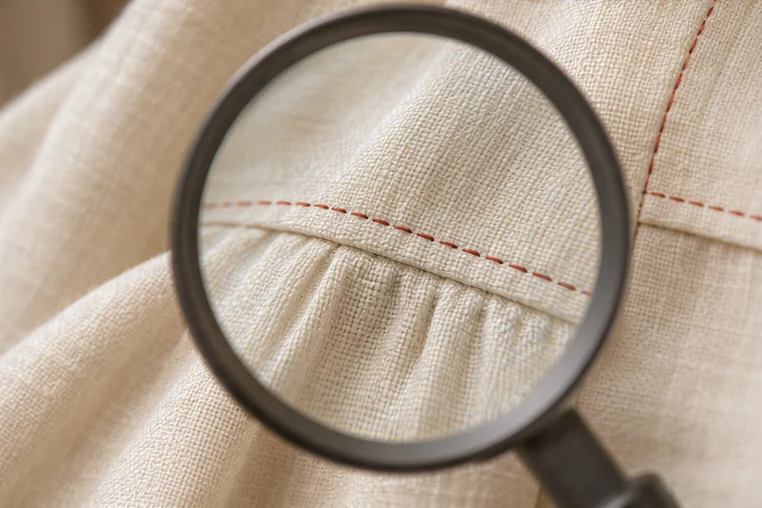
Where did this particular cloth come from?
Give the blazer shell and lining separate fabric codes. Pin a cutting of each to the dated sample sheet. For the shell, ask who wove the cloth, who dyed or finished it and where each step took place. Record the mill or supplier reference against each answer.
A factory address can identify the place where the jacket was sewn. To describe its flax as French-grown, you would also need records linking that flax to the yarn, cloth and lot in the jacket. If the record ends at the weaving mill, the growing location is still unknown.
Which sample and shipment do the records cover?
If a blend percentage will decide the order, get the mill specification for the exact shell code and color. Ask a textile laboratory which analysis suits the fibers named. Send a labeled cutting and retain its twin. Check the sample ID, components, result and date on the report. AATCC TM20A describes procedures for quantitative fiber analysis. AATCC fiber analysis method and reading a garment composition sheet.
When a supplier offers material certified to a Textile Exchange standard, ask for the name of the standard. Check which organization and products its scope certificate covers, how the shipment will be documented and, once issued, the authenticity of the transaction certificate. File it with the matching purchase order, lot and shipment details. Textile Exchange certification and transaction verification
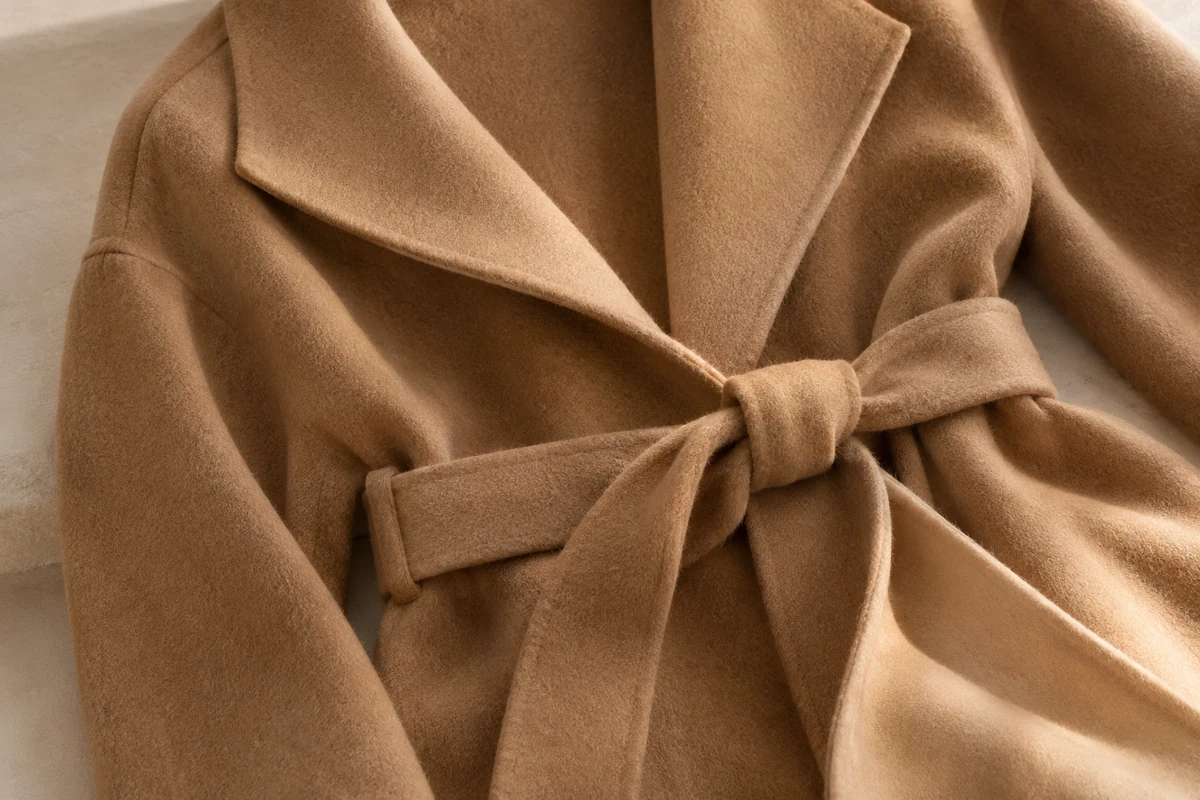
The blazer on a moving wearer
| Detail | At the fitting |
|---|---|
| Lapel and collar | Button the blazer. Photograph both lapels at eye level. Does the collar sit against the neck and do the lapels roll evenly? |
| Shoulder and sleeve | Reach forward and bend the elbow. Watch the lining for any pull on the outer sleeve. Compare left and right sleeve lengths. |
| Welt pocket and back vent | Put a hand into each pocket. Sit, then stand. Do the pocket ends twist? Does the vent settle closed? |
A comment such as “correct left pocket” leaves the pattern maker guessing. Mark both ends of the tilted welt on a close-up, show the intended position on the pattern and ask to see the same view of the revised sample.
The first sewn lapel and the final inspection
At WiseNatura, incoming checks cover fabric, accessories and color. During production we check cutting, sewing and measurements. Final checks cover appearance, sizing, packing and quantity. For this blazer, compare the first sewn lapel with the approved one while the team can still adjust the roll. Inside our factory
Record the style, color, lot, size, number inspected and number affected. If the same fault turns up again, identify the affected pieces or cartons and agree on a correction. Keep the recheck result with the original finding, including a photo of the corrected welt beside the approved one.