
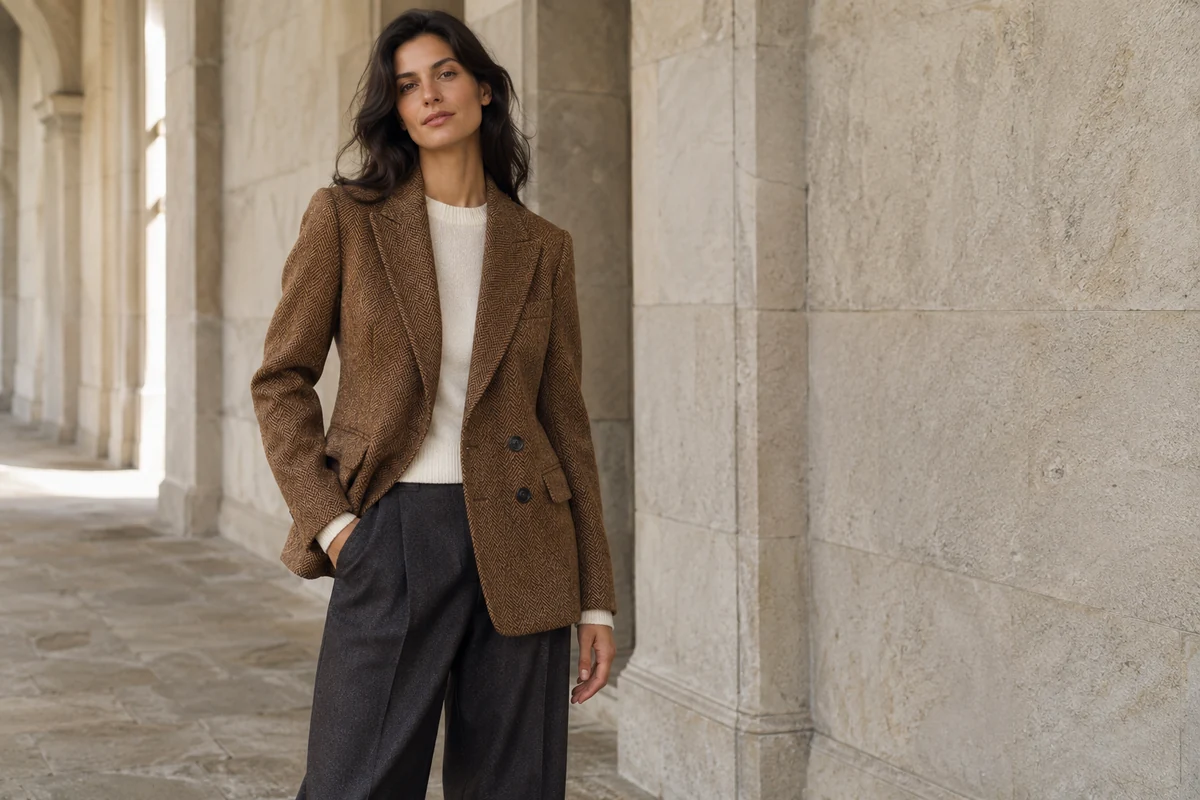
Custom Wool Clothing
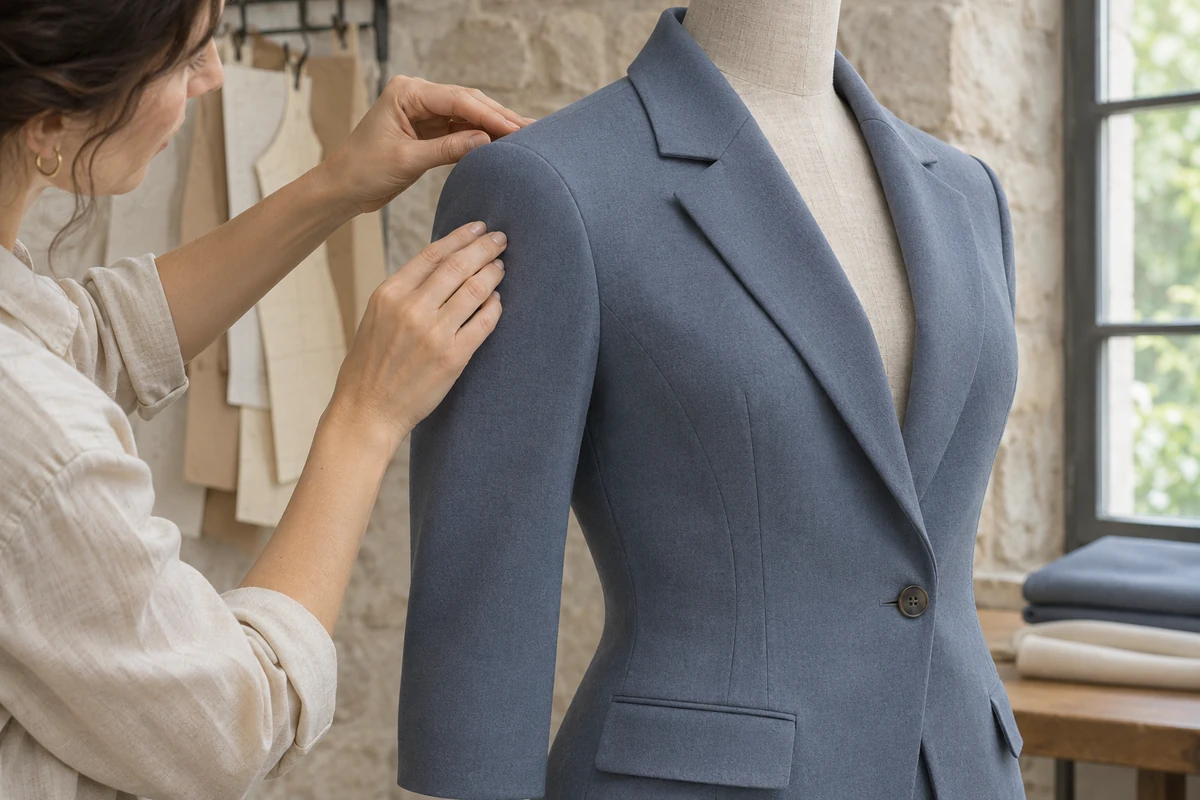
Fasten the blazer over the blouse it will be worn with. The shoulder, button position and room through the sleeve all change how the jacket sits.
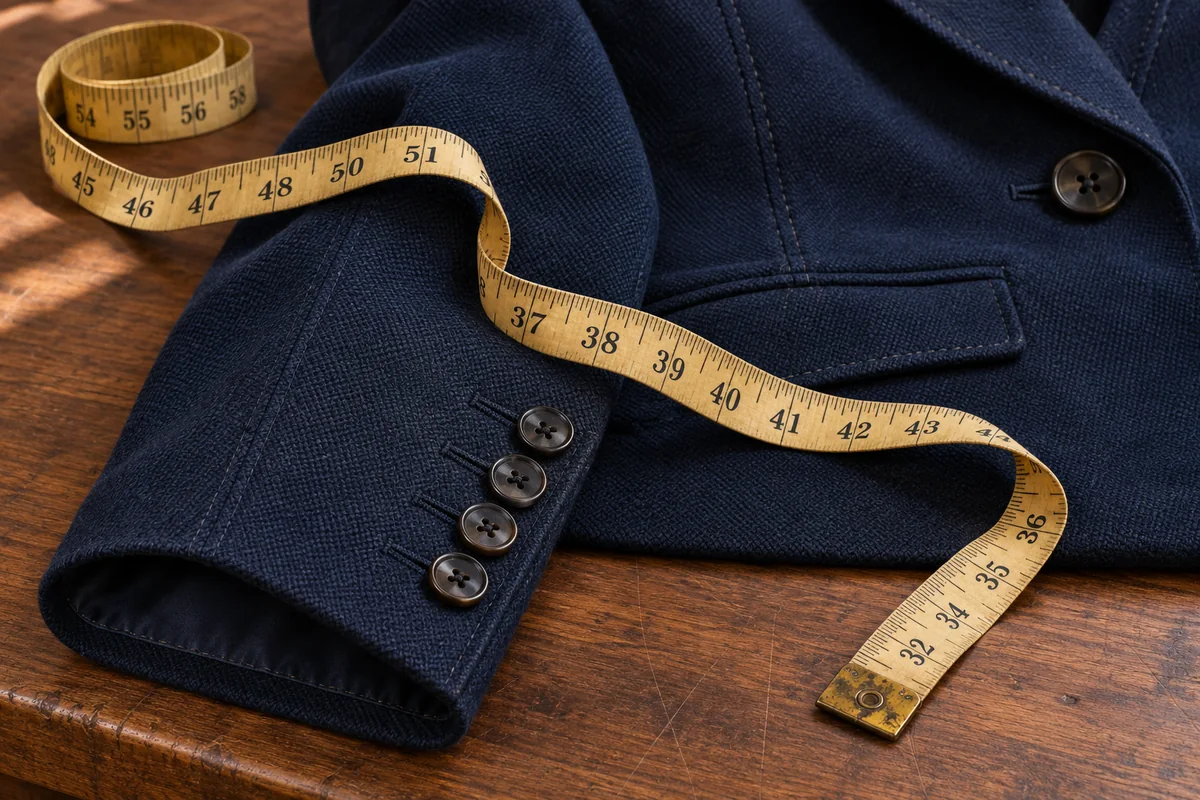
What goes into a tailoring brief
- Front and side views show the jacket length, lapel shape and intended line of the trousers.
- Add measurements from your size chart or a reference jacket. Tell us what will be worn underneath.
- For a matching suit, specify the cloth and color for both pieces. We can check wool and wool-blend options.
- Count each style, color and fabric separately. Our usual bulk minimum is 10 pieces for each combination. We review smaller runs individually.
- Send any documentation requirements before settling on the wool.
Building a suit around the approved fit
The lapel may look right when the jacket is open but lift when it is buttoned. A sewn sample lets you see both.

Hangzhou tailoring and production
Our 2,800 m² facility includes cutting, sewing, finishing and packing areas for garments.

Suiting or coating
We look at available wools with the shape in mind. A suit needs cloth that works for both the jacket front and the trouser leg.

The jacket fitting
Mark the fastening height and shoulder position while the wearer has the intended underlayer on.

Inside the jacket
Include lining and label placement on the inside view. The team works to the measurements and artwork you approve.

Comparing bulk to sample
We inspect cloth on arrival and check sewing as it progresses. The approved measurements and appearance guide the final inspection.

The next production run
If the suit is coming back next season, send the original cloth reference so we can check supply and timing.
Wool tailoring for women
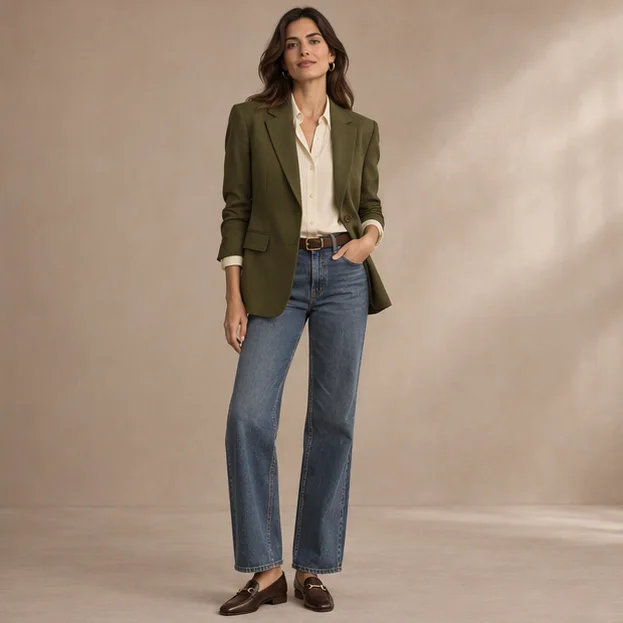
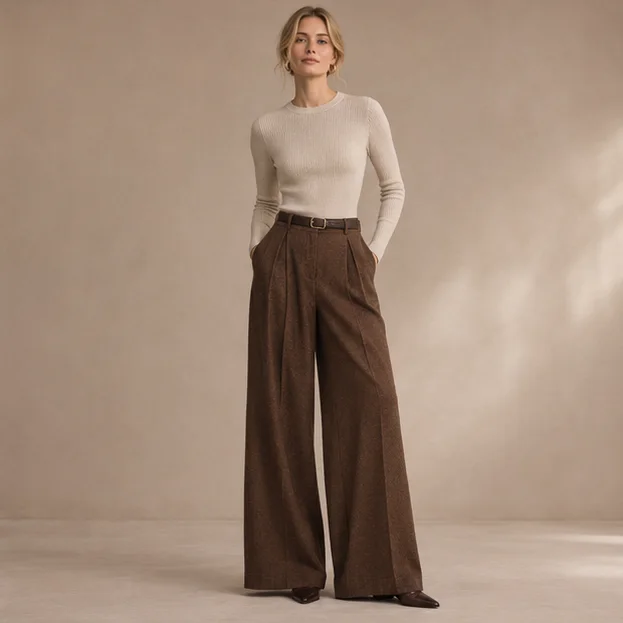
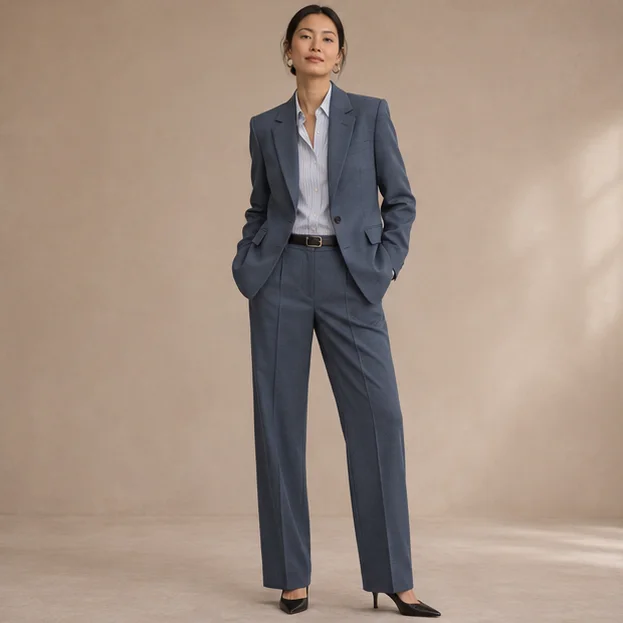
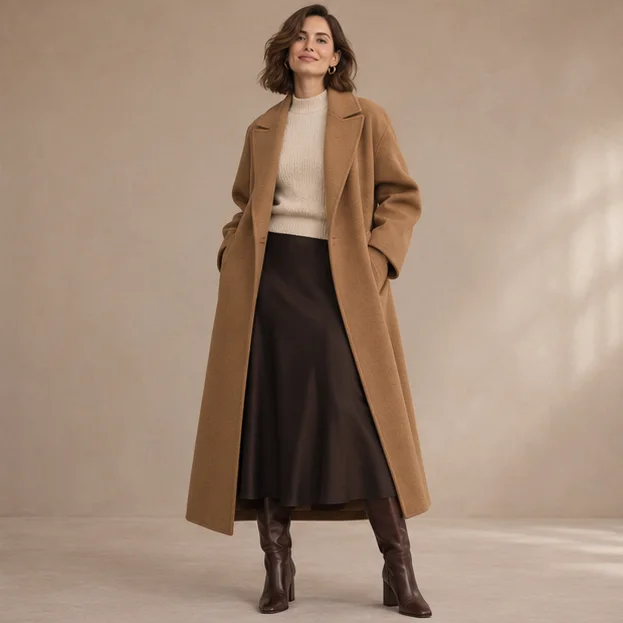
Here the illustrations range from a single blazer to a full-length coat. Pick a proportion to discuss and mark any changes on your sketch.
How much body should the wool have?
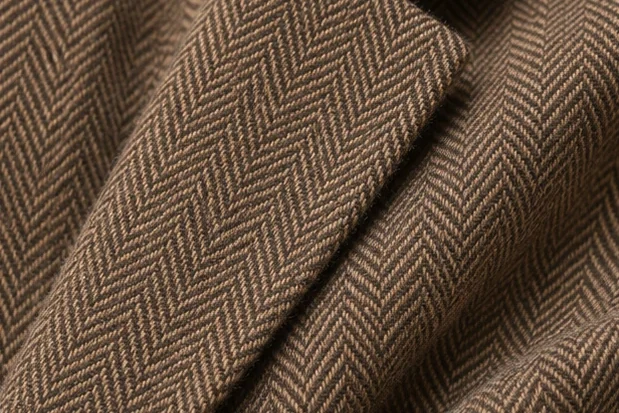
Try a fold for the trouser crease and another for the lapel. See how much shape the wool holds when you release it.
- Suits and trousers
Compare 200–300 g/m² wools for suits and trousers. Hold a length free to see whether the leg falls as you intended. - Coats
A coat calls for a different comparison. Try available weights around 350–520 g/m² with the intended collar shape. - Hand and drape
Run your hand along a pressed fold and let the cloth relax. Look for the balance of structure and movement you want. - The chosen wool
Keep the approved fabric reference, weight and composition with the suit measurements.
Set the line of the suit
A longer jacket over a wide trouser reads differently from a close-fitting blazer. Send a front and side view of the silhouette.
- Shoulder shape
Show the intended shoulder width and how square or relaxed the outline should appear. - Waist and fastening
Pin the button stance on the sample and review the shape through the bust. - Trouser line
Mark the front rise, knee and lower leg widths to control the break at the shoe. - Outer layer
Fit a coat over the layer your customer is likely to wear underneath.
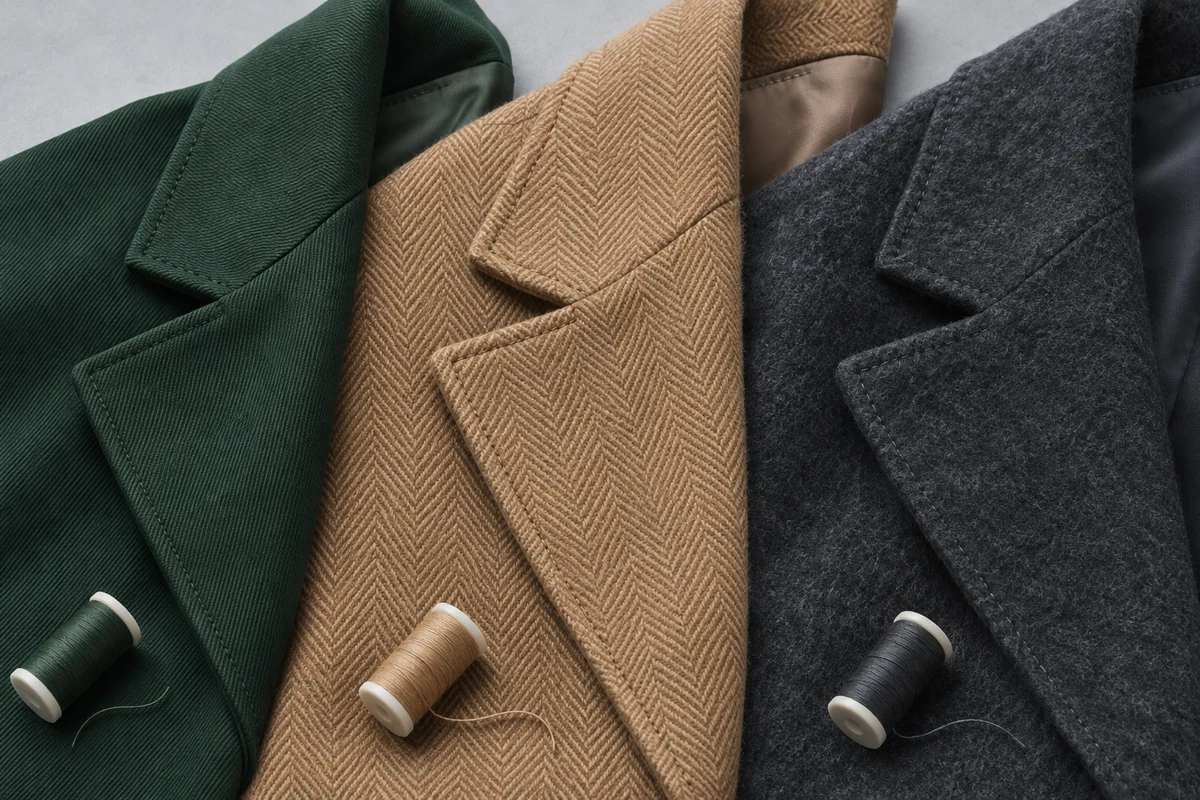
One shade for jacket and trousers
Lay the jacket cloth next to the trouser cloth before you approve the suit color.
- Stock colors
Tell us the blend and weight first so we can identify shades in that wool. - Color target
Use a Pantone code or an actual fabric cutting to show the custom shade you want. - At the lapel
Look at the cloth flat, then turn a lapel-shaped fold toward the light. Check that you like the color both ways. - Reordering separates
A replacement trouser may be made from a different dye lot. Keep a cutting of the original jacket cloth for comparison.
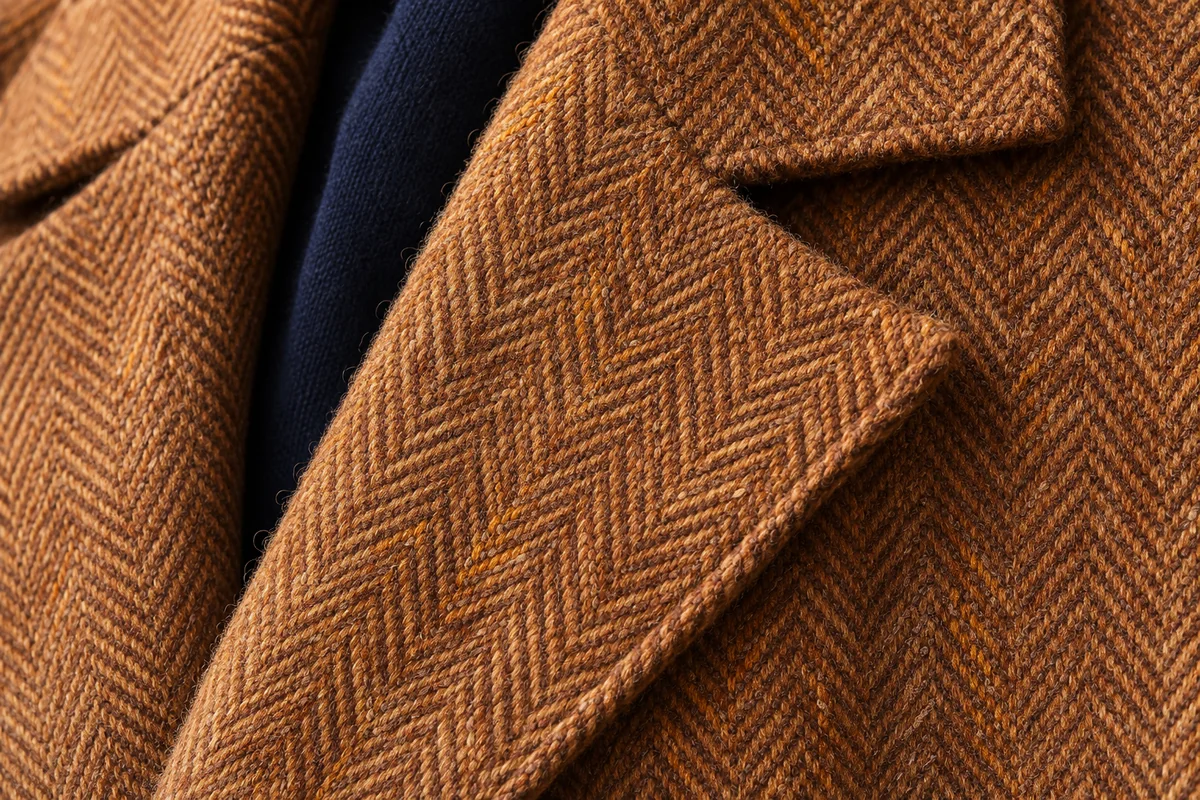
Refine the tailoring details
Review the edges, folds and fastenings once the jacket is pressed.
- Lapel width
Compare the lapel with the shoulder width and intended neckline. - Pocket position
Mark the pocket angle and height on the front view. - Trouser crease
Check the crease while walking, then sit down to see how the fold opens at the knee. - Sleeve finish
Show the intended cuff length on the layer worn underneath.
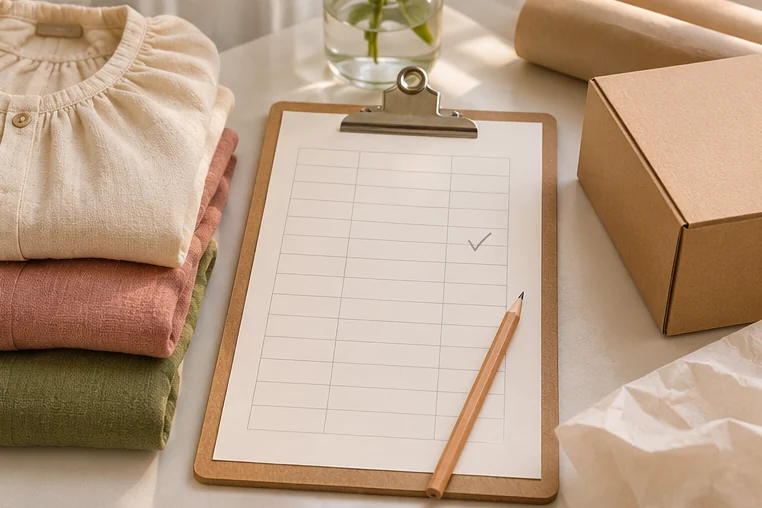
Packing jackets and matching trousers
If the shop sells the suit as separates, tell us how it wants the two pieces identified.
- Hangtags
Supply the tag artwork and its attachment point for each garment. - Unit packing
Give folding and labeling instructions for the jackets and trousers separately. - Cartons
List whether cartons should be sorted by garment, suit color or size. - Paper choices
Kraft paper, recycled paper and recyclable cartons can be discussed for the chosen packing arrangement.
Cloth for a suit or a winter coat
Two wools of similar weight can behave differently at a lapel. Keep the fabric specification with the swatch you handle.
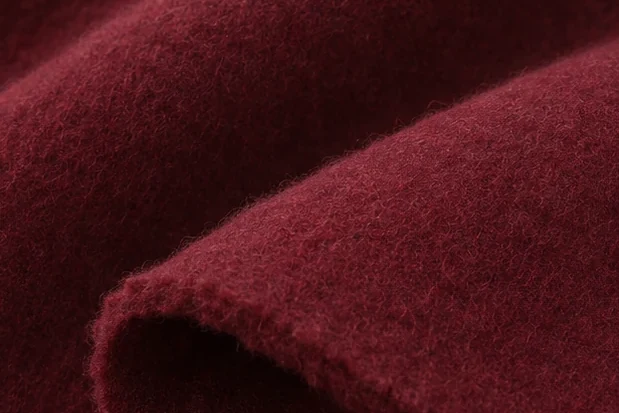
Composition
Confirm the exact wool percentage and the other fibers in a blend before preparing garment labels.
Ask about a wool blend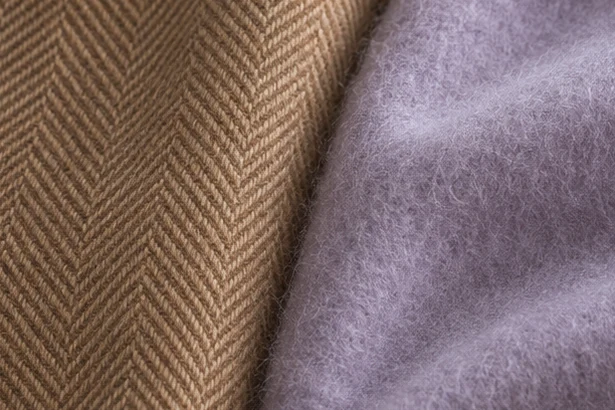
Wool beside cashmere
Compare wool with cashmere for outerwear. Wool gives a springier hand, while cashmere offers a softer surface.
Compare Materials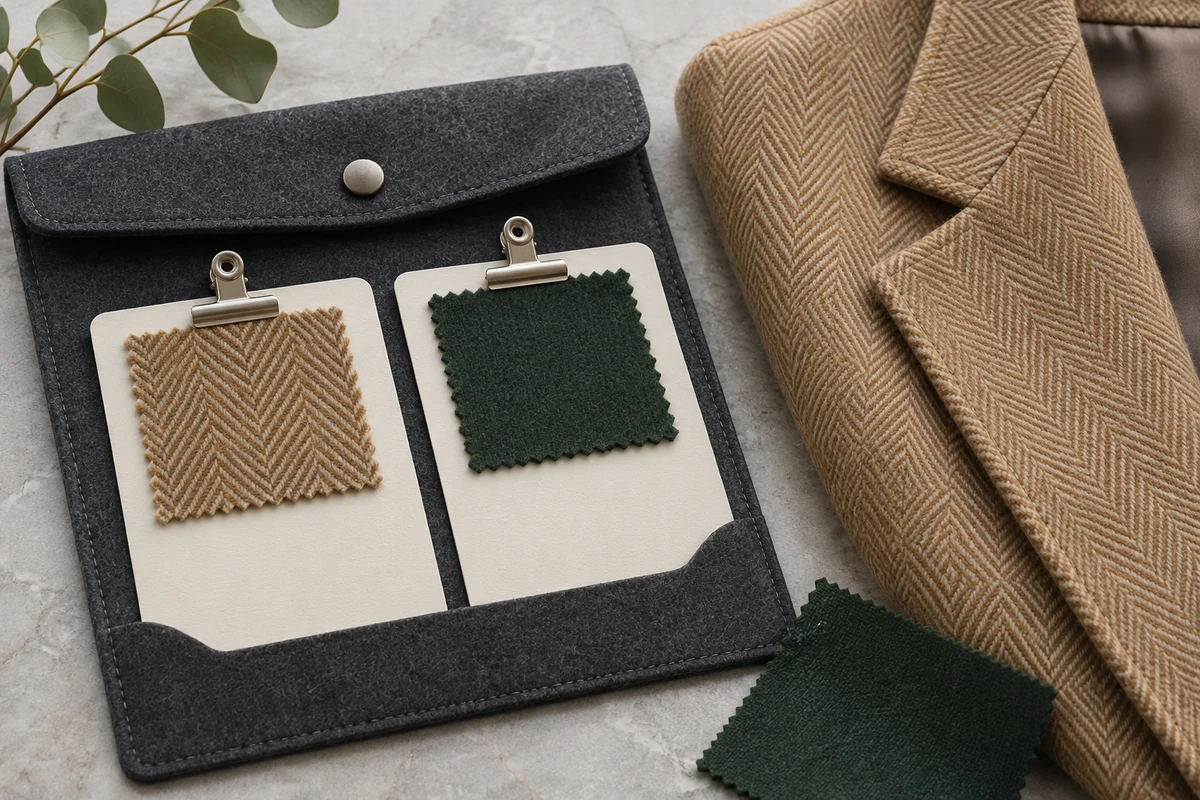
Supplier reports
Share the report required for your market and the intended use of the material. We will check availability for the actual cloth and supplier.
Ask which reports apply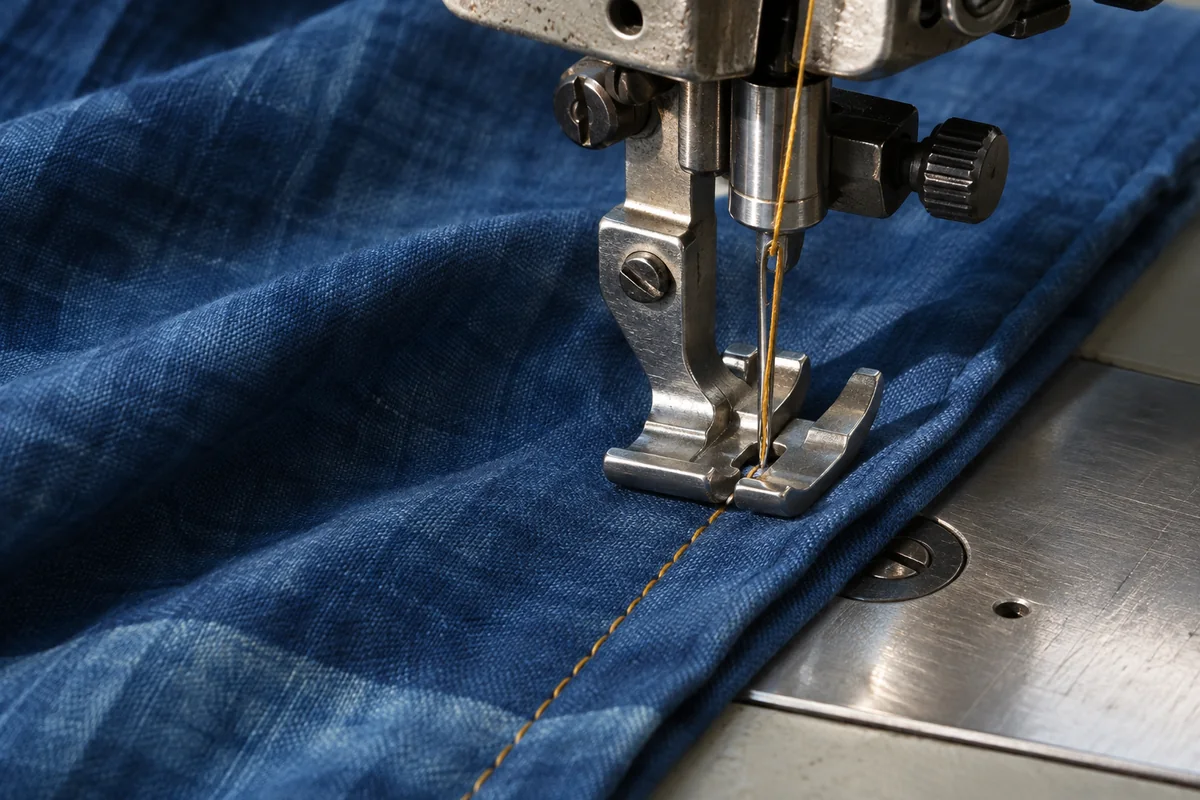
Fitting the suit before cutting the run
Fasten the jacket and sit in the trousers. Look for pulling across the bust, strain at the seat or a crease that twists. The approved sample gives our team a reference for construction, measurements and the final packing check.
A quote for your tailored pieces
Send drawings of the jacket and trousers or coat, the size range and the planned quantities by color. Include the target date and wool preference.
Request a tailoring quoteWool tailoring questions
A matched suit ties two garments to one cloth choice. These details affect the minimum and the turnaround.