
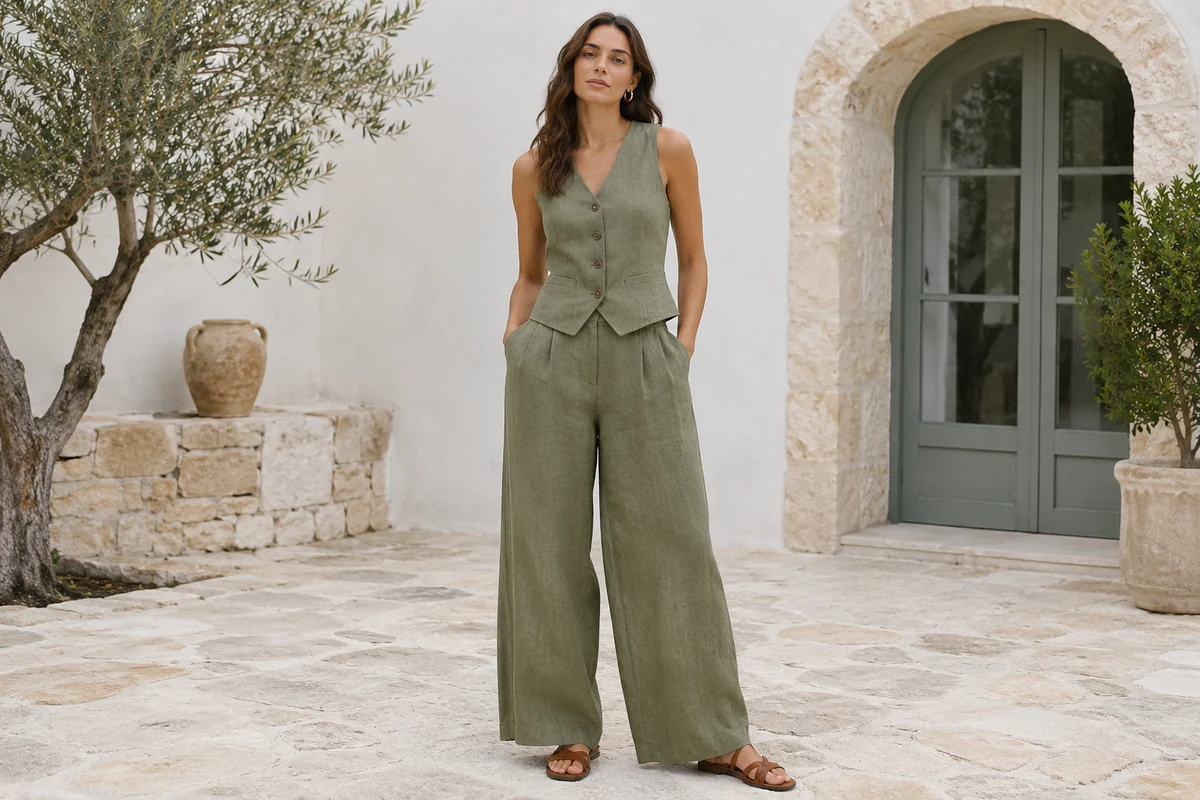
Custom Linen Clothing
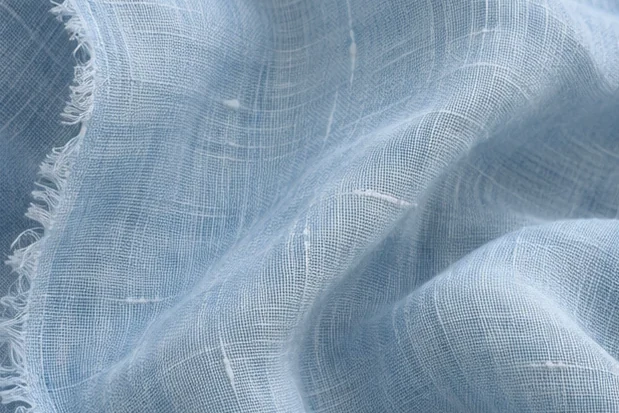
Hold pale linen up to the light before choosing it for a summer dress. For wide-leg trousers, let the same swatch hang loose and see whether it has the weight you want.
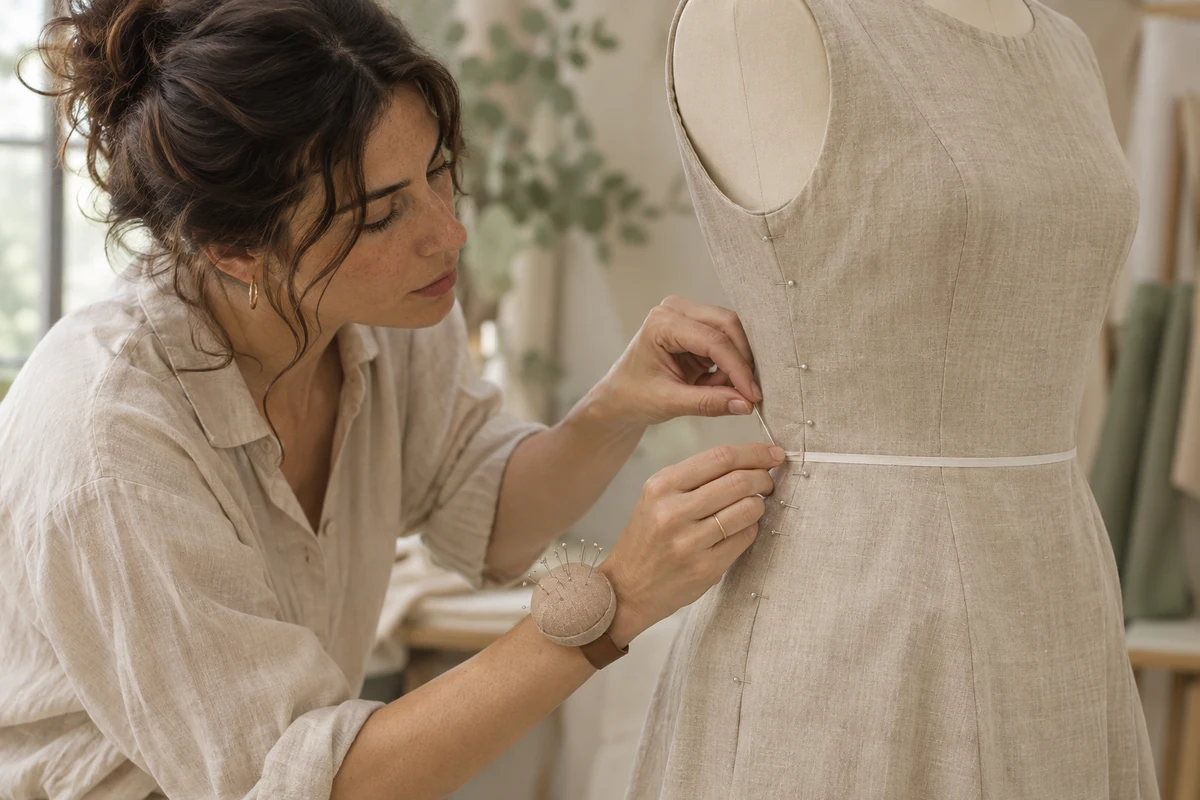
Putting together a resortwear brief
- Send a sketch of the first piece you want to sample, with your size chart or a garment that fits.
- Mark the point where a loose shirt should clear the hip or the trouser hem should meet the shoe.
- Note whether you want the crisp feel of linen or would like to compare a cotton–linen blend.
- List quantities for each style, shade and cloth. The standard bulk minimum is 10 pieces per combination, with smaller orders considered individually.
- Mention any fabric documents your buyer requires when you request swatches.
From swatch to resortwear sample
A resort shirt can look right on the hanger and pull across the back when worn. The first fitting is the time to settle the ease.

Where the garments are made
Cutting, sewing, finishing and packing take place in our 2,800 m² Hangzhou facility.

Finding a linen
We check the available cloth against your intended use, whether that is a loose shirt, a summer dress or a pair of trousers.

Checking coverage
Wear the sample in the intended shade. Sit down to see what happens across the hip and at the hem.

A note on labels
Mark the label positions on your drawing, particularly if the garment is sleeveless or made in a light color.

During and after sewing
Our team checks the incoming material, work in progress and finished pieces against the approved sample and dimensions.

A second color or run
Tell us which cloth you used. We check whether the same shade and weight are available before scheduling another run.
Linen resortwear
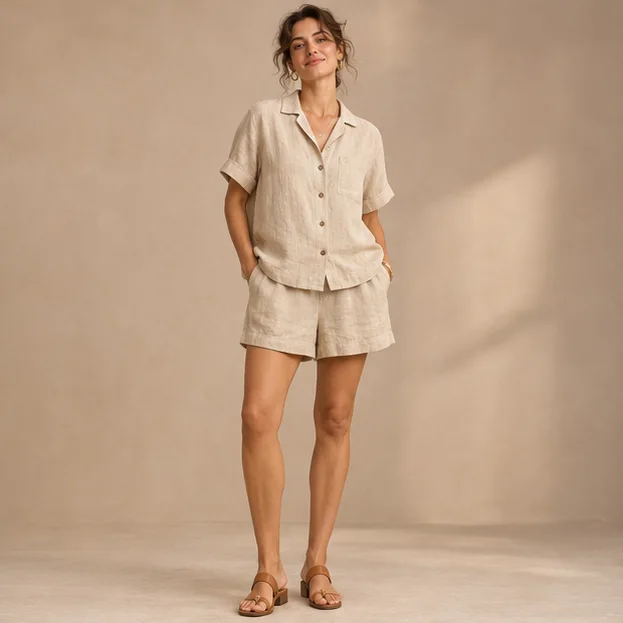
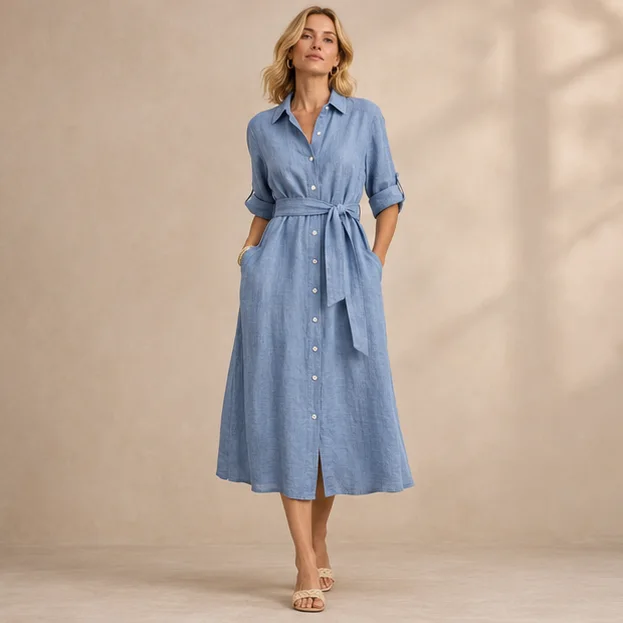
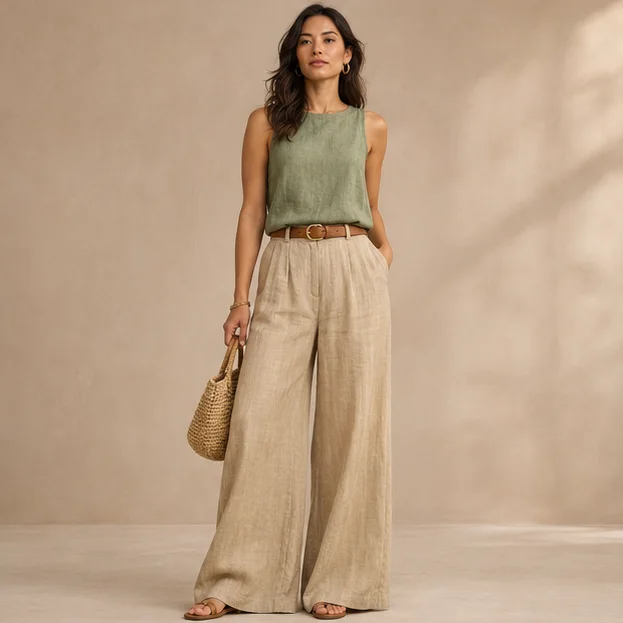
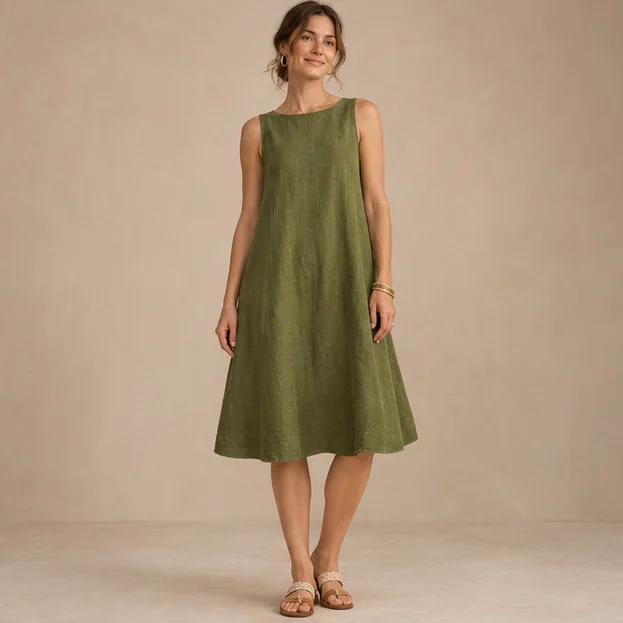
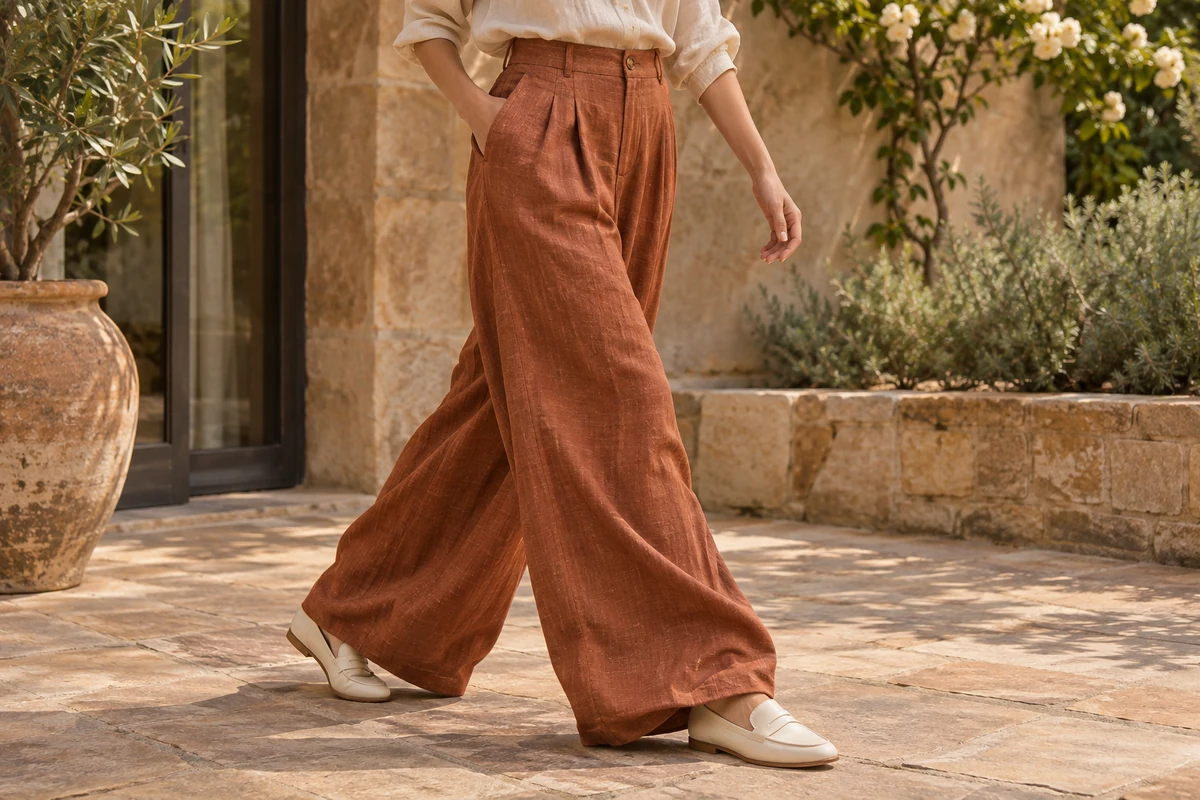
The illustrations show four ways to use the same relaxed proportions. Tell us which neckline, sleeve or trouser shape you have in mind.
Choosing linen by weight and shade
A shirt might work in a linen that feels too light for trousers. Handle the cloth in the specific shade you want to cut.
- Shirts
Around 120–160 g/m² is a useful range for a shirt. Look at the way a folded collar sits in each weight. - Trousers and outer layers
Consider 160–200 g/m² for trousers or a light outer layer. Check how the fabric falls in a long panel. - Hand and drape
Crumple the swatch lightly and open it again to judge whether the natural creasing suits your design. - Keeping a swatch
Write the fiber percentages, weight and shade on the approved cutting for later comparison.
Decide where the linen should fall
A straighter shirt, a tied waist and a wide trouser leg each use linen’s crisp hand differently.
- Relaxed shoulder
Mark the drop and chest ease so the shirt hangs away from the body. - Belted waist
Place the tie on the sample and review the folds it creates. - Wide leg
Check the rise, hem width and where the trouser breaks over a shoe. - Sleeveless shape
Review armhole depth and neckline coverage both standing and seated.
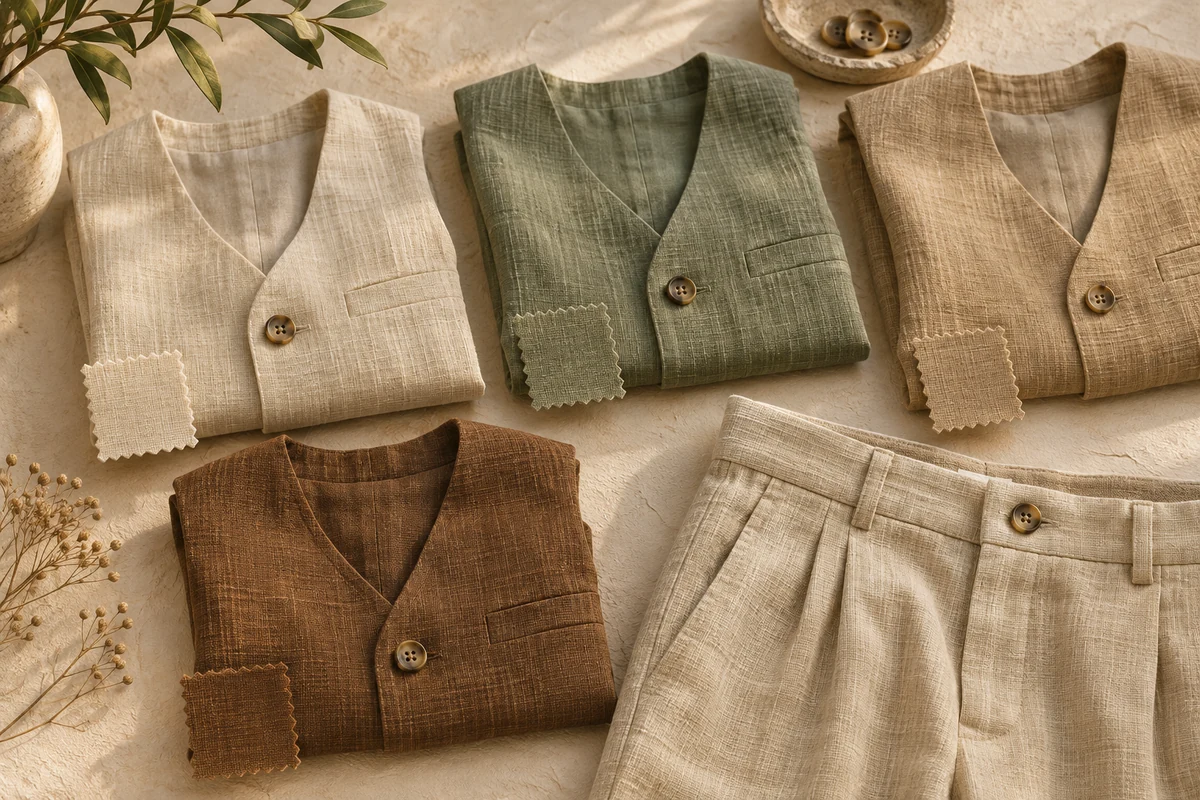
Choosing a pale or saturated linen
Try the color in a single layer as well as doubled over. A folded swatch can hide how much shows through a light dress.
- Stock colors
Once you know the weight and blend, ask which shades are available in that cloth. - Matching a color
Send a physical swatch or Pantone reference if a stock shade is unlikely to match the collection. - In the finished outfit
View the sample in daylight over the underlayer you expect the customer to wear. - A later dye lot
Keep a piece of the approved linen to check the color if you order again.
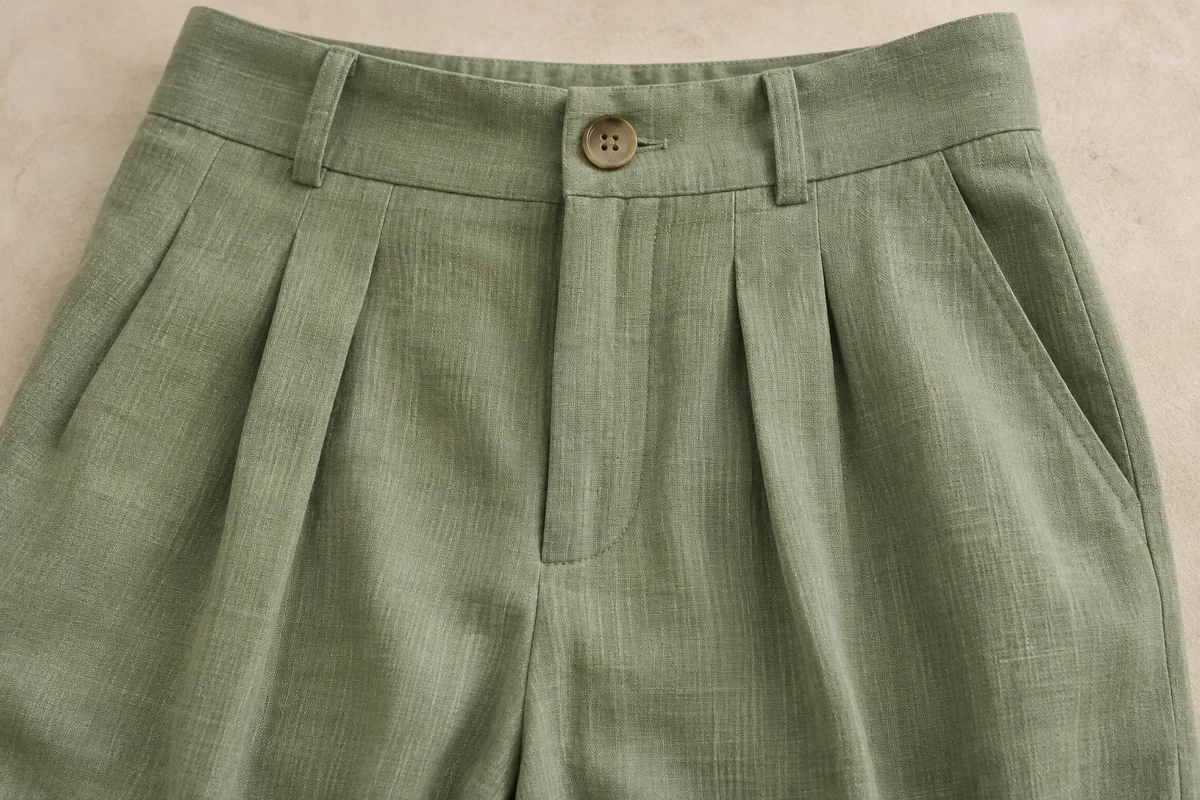
Set the summer details
On a summer dress, the height of a slit and the depth of an armhole can matter as much as the hem length.
- Shirt collar
Check how the collar falls when the neck is worn open. - Dress opening
Place the last button or side slit where it allows comfortable movement. - Waist finish
Send the waistband depth and the amount of ease you want after fastening. - Coverage
Review a light shade on the body before deciding whether the outfit needs lining.
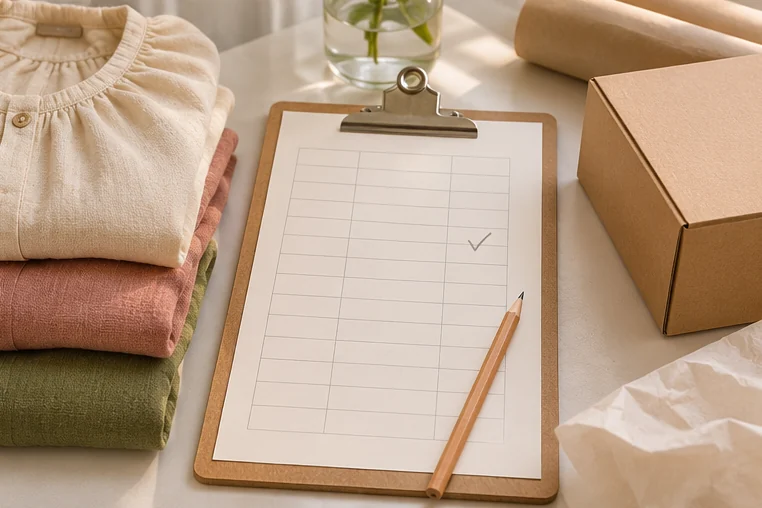
Packing linen for delivery
Where you fold a long shirt dress matters if it will go straight onto a shop rail. Mark the fold you prefer.
- Hangtags
If you use a hangtag, send its artwork and show the attachment point on the shirt or dress. - Unit packing
List the size and shade information that should accompany each folded piece. - Cartons
Give quantities per style and color if each shop needs a different carton assortment. - Paper and outer cartons
Ask about kraft paper, recycled paper or recyclable cartons for the packing you have specified.
Linen and cotton–linen swatches
Keep the intended garment in mind as you look at a swatch. A crisp fold may be exactly what you want in wide trousers.
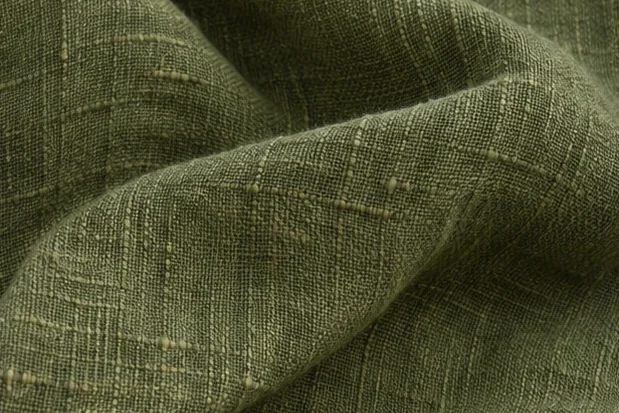
Composition
Ask for the linen and cotton percentages of the blends on offer, or specify pure linen.
See composition options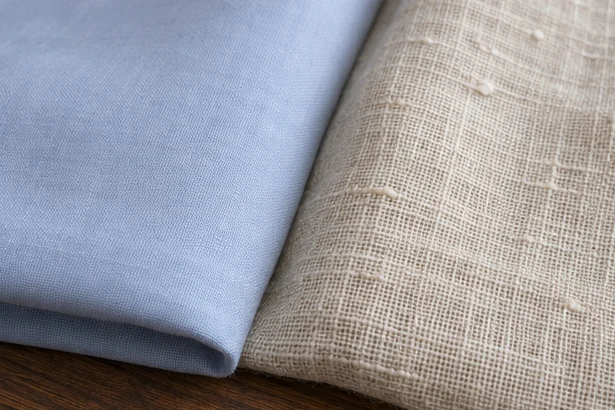
How the cloth creases
Linen has a crisper hand and shows creases more readily than cotton. Compare a cotton–linen blend when you want a softer result.
Compare Materials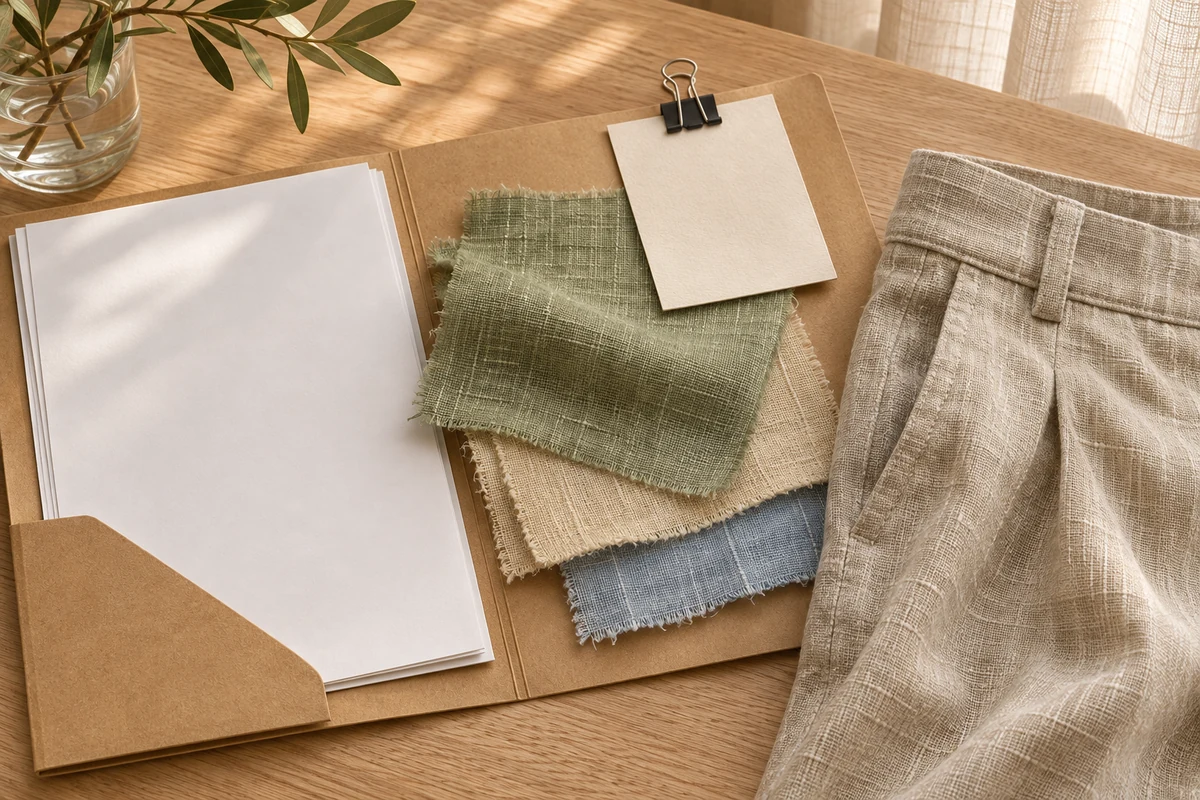
Evidence for a fabric claim
Tell us which report the retailer requests and how the fabric will be used. We can check what the supplier has for that linen.
Check available documents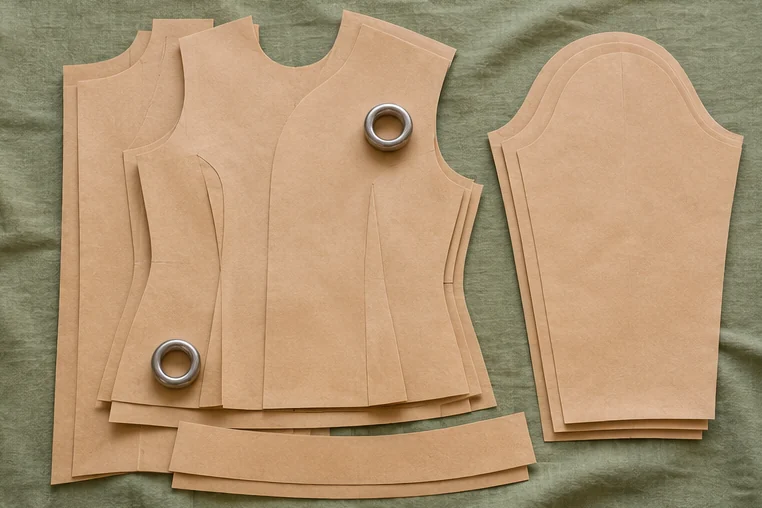
What to sign off after fitting
Walk and sit in the sample. Note the rise of the trouser hem and any change in coverage through the seat. Once approved, the sample and specifications guide cutting, sewing and the checks before packing.
Getting a linen line quoted
Send the shape, fabric preference and quantities for each shade, along with the size range and the date you need the order.
Get a linen quoteBefore you order resortwear
For a matching shirt and trousers, decide how many of each piece you need in each size. The quantities may differ.