
Custom Clothing
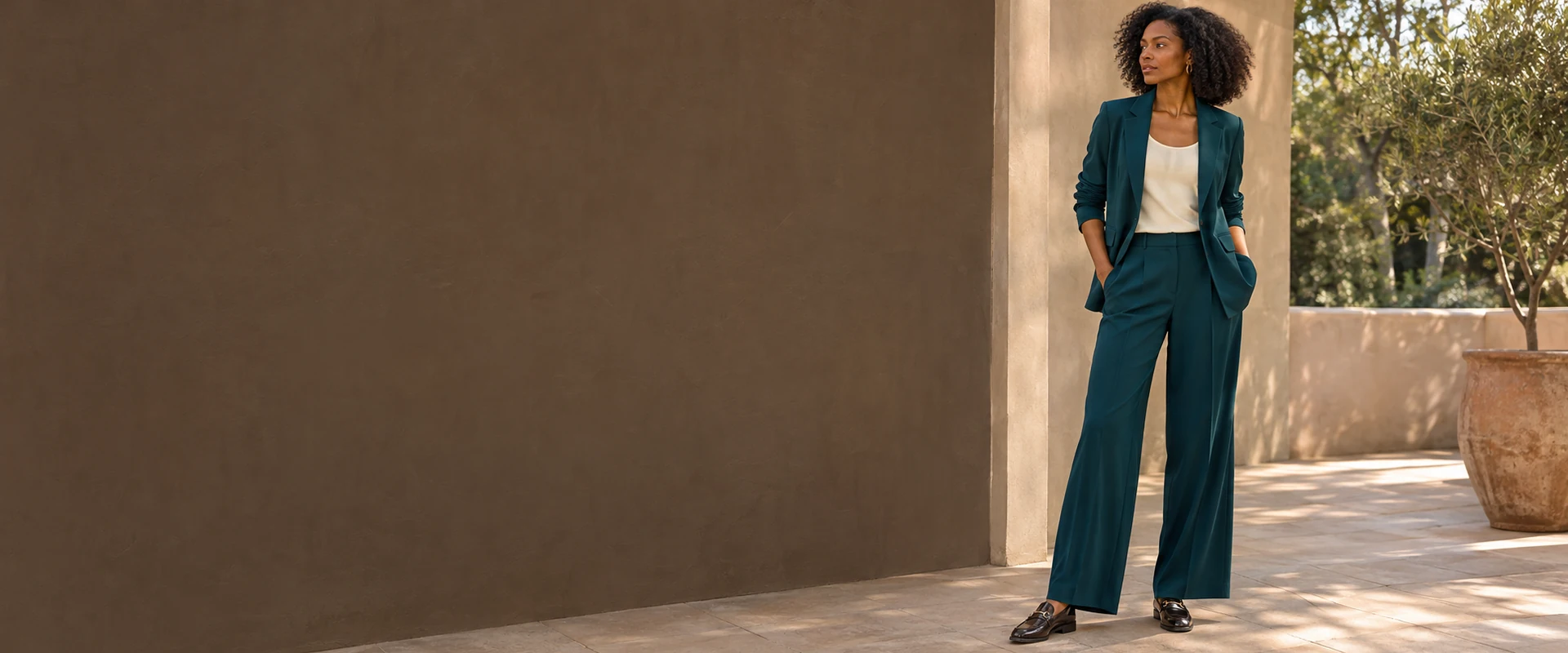
A shirt and a coat can share the same dropped shoulder. If that shape runs through your collection, mark it on a sketch and tell our Hangzhou team which piece you want to sample first.
What to put in your first brief
- Give the quantity for each style in each color and fabric. Our usual bulk minimum is 10 pieces per combination. Ask us about smaller runs.
- A photograph, sketch or garment you already like can stand in for a full set of drawings.
- Mark where the shoulder, waist and hem should fall. Include your size chart if you have one.
- Tell us how the piece should feel, even if you haven’t settled on a fiber yet.
- If your buyer needs a fabric report, name it before we choose the cloth.
How a design becomes a production sample
A sample gives your designer and our production team the same garment to measure, try on and mark up.

The workroom in Hangzhou
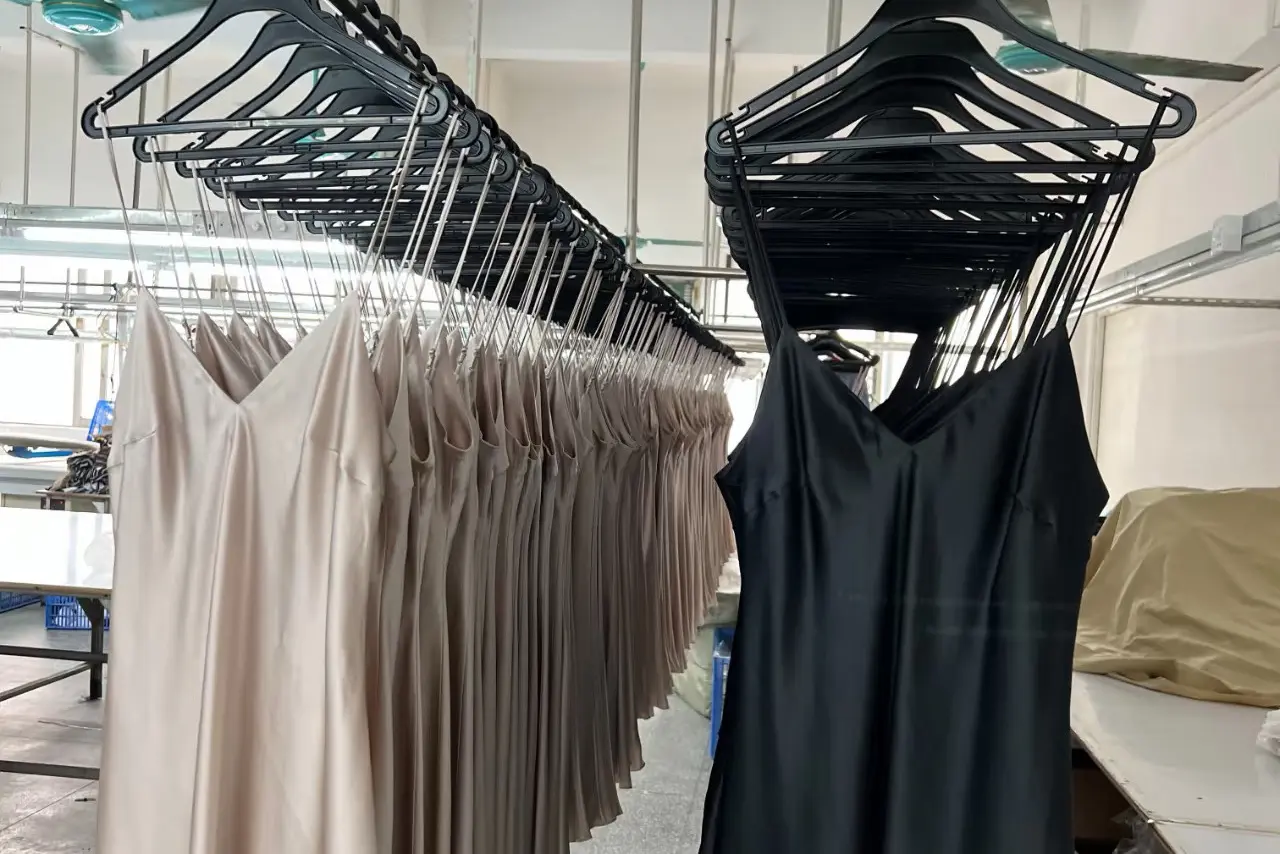
Our 2,800 m² factory houses cutting, sewing, finishing and packing.

Cloth for the design
Tell us whether the piece needs to keep a crease, fall in soft folds or hold a collar upright. We check which fabrics are available for it.

Fit and finishing
Try the sample over the layers it will be worn with. Mark any change to the cut or finish before approval.

Measurements and labels
Return the agreed measurements with your label artwork and the position you approved on the sample.

Checks during production
We inspect incoming cloth, check the work as it goes through the factory and examine finished garments before packing.

Bringing a style back
Give us the original style and color reference so we can check fabric supply and scheduling for the next run.
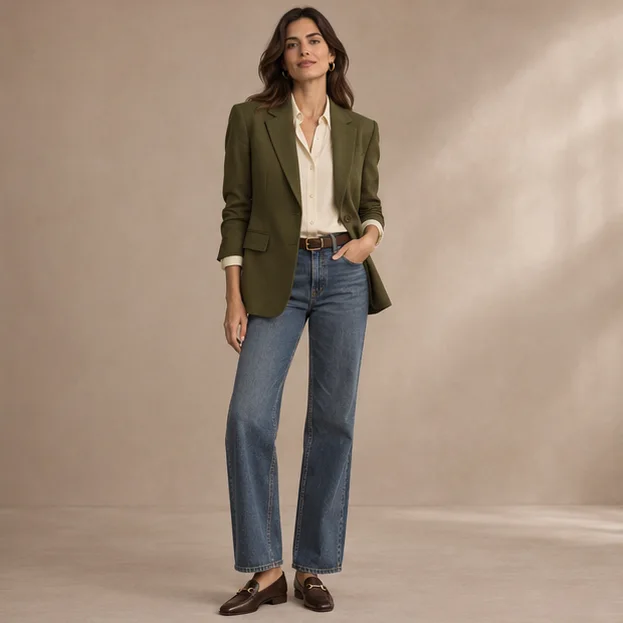
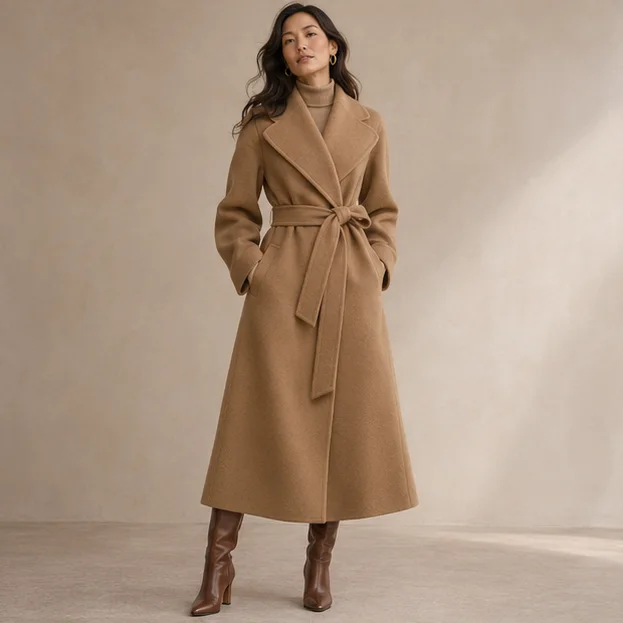
Four shapes for a womenswear line
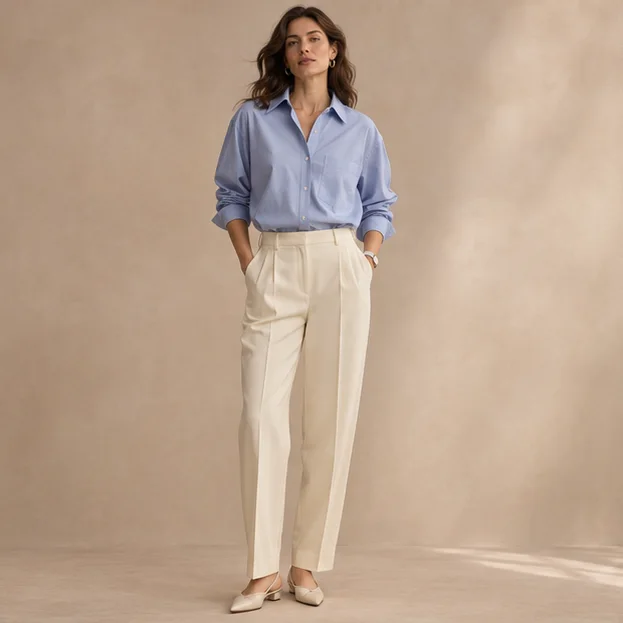
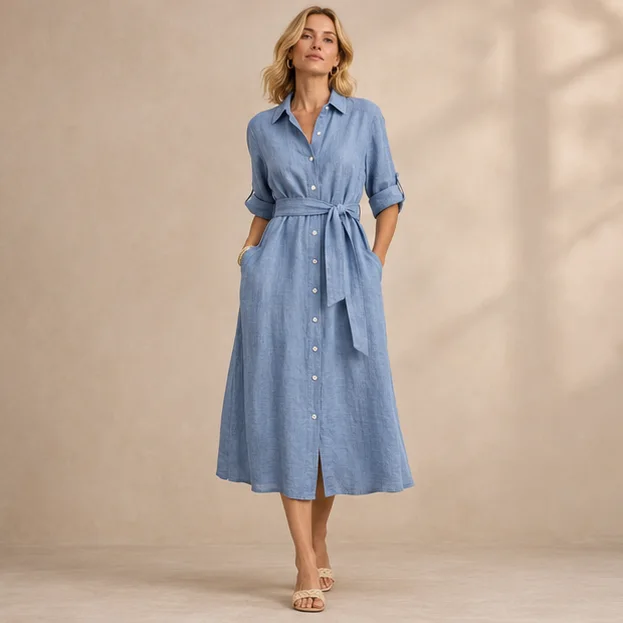
These illustrations show a shirt, dress, blazer and coat at different lengths. Use the one closest to your cut, or send a drawing of your own.
Natural cloth for womenswear
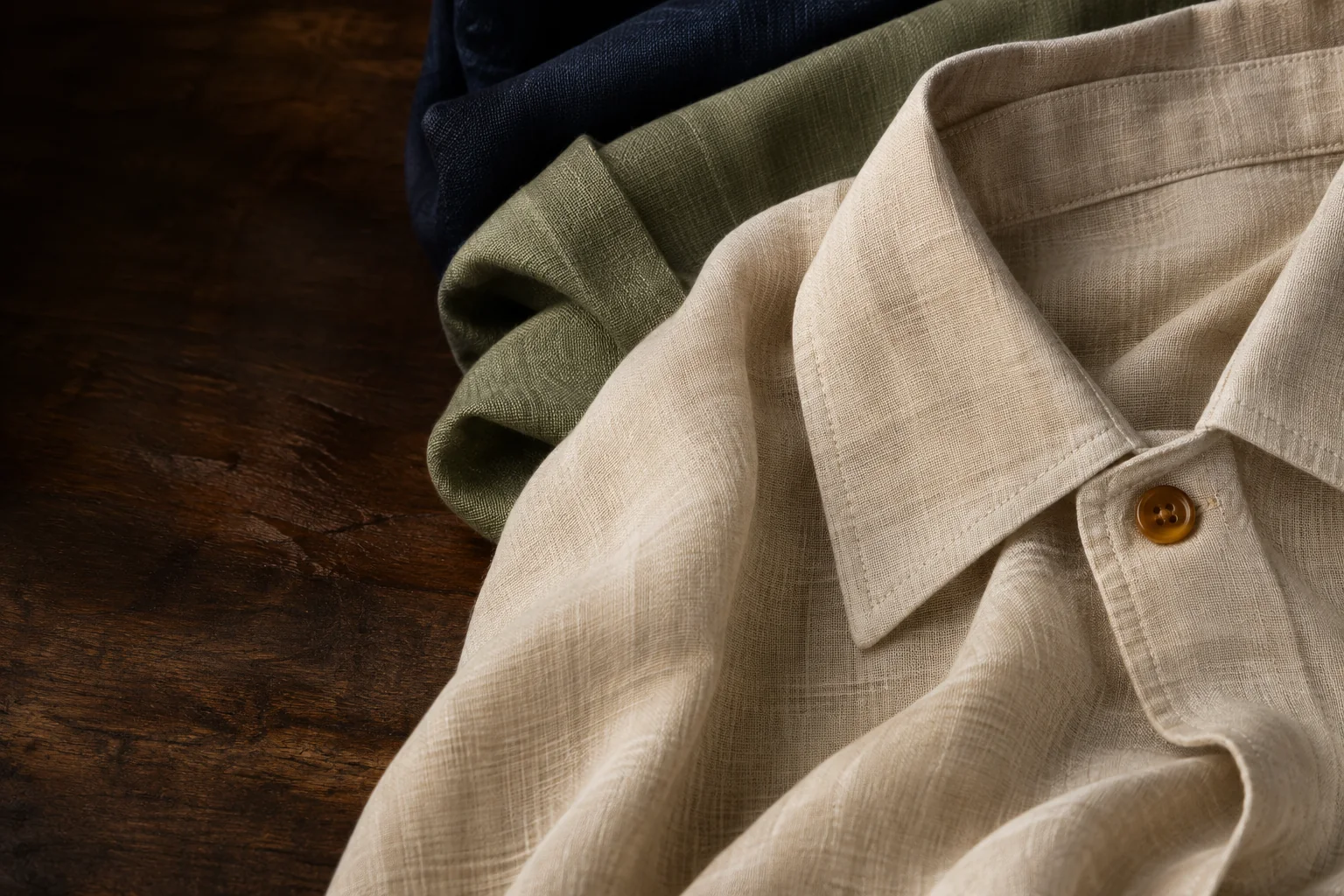
Fold a piece of shirting into a collar and hold a piece of coating as a lapel. Even a small swatch can tell you something about how the finished shape will sit.
- Cotton shirting
A 100–160 g/m² cotton is a starting point for a shirt. Decide how much body you want through the sleeve and collar. - Wool coatings
For a coat, compare available wools around 350–520 g/m². Fold the edge back to judge how bulky the front will feel. - Hand and drape
Handle each fabric in the way the garment will be worn. A sleeve, a trouser leg and a coat front place different demands on the cloth. - The production reference
Keep the chosen swatch with its fiber content and weight. Use the same reference when approving the order.
Start with the silhouette
A collection can share a proportion across very different fabrics. Choose which shapes anchor the line.
- The shirt
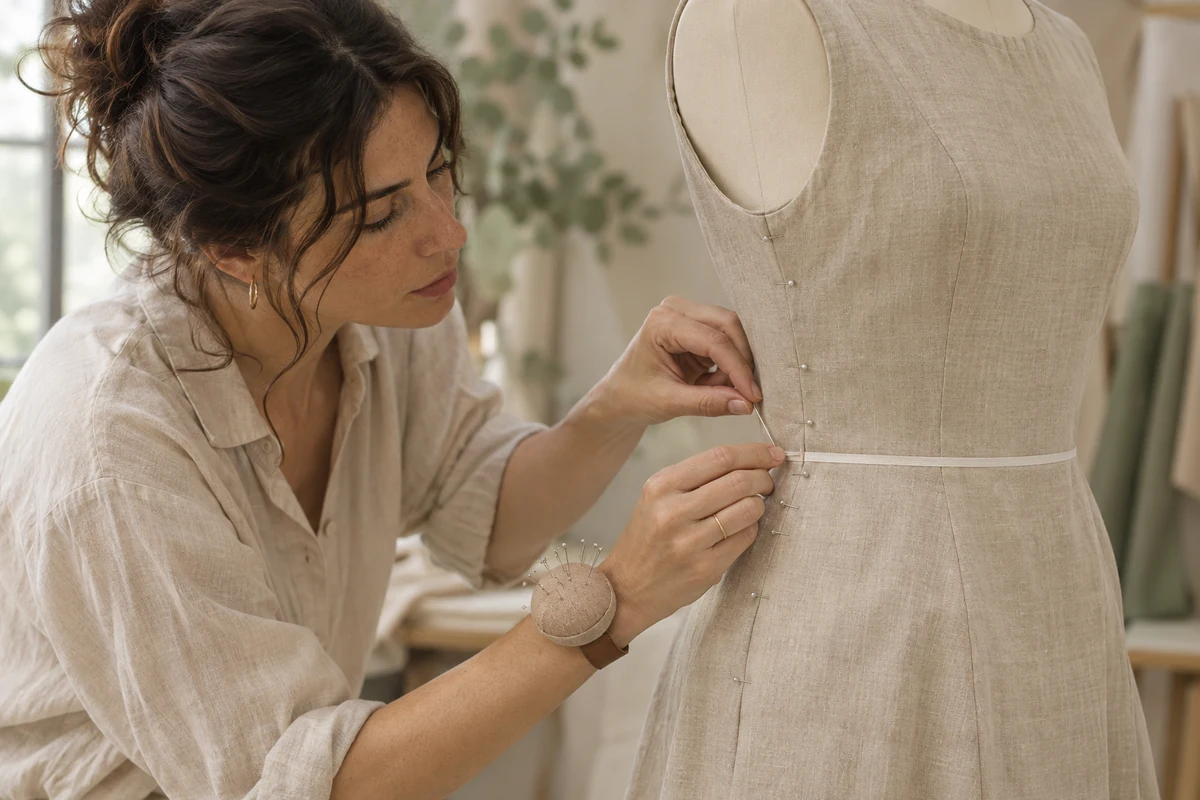
Decide whether the shoulder sits on the shoulder point or drops beyond it. - The dress
Mark the waist, the intended hemline and where the fabric should skim the body. - Tailoring
Show the lapel width, jacket length and how the blazer will be layered. - The coat
Check sweep and closure over the largest layer the customer will wear.
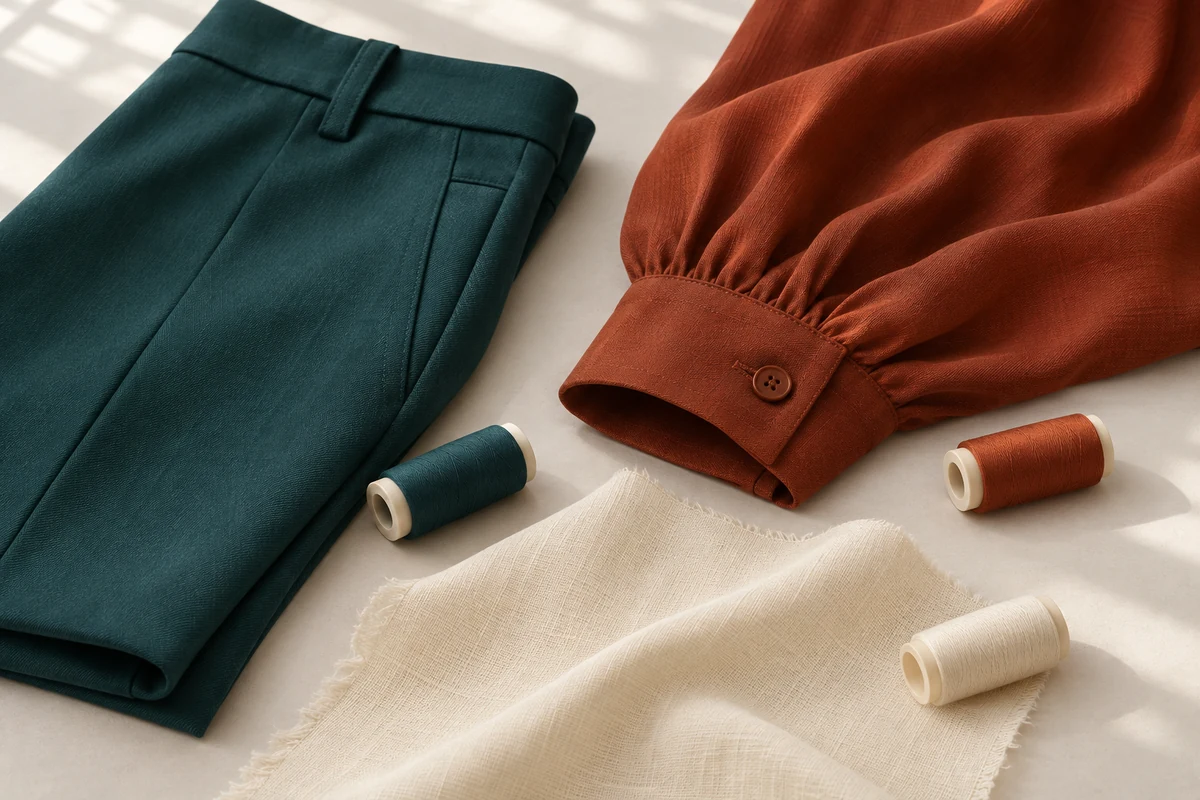
Matching a color across several pieces
If the jacket and shirt are meant to coordinate, look at both fabrics together before you approve either color.
- Available shades
We can check a stock shade once we know the fabric composition and weight. - A custom shade
A Pantone code or a piece of fabric gives us a target when we review a custom color. - The complete outfit
Hold the shirt fabric against the jacket in daylight. Look at both faces of any turned-back cuff. - The next order
Save an approved cutting if you want to compare a later dye lot with the original shade.
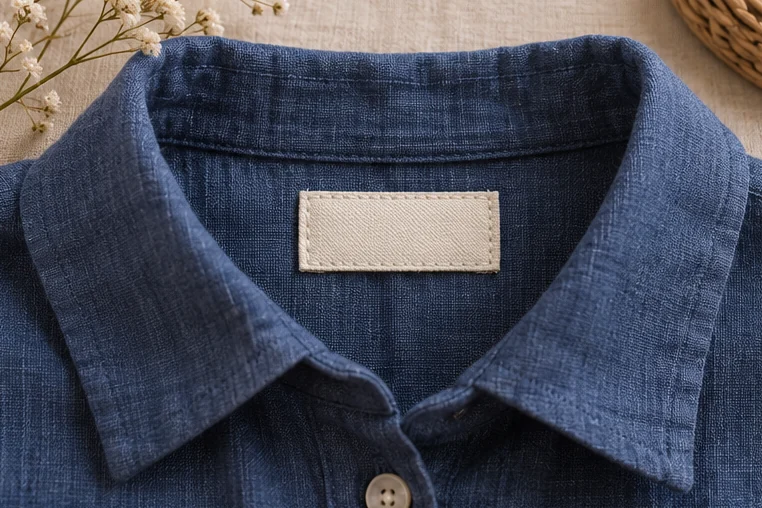
Details across a capsule
Choose a few details that carry from a light shirt to an outer layer.
- Collars
Pair a crisp shirt collar with a softer coat lapel if you want a visual link across the line. - Sleeve proportion
Show the cuff opening and where the sleeve should meet the wrist. - Closures
Specify the first visible button or tie position on the front view. - Label placement
On an inside view, mark where the brand label goes and where the care label should sit.
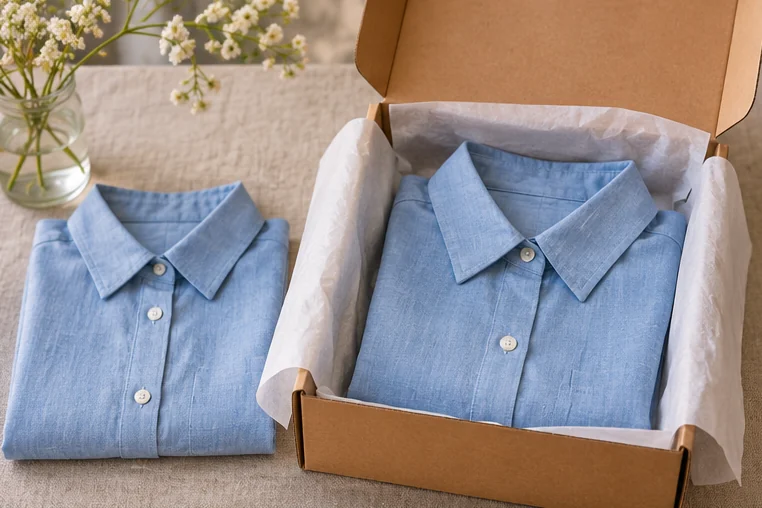
Packing a mixed collection
If a box will go straight to a shop, tell us how the shop expects to receive the pieces.
- Hangtags
Send the finished tag artwork and show where it should hang on each style. - Unit packing
Give folding and labeling instructions for each garment in the range. - Cartons
Let us know whether the receiver needs separate boxes by style, size or color. - Paper and cartons
Kraft paper, recycled paper and recyclable cartons are options we can review against your packing requirements.
Comparing fabrics for the line
With the sketch in front of you, it is easier to rule out cloth that feels right in the hand but falls the wrong way on the body.
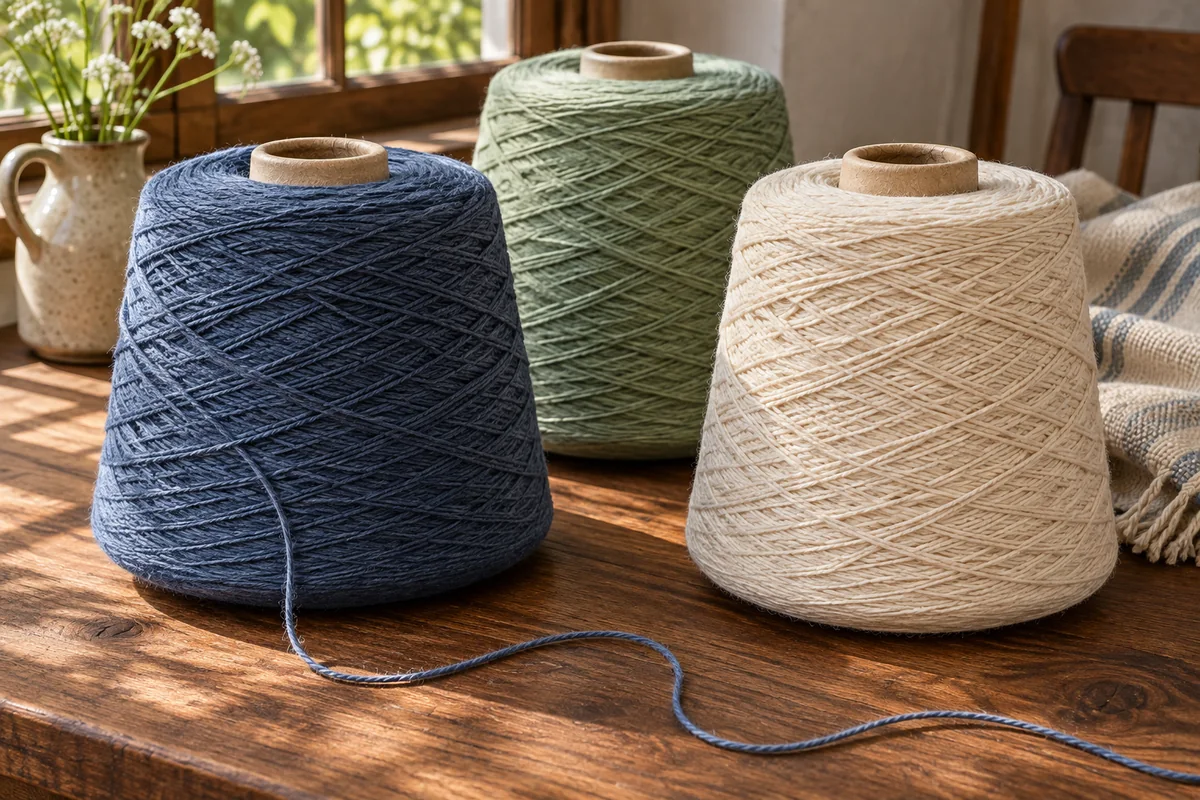
Fiber content
If your label needs to name a fiber or blend, ask for the percentages in the cloth you are considering.
Ask for a composition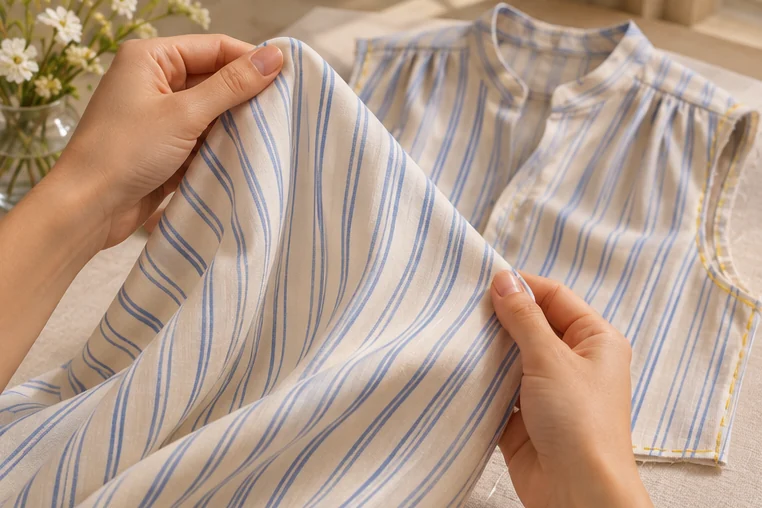
What each cloth does
Start with cotton for everyday softness, linen for a crisp hand, wool for structure, silk for drape or cashmere for soft outerwear.
Compare Materials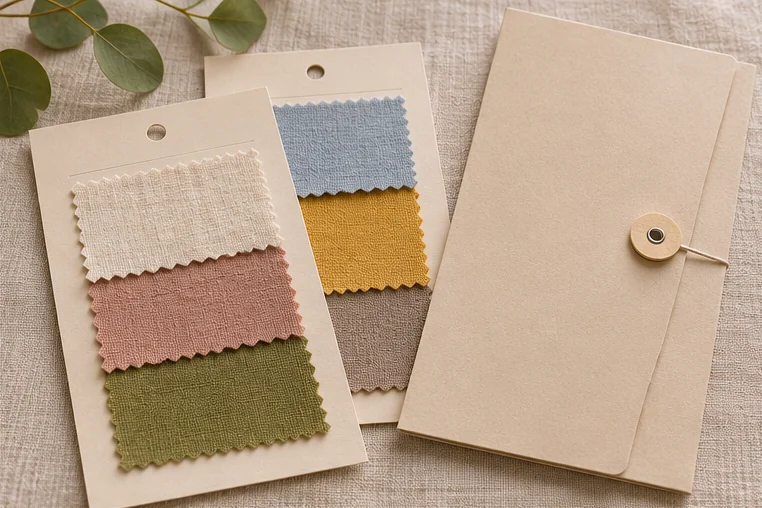
Documents your buyer needs
Name the report and end use. We check availability with the supplier of the cloth you select.
Check report availability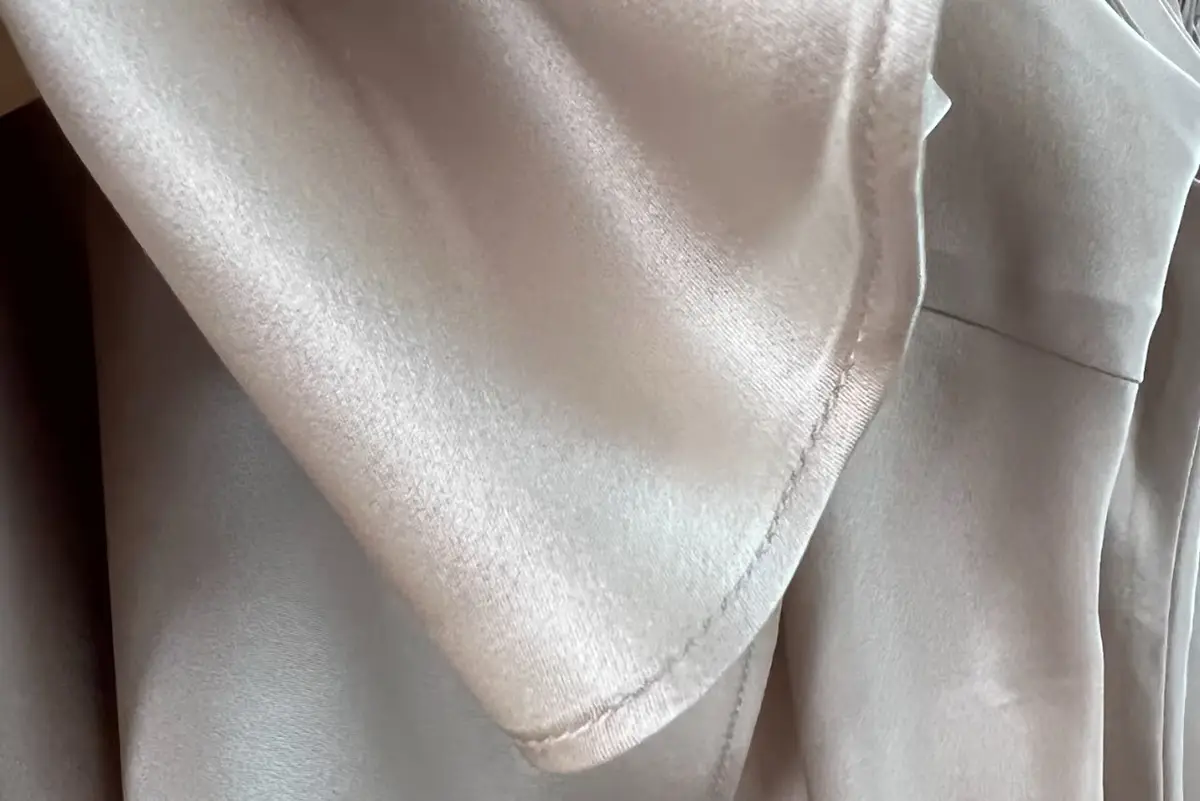
When a sample is ready for production
Walk, sit and reach in the garment. Mark the sleeve or hem if it pulls. Once you approve the sample and measurements, our team uses them to cut and sew the order and to check the finished pieces before packing.
Which piece would you like to make first?
A sketch, size range, quantities by color and target date are enough to start a conversation about your collection.
Ask for a collection quoteQuestions about a first clothing order
If you’re planning a launch, allow separate time for sampling, bulk production and shipping.