
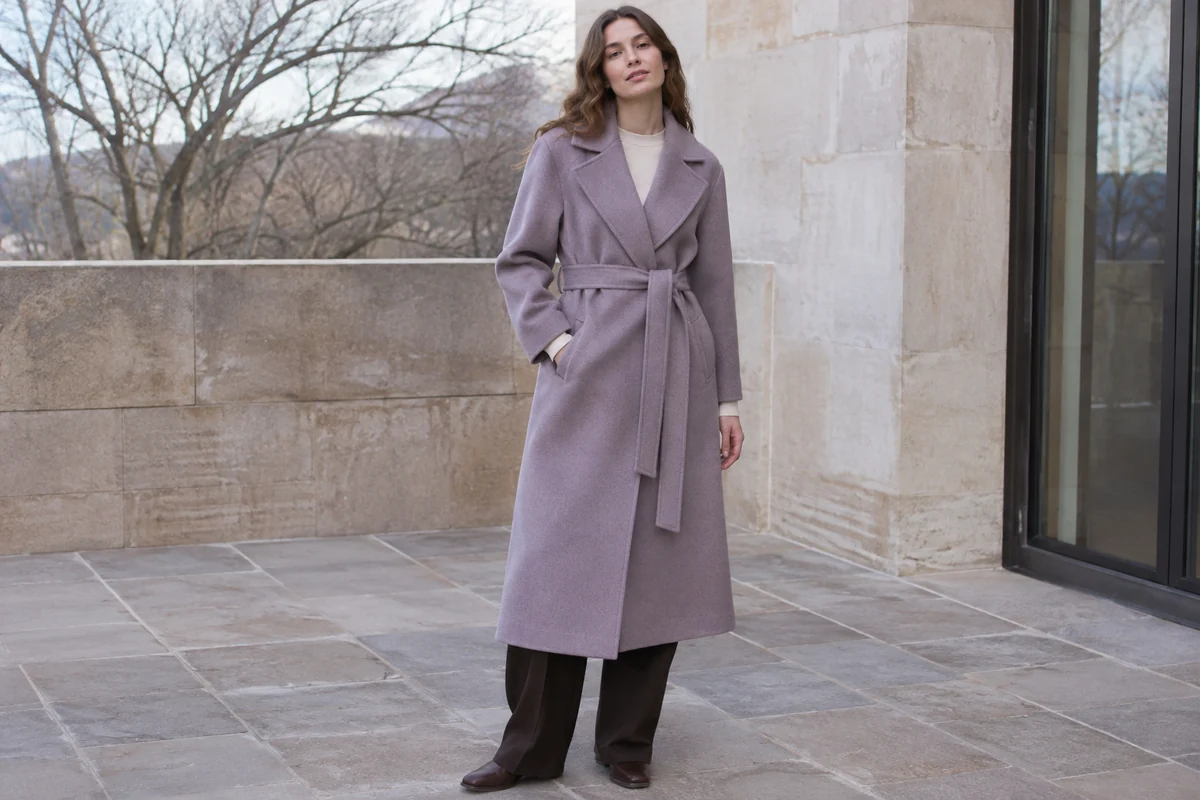
Custom Cashmere Clothing
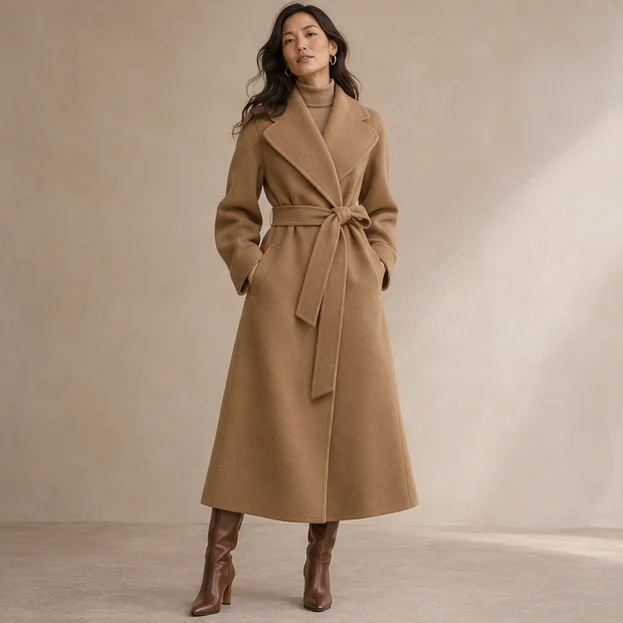
Tie the coat over the thickest sweater you expect someone to wear with it. The belt should sit at the waist and the two fronts should still overlap comfortably.
Describing the coat you want
- Start with the layer underneath. Give the shoulder and bust measurements over that layer, or send a coat that already fits well.
- Mark the back length, cuff and belt height on a drawing. For a wrap, show how far the front crosses over.
- Tell us whether you want pure cashmere or would like to compare blends for a jacket, suit or coat.
- Plan on 10 pieces per style, color and fabric for a standard bulk order. Smaller runs can be reviewed.
- If a specific fabric report is required, include it in the brief before you choose the cloth.
Settling the details of a winter coat
A soft, thick cashmere can still make a bulky belt knot. Fold and tie the actual material before deciding on belt width.

Outerwear in our workroom
We cut, sew, finish and pack garments at our 2,800 m² facility in Hangzhou.

Cloth for each layer
We check available cashmere and blends for the weight of your jacket or coat. The cloth for a soft suit and for a double-faced coat can be quite different.

Trying the coat on
Tie the belt, put your hands forward and sit down. Watch what happens to the front overlap.

Measurements inside and out
Approve the finished garment measurements and mark your inside label placement, particularly on a coat worn open.

Checks against the sample
We inspect incoming fabric, follow the work through sewing and check the finished coat against the approved details.

A winter reorder
Let us know whether you need the same weight and shade. We check the cloth supply and factory calendar before confirming another run.
Cashmere jackets and coats
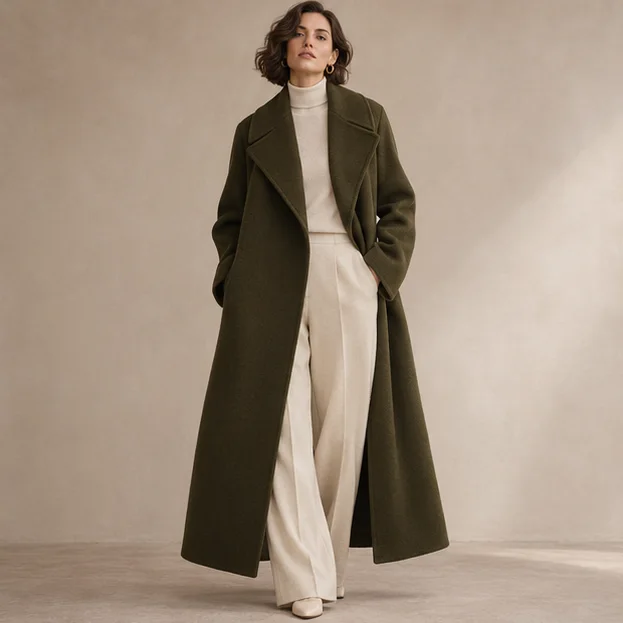
The short jacket and the belted coat in these illustrations cover different amounts of the body. Use the proportions to show us which length you prefer.
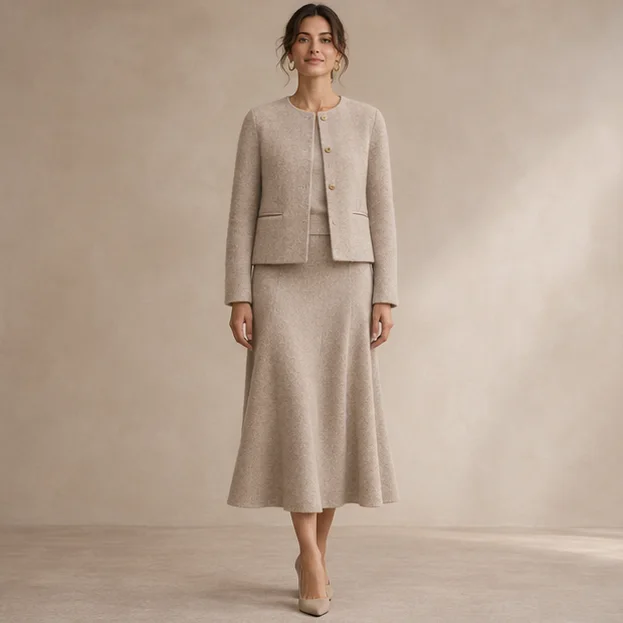
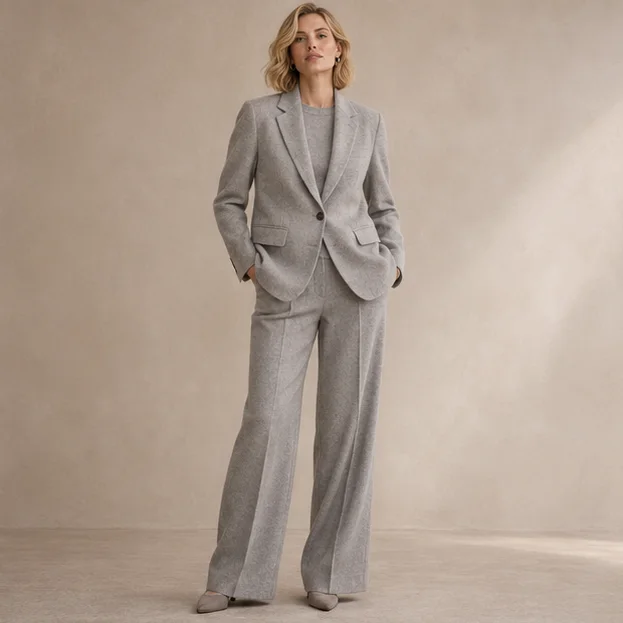
Cashmere for soft tailoring
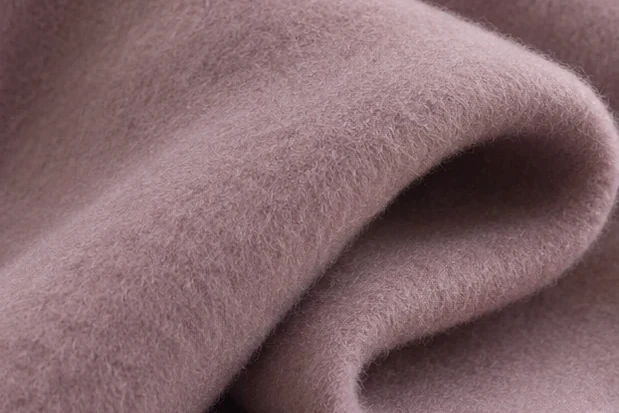
Look at a length of cloth for the jacket body, then double it over where an edge will turn. You can feel how the same material behaves in two layers.
- Jackets and suits
In the 280–460 g/m² range, compare how the fabric falls at the shoulder and bends at the elbow. - Double-faced coats
For a double-faced coat, compare weights around 520–640 g/m². Ask to see current cloth in your intended color. - Hand and drape
Handle the face, reverse and folded edge. Judge the softness and bulk together, especially if the hem will remain visible. - Chosen fabric
Record the composition and weight with the approved swatch so the coat specification identifies the right cloth.
Design the coat around its layers
A wrap coat needs enough front overlap to stay closed, while a shorter jacket can sit closer to the body.
- Wrap front
Mark the overlap with the belt tied and again when the coat is worn open. - Belt and waist
Check the belt position over a dress and over a thicker winter layer. - Sleeve volume
Fit the arm and cuff over the layer the customer will wear most. - Hem sweep
Decide how much flare you want below the hip and check it in motion.
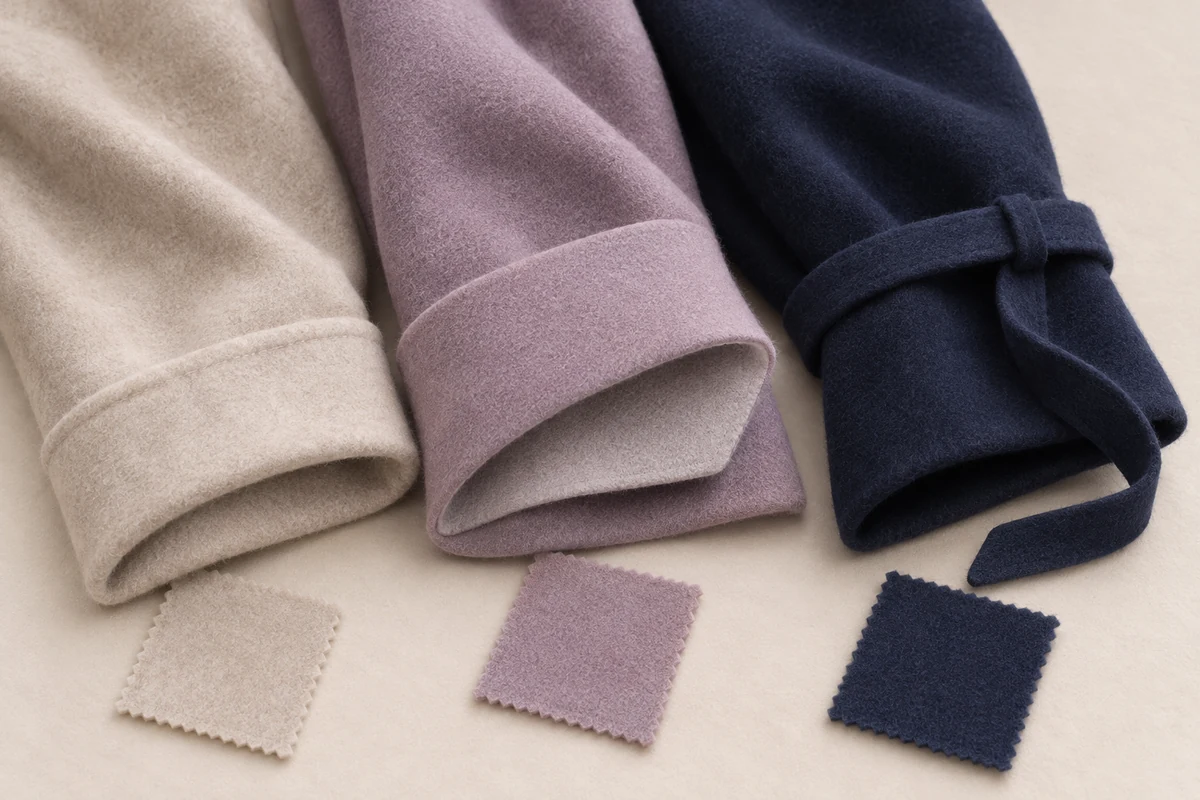
Choosing the shade for a coat worn open
Look at the front, the turned-back lapel and the cuff together. All three surfaces can be visible at once.
- Stock colors
We can check current shades once the weight and composition are known. - Color target
A physical color cutting or Pantone code gives us a reference for a custom shade. - Face and reverse
Fold the selected cloth as a lapel and view both sides in the same light, particularly for a double-faced style. - Matching a later order
Save the original color cutting. A new dye lot can then be compared with the coats you already have.
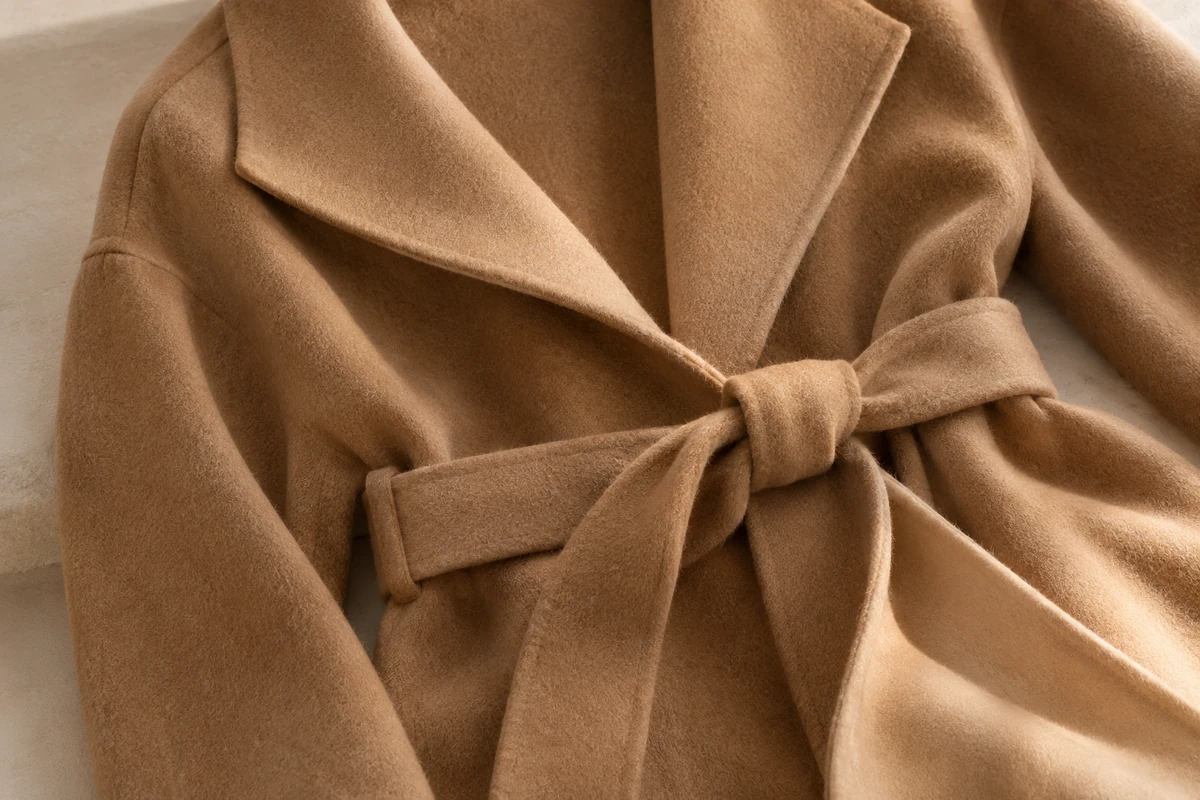
Choose the visible edges
In a softly constructed coat, the collar, belt and front edge define much of the finished shape.
- Collar proportion
Compare a broader lapel with a smaller collar on the selected cloth. - Belt width
Review the knot and the amount of bulk it creates at the waist. - Cuff treatment
Show how the sleeve should look folded back or worn at full length. - Double-faced edges
Review a finished section of the selected fabric before setting the edge treatment.

Packing belted coats and suits
Give the warehouse instructions for the coat and belt together, including how to identify each finished size.
- Hangtags
Choose the hangtag position and send the final artwork for your label. - Unit packing
Show how the coat and belt should be arranged when you specify the fold and unit label. - Cartons
If jackets and trousers will be received separately, list their carton quantities by size and color. - Paper for the order
We can review kraft or recycled paper and recyclable carton options for your packing needs.
Checking the cashmere content
A cloth can feel soft at several blend ratios. Ask for the actual fiber breakdown when writing the garment specification.
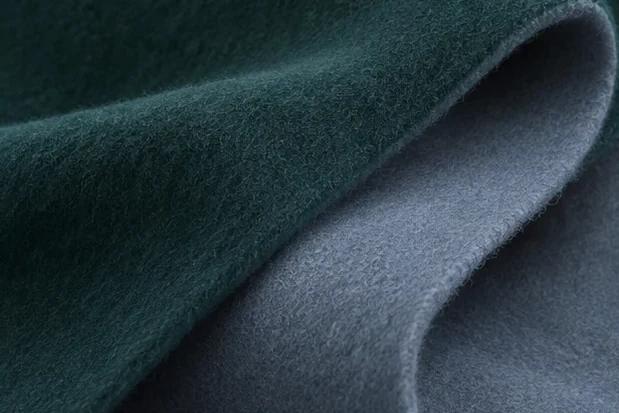
Composition
Specify pure cashmere if that is a requirement, or ask which cashmere blends are available in the chosen coating weight.
Ask about blend percentages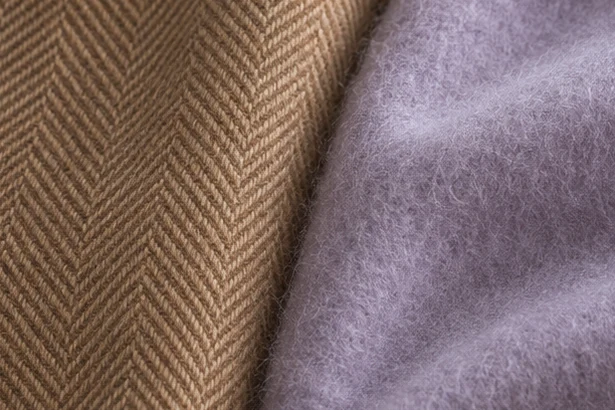
A coat in wool or cashmere
Cashmere typically feels softer and lighter in the hand than wool. Compare fabrics in the intended garment weight.
Compare Materials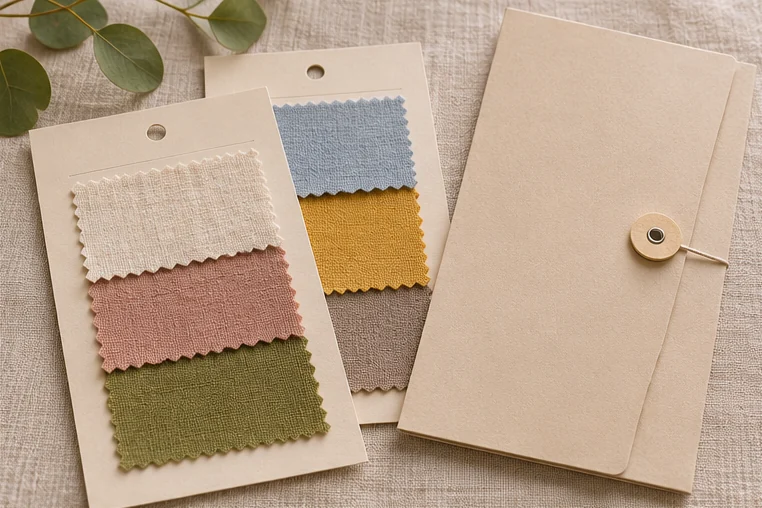
Documents for the buyer
If the buyer requests a report, send the required document and intended end use. We check what is available for that cloth and supplier.
Ask about cloth reports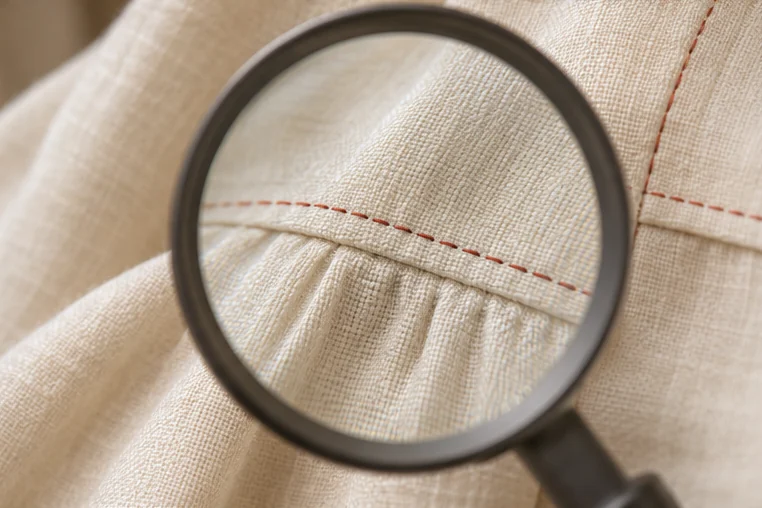
Approving a finished coat
Look closely at the collar, turned cuff and front edge, especially where both faces of the cloth show. Once the fit and finish are approved, we use the sample and measurements to check the run through to packing.
Get a quote for your winter range
Send the coat or jacket reference, planned underlayer, sizes and quantities by shade. A target delivery date helps us check cloth and production timing.
Get an outerwear quoteCashmere jacket and coat questions
Tell us early if the design relies on a particular double-faced cloth. Availability affects both the sample and the bulk schedule.