
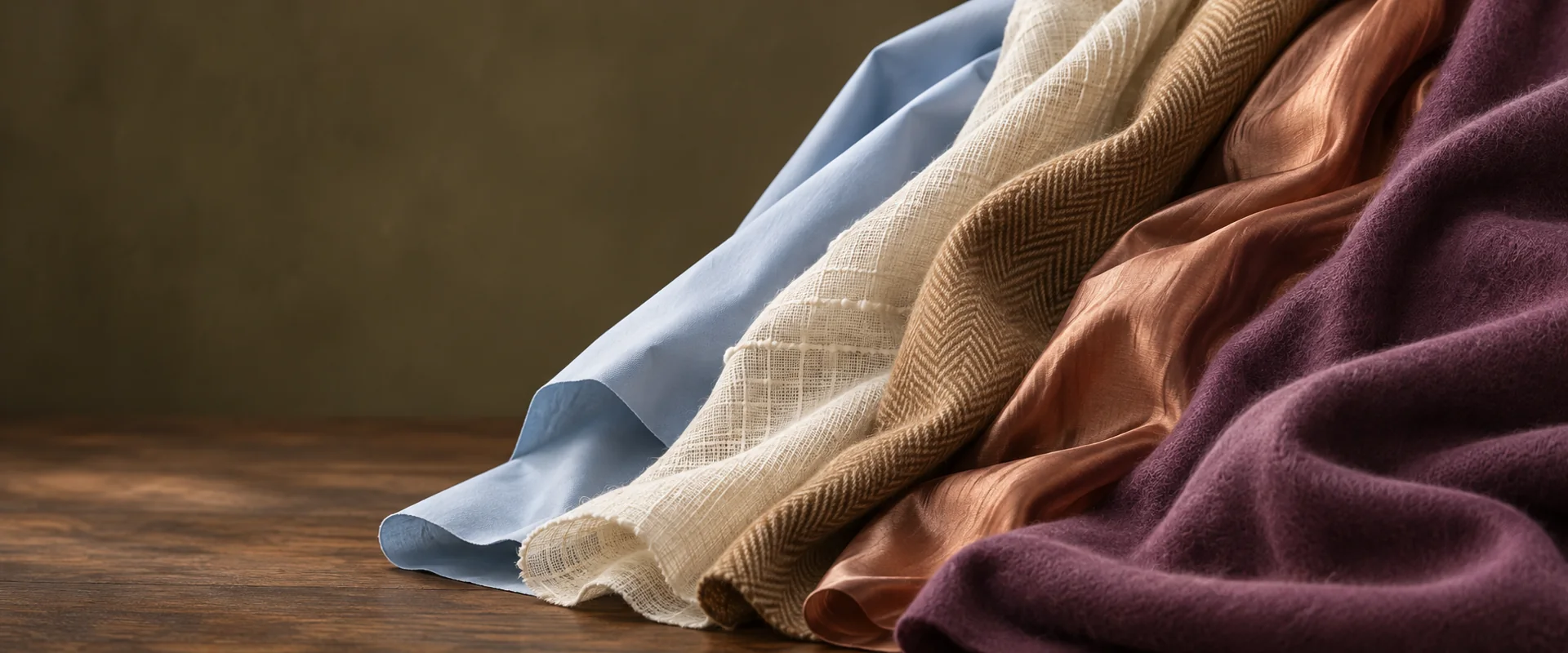
Natural Fabrics
What should the cloth do when someone wears it? A cotton shirt needs body at the collar. A silk slip should fall freely from the hip. Use the garment to narrow the choice among our five natural fibers.
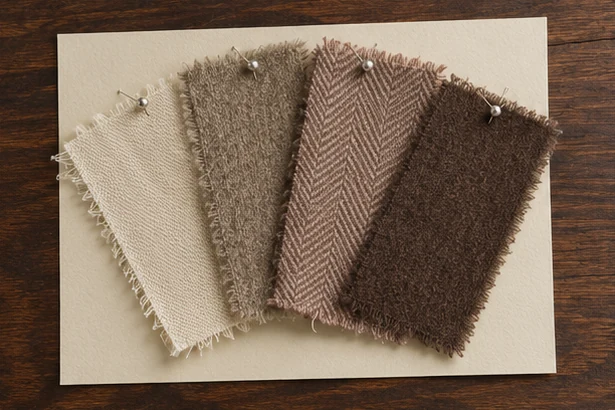
The garment behind the swatch
- Name the piece you are making and how you want it to hang.
- A photo of a fabric you like can show texture. A cutting also lets us feel it.
- Tell us if you need a particular fiber percentage.
- List the colors and the approximate length of each.
- Flag any documents your customer will need before ordering.
From your sketch to a length of cloth
You can come to us with a fabric code, a well-worn sample or a sketch of the piece you want to make.

At the worktable
Show us where the pattern needs structure and where it should hang loose. That usually narrows the choice of cloth.

Current references
We check the fabric library for cotton, linen, wool, silk and cashmere that fit the brief.

A trial piece
Tell us if you need a hand swatch or enough cloth for a first garment.

Width and weight
We can check those figures on the references you choose to compare.

Incoming fabric
We compare the material and shade we receive with the order.

Your delivery
Share the receiving address and the roll identification your workroom needs.
Four ways to use the cloth
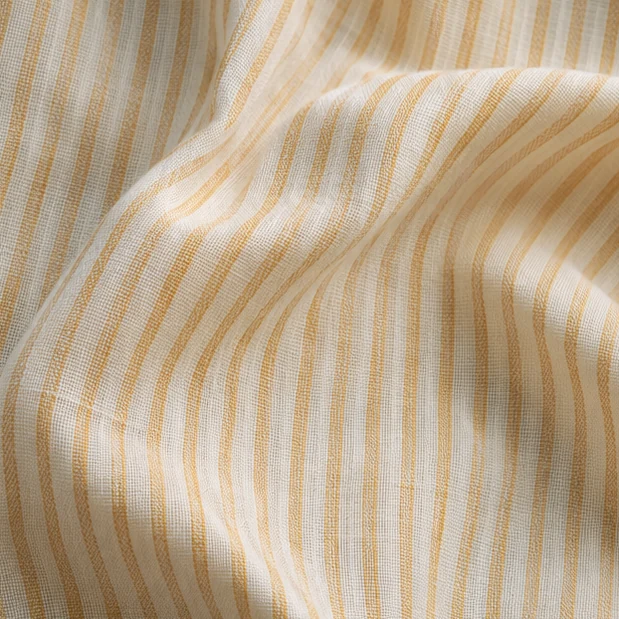
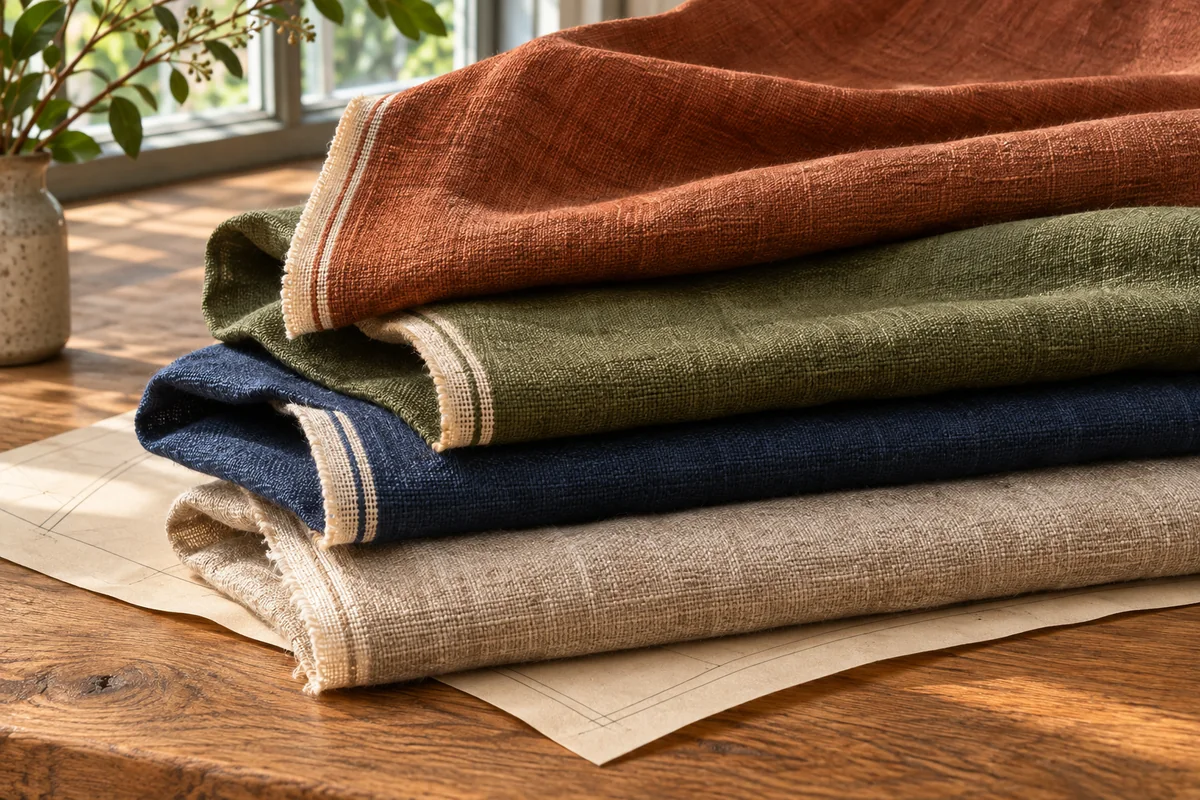
These examples pair a fabric with a cut. Select one to ask about a similar cloth in your colors.

How much weight does the cut need?
A weight figure makes more sense beside a sketch of the garment.
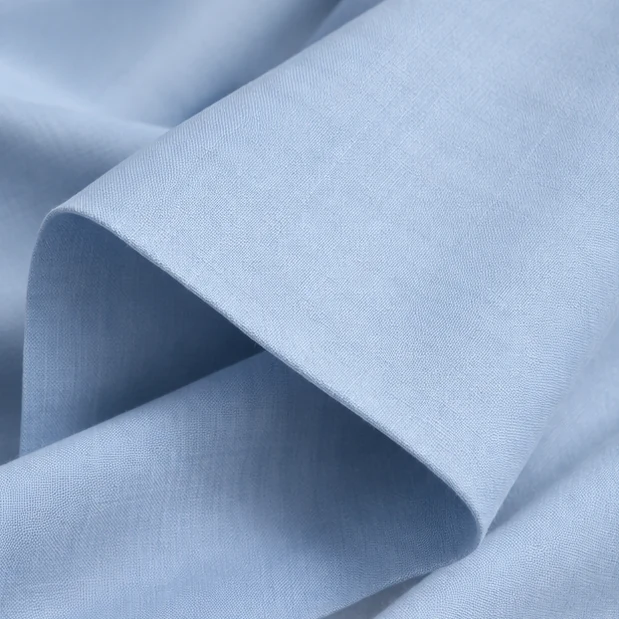
- A blouse
Cotton shirting around 100–160 g/m² gives you a range to sample. - A coat
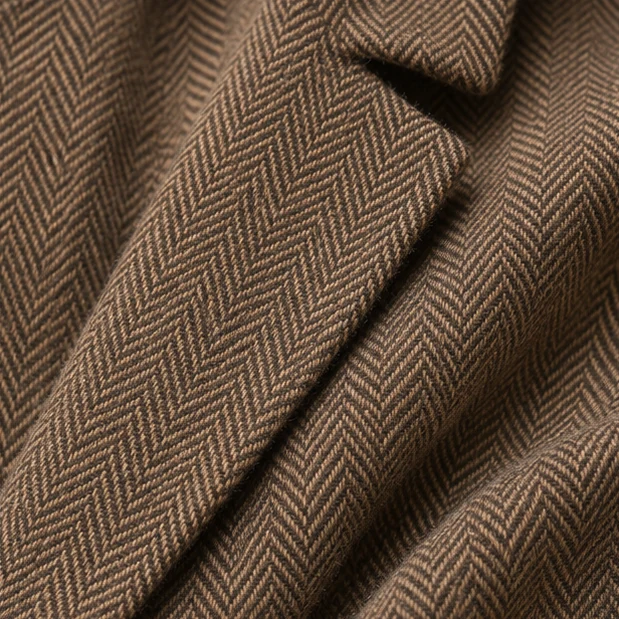
Wool coatings around 350–520 g/m² are a useful comparison for outerwear. - A sleeve
Drape a strip over your arm and watch the fold at the elbow. - Your reference
If another cloth already hangs the way you want, send its weight and a cutting if available.
Which width goes into the cutting plan?
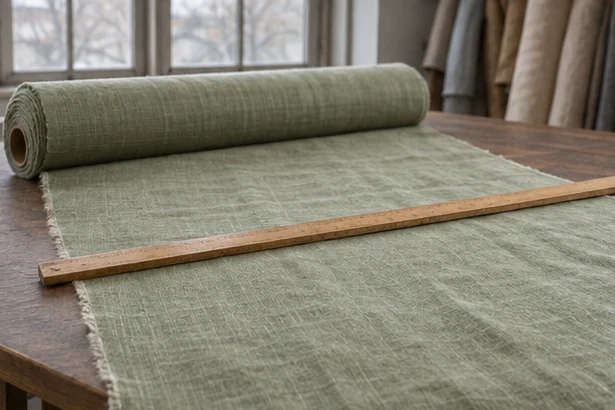
The usable width is the span your cutter can actually work with. The roll may measure wider from edge to edge.
- Pattern pieces
Check the widest piece against the usable span. - Units
Give the width in centimeters or inches and mark the unit on the layout. - Length
Work out the meters or yards required at that width. - Changes of width
If a second fabric is narrower, your first yardage estimate may need revising.
Choosing shades in person
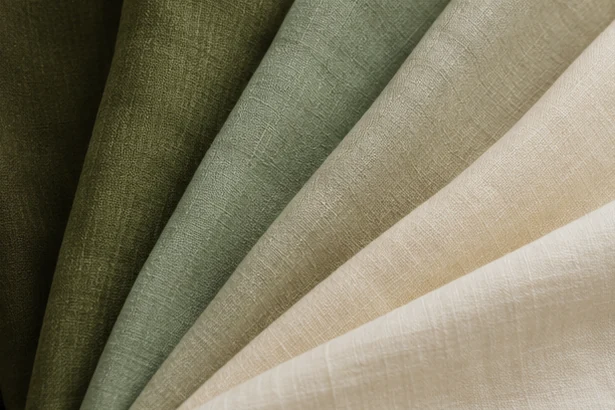
Place the options beside the other pieces in the collection.
- Color target
A physical cutting or Pantone reference gives us a shade to look for. - Surface
Smooth silk and brushed coating catch light differently, even in similar colors. - Daylight
Turn the cuttings as you view them to see the effect of the surface. - A matching set
Tell us which pieces will be worn together so we can check dye lots.
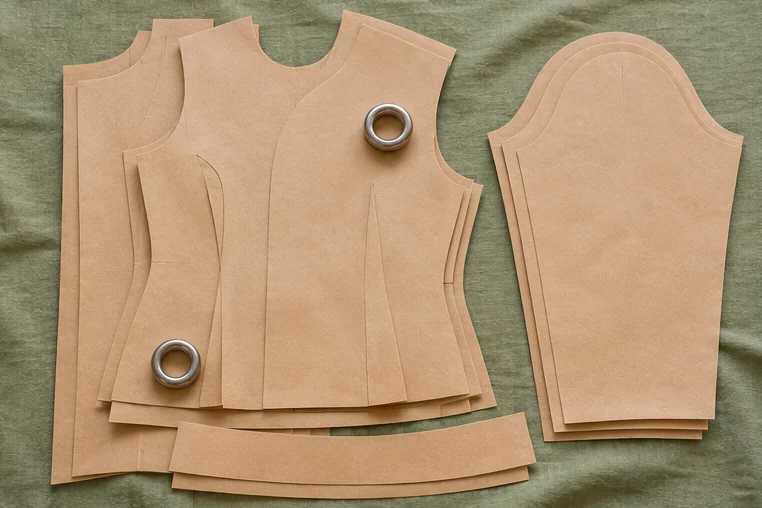
Sample lengths and production rolls
Work backwards from the cutting table when you request cloth.
- Trial garment
Estimate the separate length needed for one sample. - Bulk cutting
Give a total for each cloth and shade, with units. - Minimum order
The fabric, current stock and minimum cut or roll for each color determine how much you can order. - Receiving
Include the destination and any roll labels your warehouse uses.
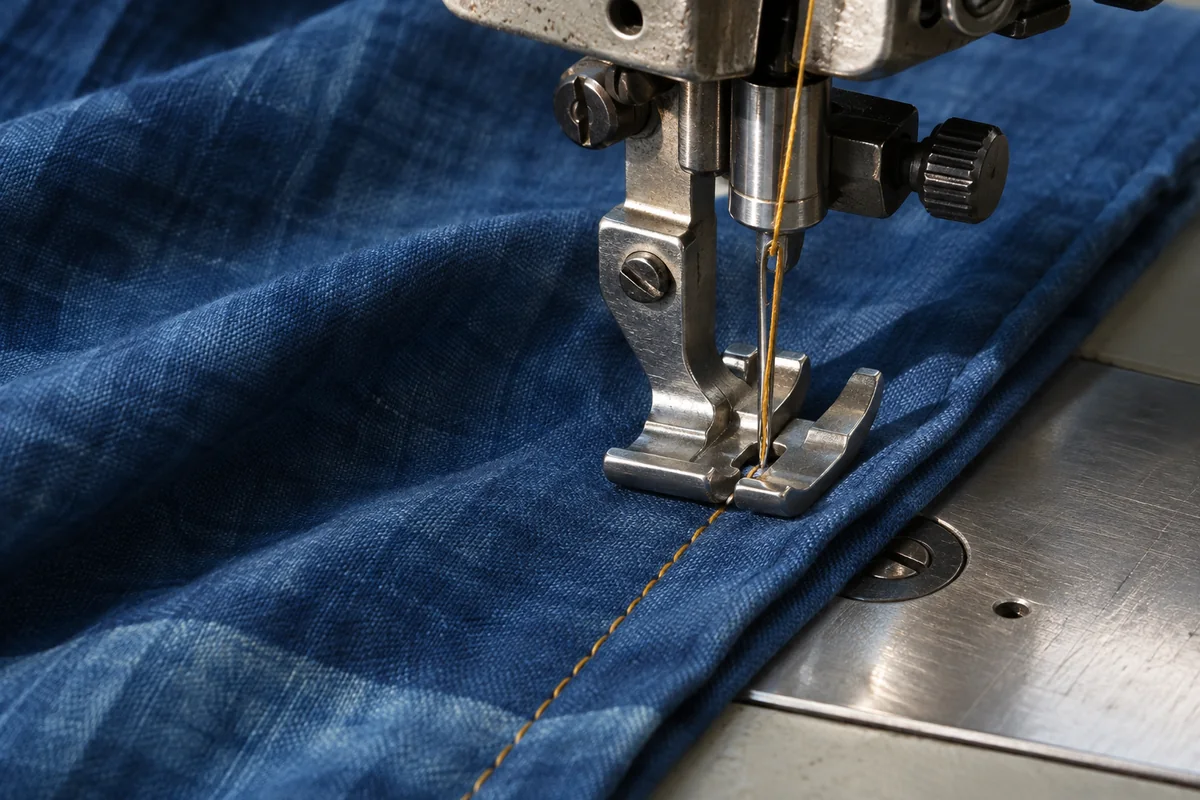
What to keep when you approve a swatch
Put the cutting and its details in one place before placing the order.
- Reference number
Record the supplier’s code so another shade or weave is easy to spot. - Composition
Keep the blend percentages from the selected specification. - Shade
Mark which side and which color you approved. - Workroom notes
Write down what worked in the trial, such as the way a collar stood or a skirt fell.
What the label tells you
A cutting answers some questions by touch. The specification and supporting records answer the rest.
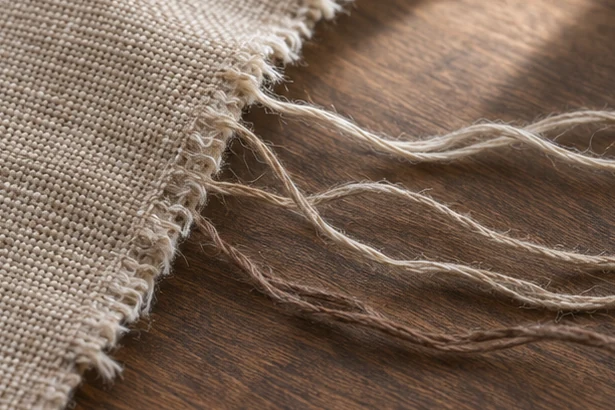
Fiber percentages
Request the breakdown for the exact cloth your buyer is considering.
Check a composition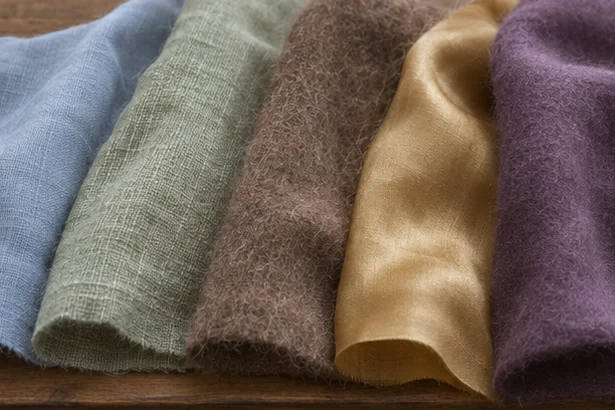
Cloths under consideration
If two options have a similar weight, lay each over the same shape and compare their fall.
Ask for alternatives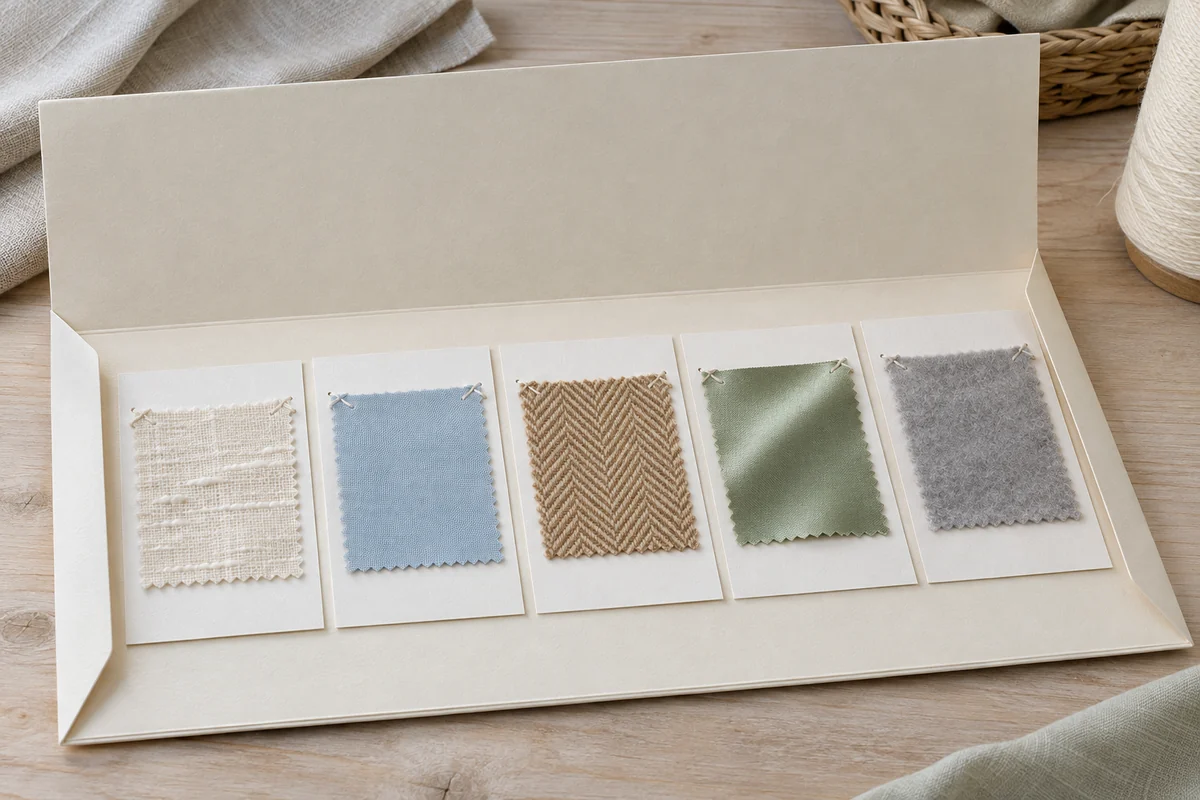
Buyer documentation
Send the report your buyer requires. We can check what the supplier has for that material and use.
Ask about documents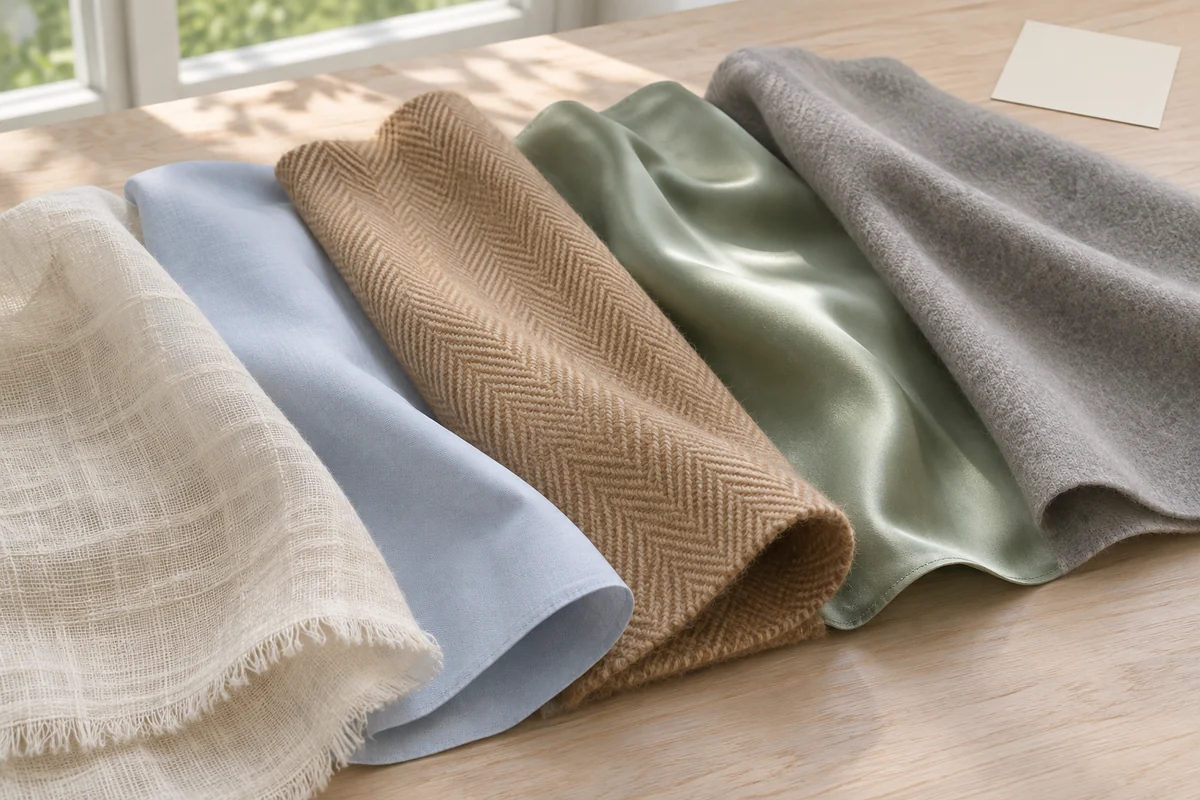
When the rolls arrive
Match the roll labels and shade to the approved cutting before issuing cloth to the cutting room. Keep any mismatched roll separate while you check its reference.
Tell us what you are making
A sketch, a preferred cloth and a rough length are enough to open a conversation. We can check which references are available to sample.
Send a fabric brief