
Cashmere Fabrics
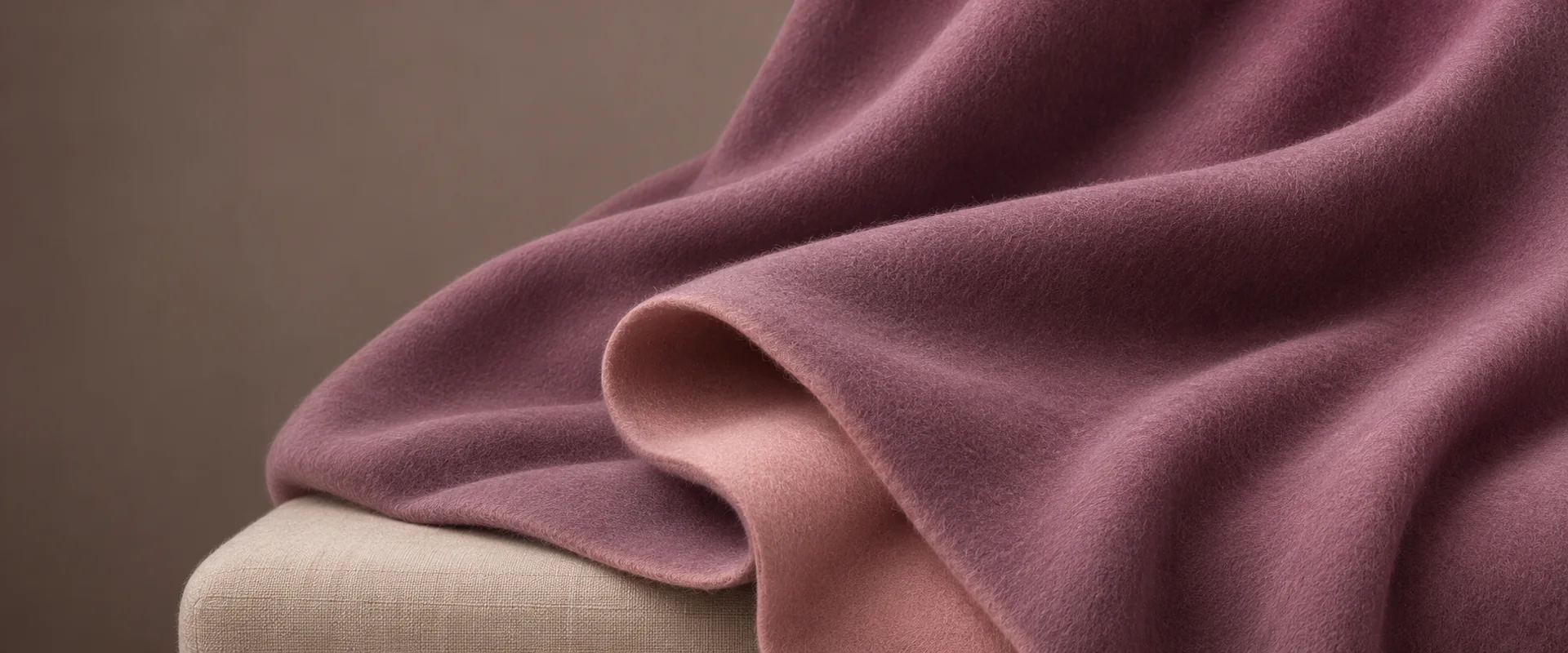
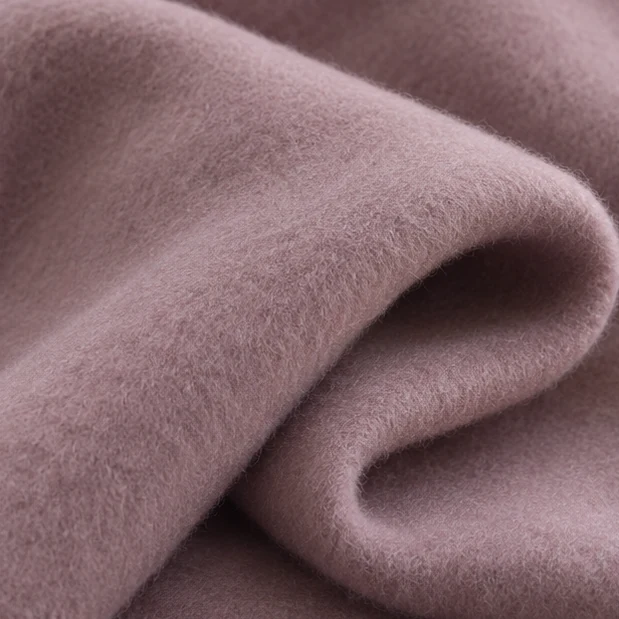
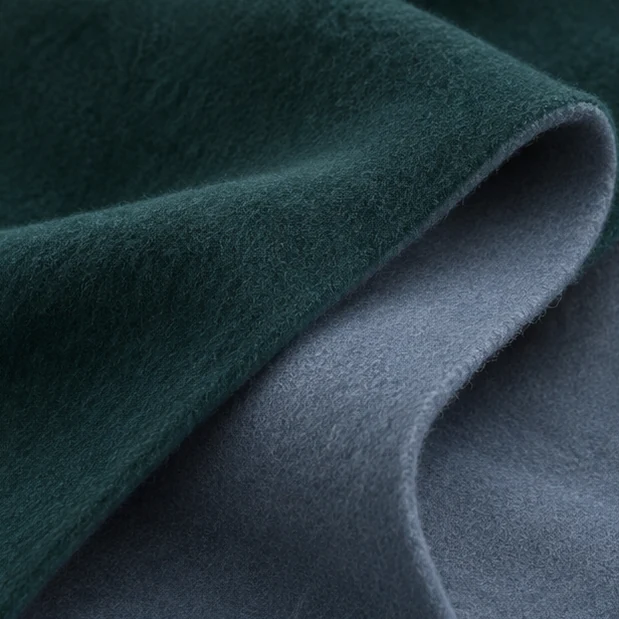
The turned-back cuff of a wrap coat shows both sides of the cashmere. Fold the coating to its finished depth to judge the color of the reverse, the thickness of the edge and the feel at the wrist.
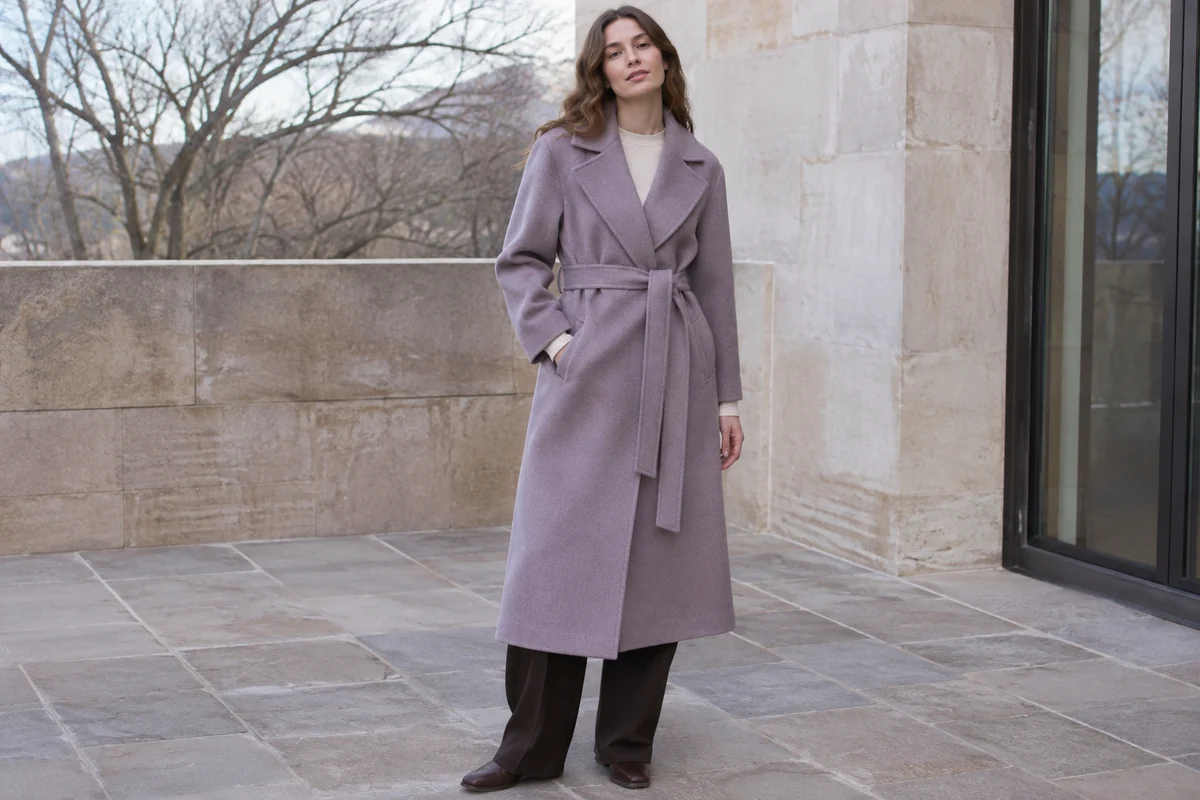
The edges that will show
- Tell us whether the coat is lined, open at the front or turned back at the cuff.
- Show the hem and lapel shape you want.
- If a second color should show on the reverse, include both shade references.
- Specify any requirement for cashmere content.
- Give a length estimate for each color and the width used in your pattern.
Choosing cloth for a wrap coat
A small cutting gives a first impression of softness. The collar and belt on a sample coat tell you more about bulk.

Coat construction
Where the coat fronts overlap, you’ll be wearing two layers of cloth. Feel that thickness as well as the single layer at the back.

The cloth library
We check current cashmere and cashmere blends for the weight and finish you need.

The trial cuff
Fold the selected cloth to the finished depth and feel it over the layer worn underneath.

The cloth record
Note the width and weight beside the cashmere percentage.

Incoming coating
We use the agreed material and color when checking the incoming cloth.

Dispatch details
We can coordinate packing and shipping once we have the destination and roll instructions.
Cashmere for suits, jackets and coats
A softly tailored suit and a double-faced winter coat ask very different things of the cloth.
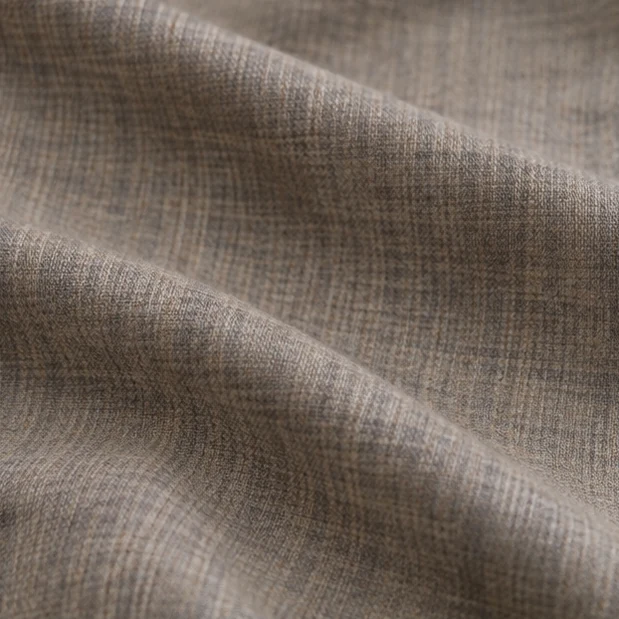
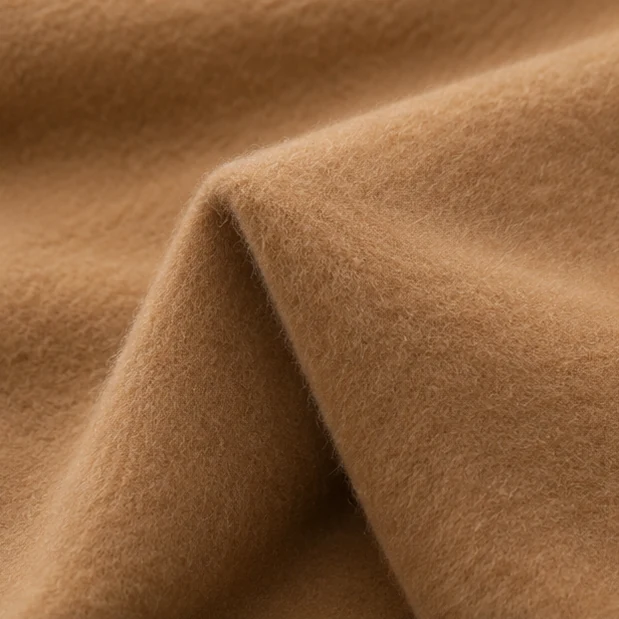
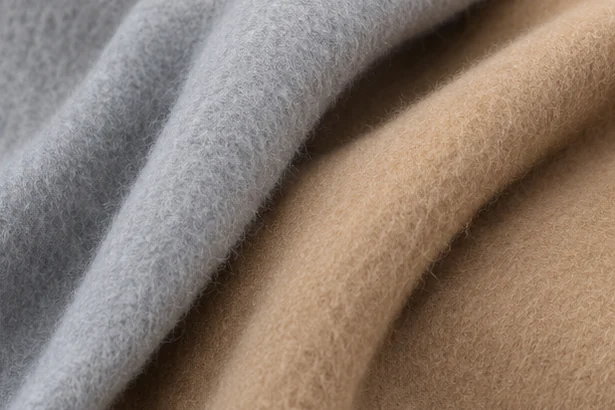
From soft suiting to double-faced coating
Consider the weight along with how the garment closes and what the wearer will layer beneath it.
- Suits and jackets
Compare swatches around 280–460 g/m². - Double-faced coats
520–640 g/m² is a reference range for a more substantial cloth. - A wrapped layer
Cross the fronts as they would overlap when belted. - The finished edge
Turn the cloth back at the cuff or hem before selecting a weight.
Sleeve room and fabric width
The swatch helps you judge comfort. The pattern tells you whether the cloth is wide enough.
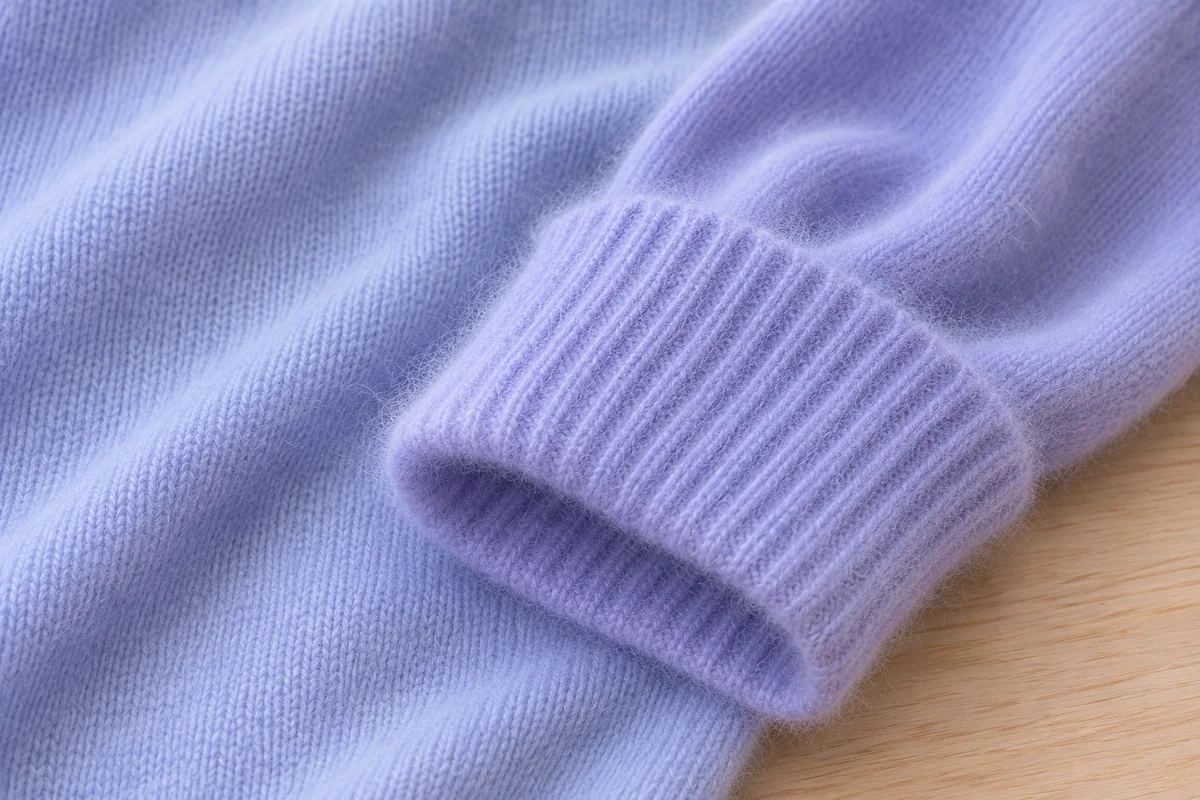
- Over a sweater
Try the folded cuff against the layer the coat will go over. - Coat front
Show the overlap, lapel and widest part of the front. - Usable span
Confirm the cuttable width for the exact reference. - Cutting direction
Allow for any layout in which all brushed panels face the same way.
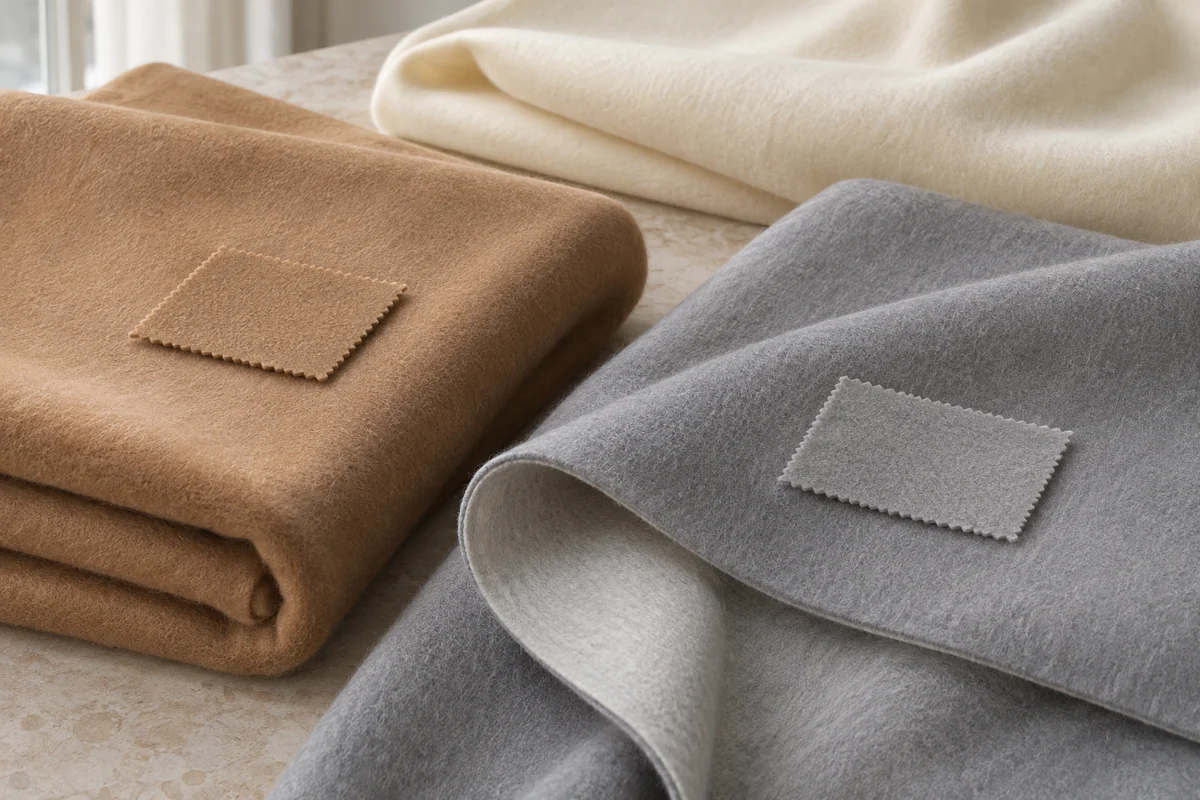
Does the reverse need to match?
Look at both sides where a collar turns or a coat falls open.
- Two faces
Send a reference for each visible color on a double-faced design. - Brushed surface
Stroke the cloth in both directions and see how the light changes. - Lining
Lay it beside the coating if the two will show together. - Order shade
Record which face and reverse you approved on the swatch card.
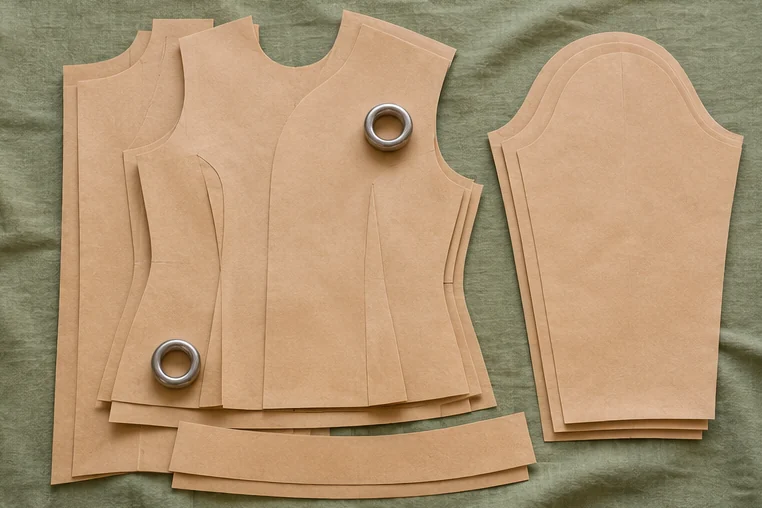
Planning lengths for outerwear
The large pieces in a long coat can leave fewer choices in a layout.
- Body panels
Start with the longest front and back. - Small pieces
Include belt, pockets and cuffs cut in the coating. - First sample
Allow a separate trial length to see how the edges sew up. - Production
Give the remaining length in meters or yards per color for a roll check.
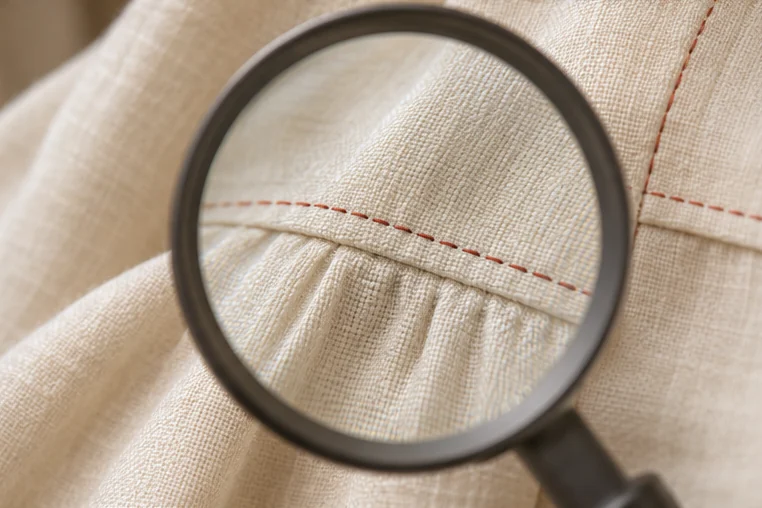
The reference for repeat discussions
Two similar-looking mauve coatings can differ in cashmere content, surface and weight.
- Fiber record
Attach the blend percentages to the cutting. - Approved face
Mark the outside and the direction of the nap if visible. - Sample notes
Keep the details of the edge or seam your team liked. - At dispatch
Specify any roll and color identification needed by the receiving team.
Softness and cashmere content
Touch can help you choose a hand. The material specification tells you how much cashmere is in the cloth.
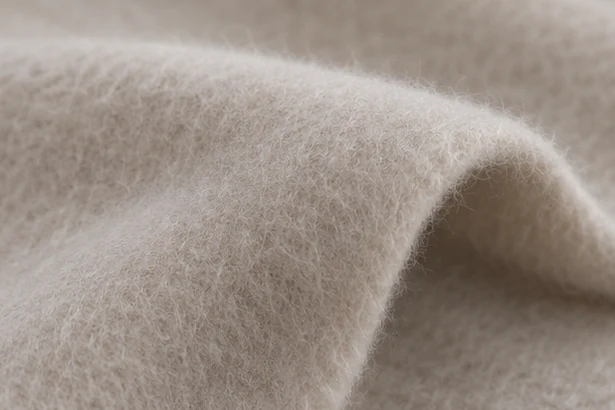
Cashmere blend
Ask for the proportions of cashmere and the other fibers in the selected reference.
Ask for the fiber breakdown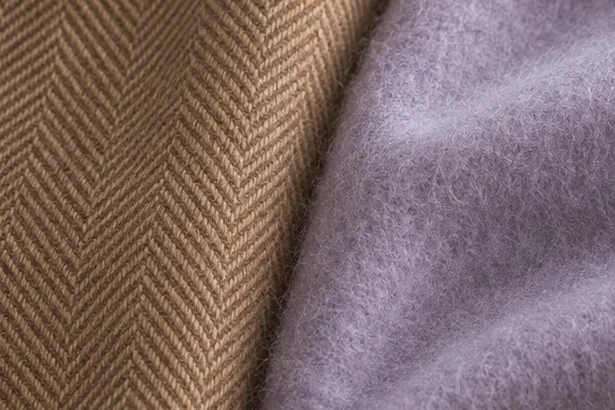
A wool alternative
Compare a wool coating of a similar weight, particularly where a collar needs more spring.
Compare outerwear fabrics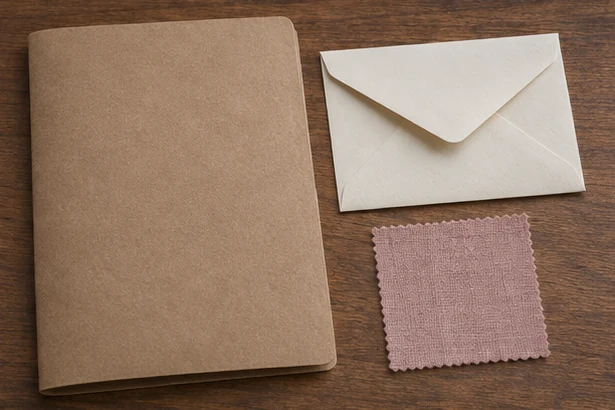
Material documents
If the order requires a report, tell us which one. We can check what the supplier can provide for that cloth and intended use.
Check document availability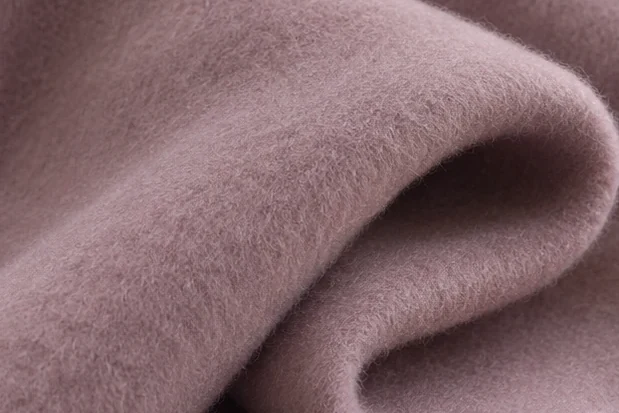
Checking the delivered coating
Place the approved cutting face up on the roll with the nap running the same way. Turn both back together to compare the reverse before cutting the coat.
A coating inquiry starts with the coat
Show the silhouette and where the edges turn back. Add the composition, shade, weight and length you have in mind so we can check current options.
Send a cashmere brief