
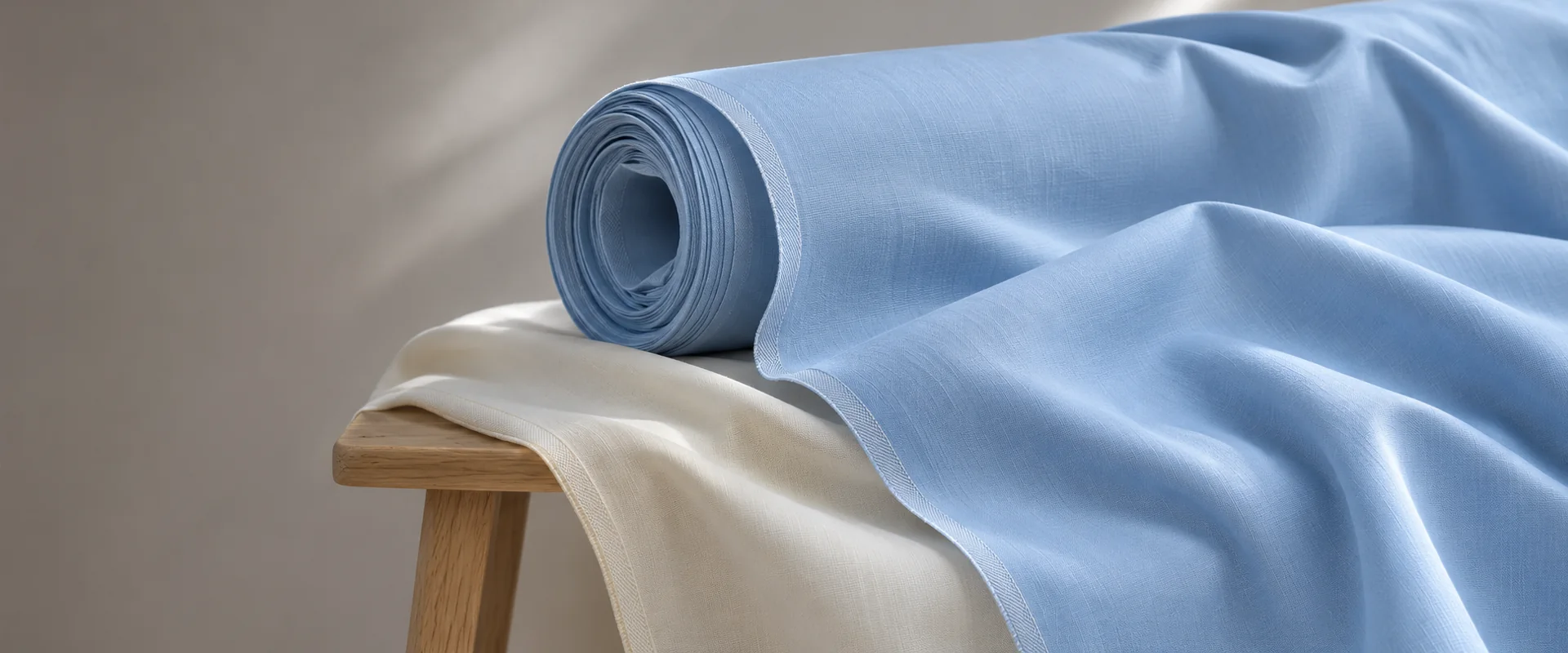
Cotton Fabrics
Poplin, jersey and twill can all be 100% cotton. Their construction is what gives a shirt its crisp edge, a tee its stretch or trousers their body.
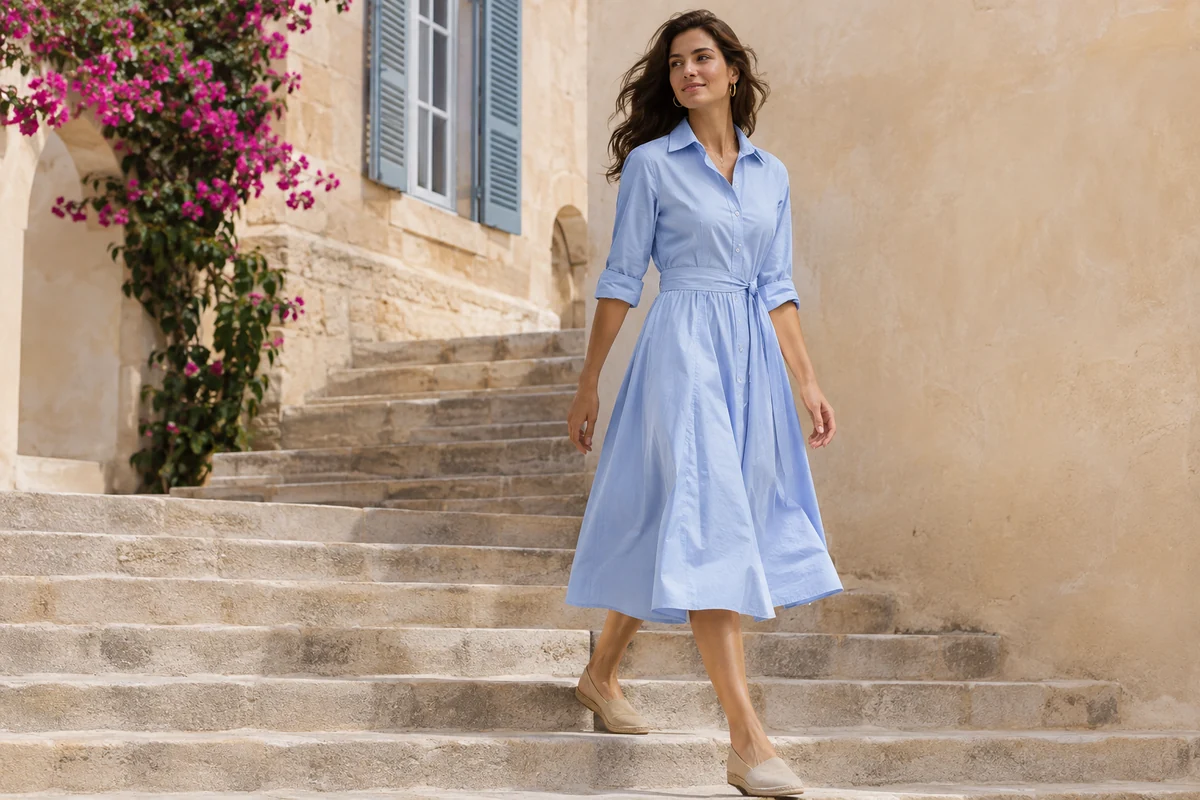
What are you cutting from the cotton?
- A shirt, tee or trouser pattern points us toward different constructions.
- Describe the finish you want against the skin.
- Send a cutting, photo or color reference if you already have one.
- Give us the usable width your pattern needs.
- For a price, include the approximate length in each color and where it will ship.
From shirt pattern to cotton order
If your starting point is a shirt you already like, show us the collar, cuff and cloth close up.

The cut
Our sewing team can help judge whether a cloth has enough body for that collar.

The weave
We check current shirtings for a surface close to your reference.

The first shirt
An actual sleeve and cuff will show how the cotton feels at the wrist.

The specification
Record the width and weight of the cotton that works in the sample.

The shade
At receiving, we compare the cotton against the material and color agreed for the order.

The rolls
We coordinate packing and shipping with the team receiving your cloth.
Cotton by garment
Woven shirting, knitted jersey and a trouser twill all make different use of the same fiber.
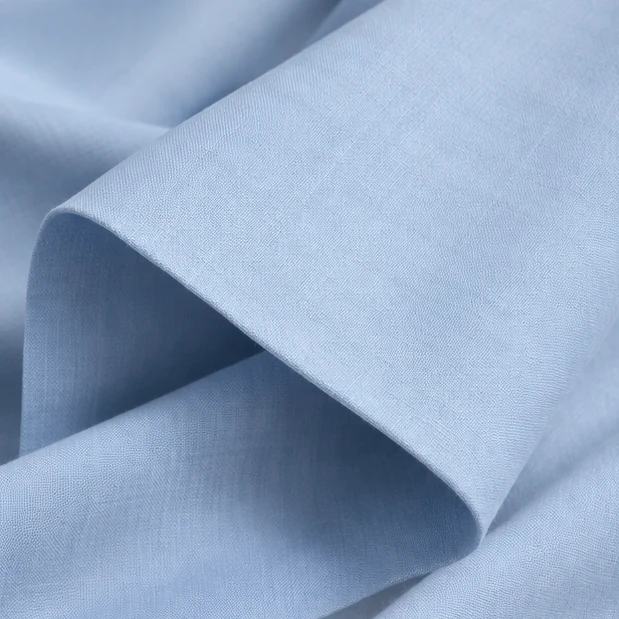
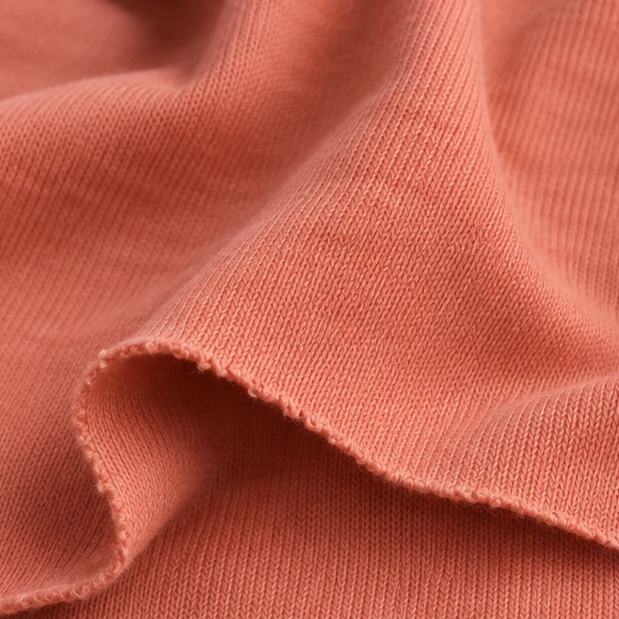
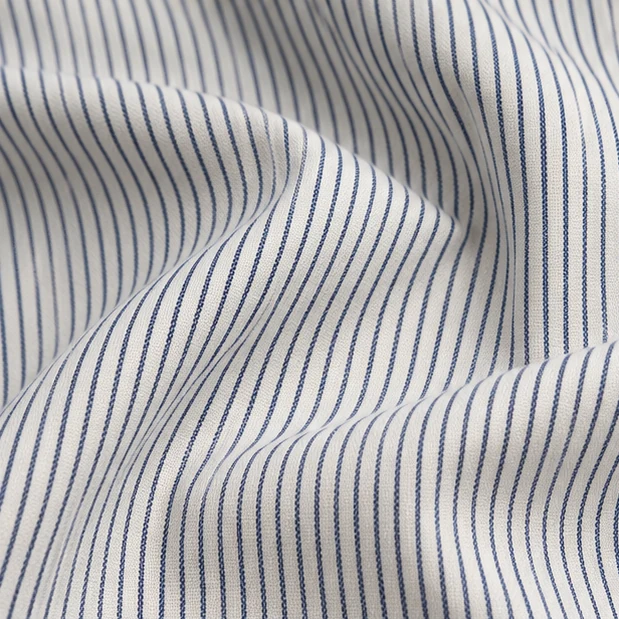
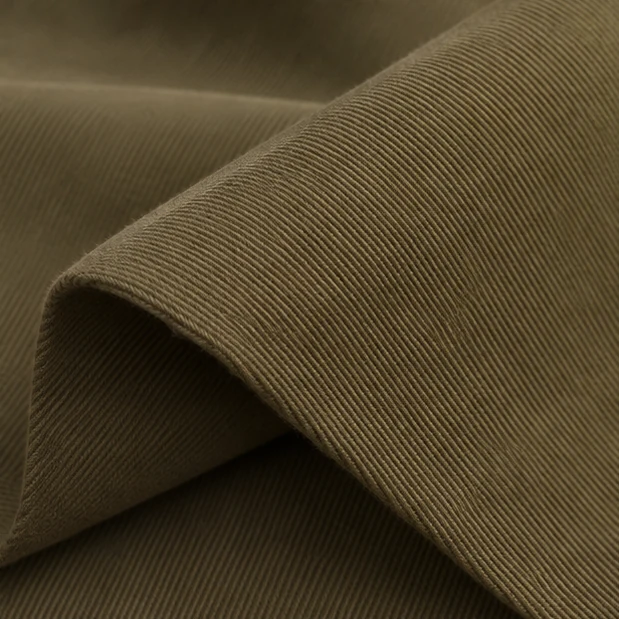
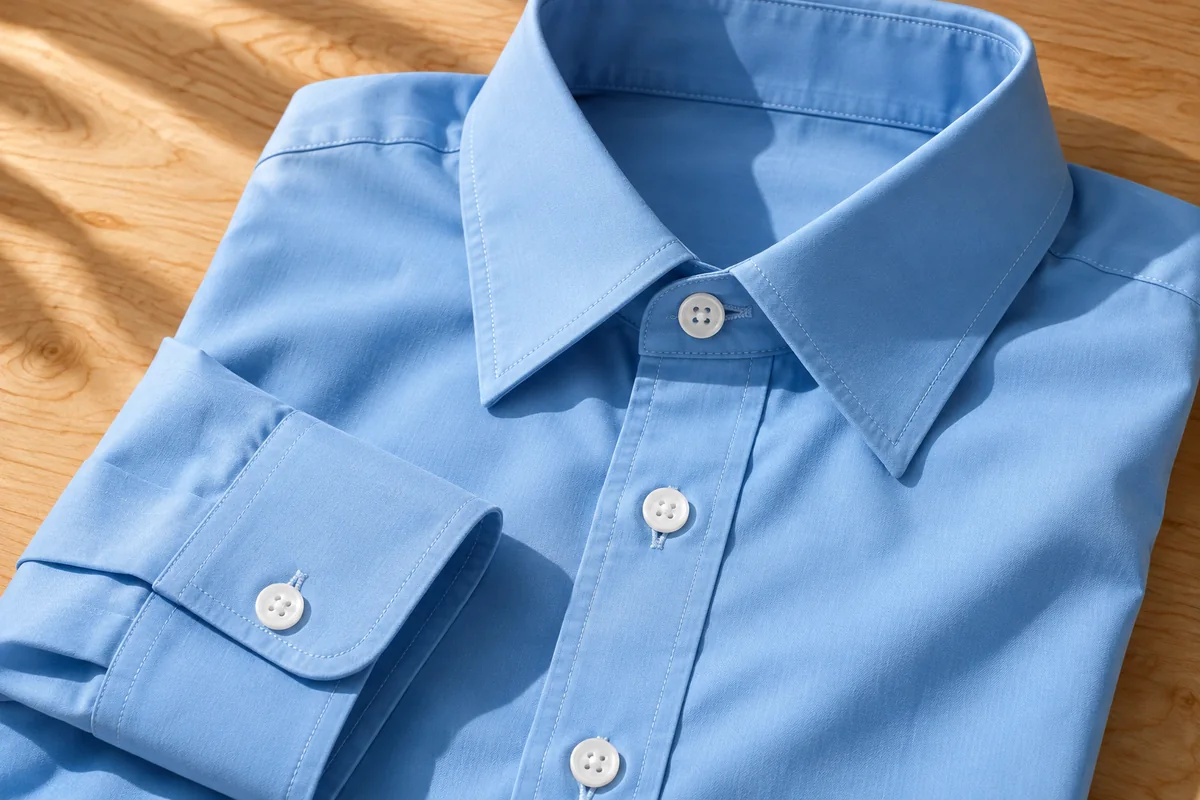
Two weight ranges to sample
Choose the construction first, then compare weights within that group.
- Shirting
Try 100–160 g/m² for a woven shirt or shirt dress. - Tees and sweatshirts
For more body, consider cottons around 160–240 g/m². - A pale color
Look at a single layer and a folded seam in the actual shade. - An easy fit
Hang enough cloth to see what happens between the shoulder and hem.
Poplin, jersey or twill?
Construction helps explain why two cottons of similar weight can behave differently in a pattern.
- Poplin
A smooth woven surface suits a button-down with a defined front. - Jersey
See how a length hangs and stretches in the direction the tee will be cut. - Twill
Look along the diagonal ribs and fold a trouser hem to judge its body. - Fiber mix
For a blend, ask what else is in the cloth and in what proportion.
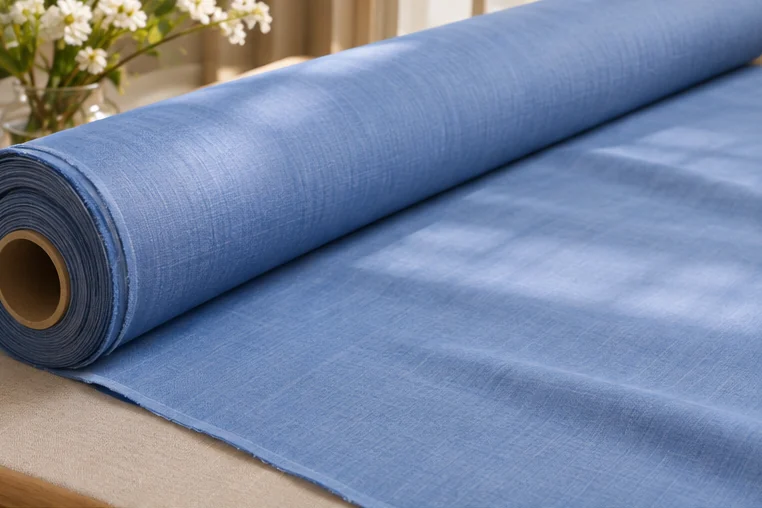
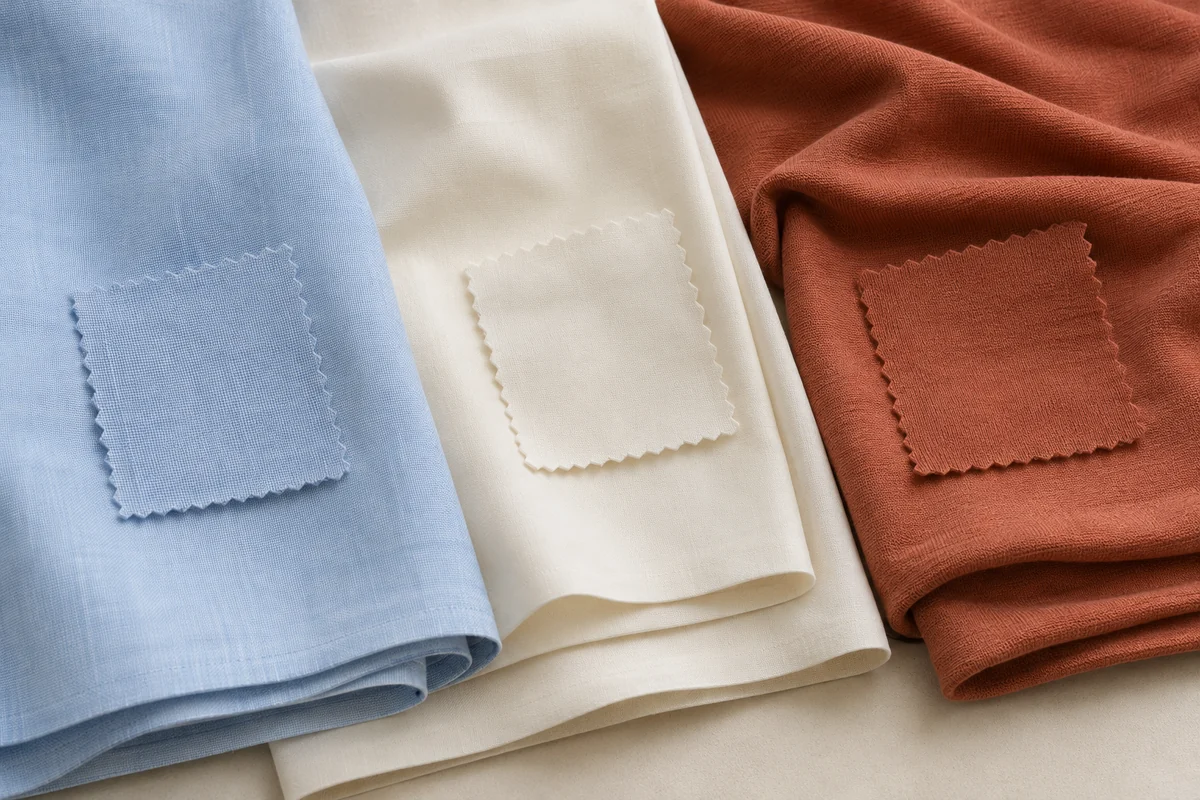
Matching color across a range
A shade card narrows the search. The final comparison is easier on the cotton you plan to use.
- Starting shade
Send a Pantone reference or a piece of the original fabric. - Pale shirting
Place it over the planned underlayer in daylight. - Stripes
Check the colored stripe as well as the background against your target. - Coordinated pieces
Tell us if two garments need cloth from the same dye lot.
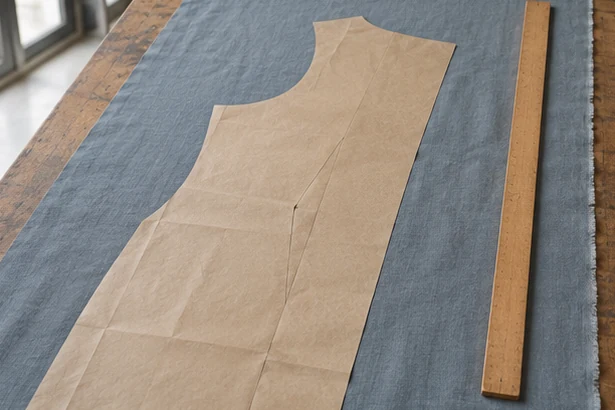
Yardage for your cutting table
A wide-leg trouser can use a different length from a narrow cut in the same size.
- Layout
Measure the widest pattern pieces before specifying usable width. - Striped cloth
Allow for any matching your shirt front or pockets require. - Samples
Count the trial shirt or tee separately from the production run. - Color split
Give the meters or yards for each shade so we can check lengths and roll minimums.
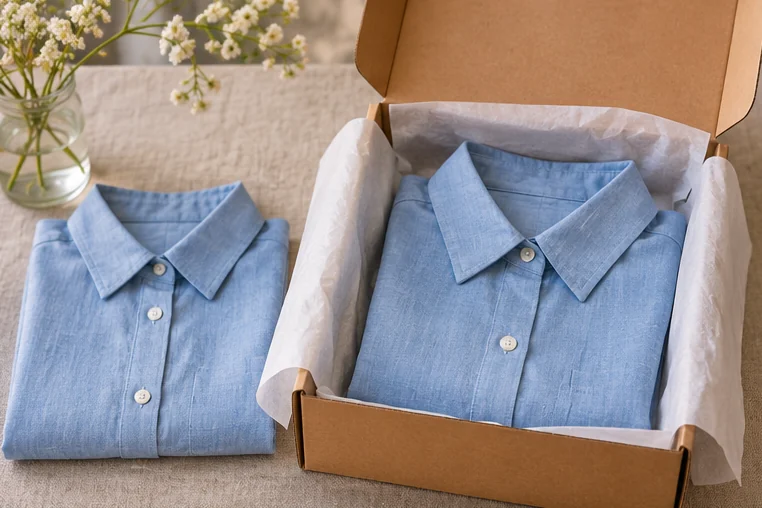
From approved cutting to delivered roll
A few details on the cutting card keep similar blues or whites from getting mixed up.
- Code
Put the cotton reference on the order. - Specification
Note the approved construction, composition and weight. - Color
Keep a piece of the shade your team signed off. - Warehouse
Specify the roll marks or packing details the receiving team needs.
What to ask about a cotton blend
Softness alone tells you very little about the fiber percentages.
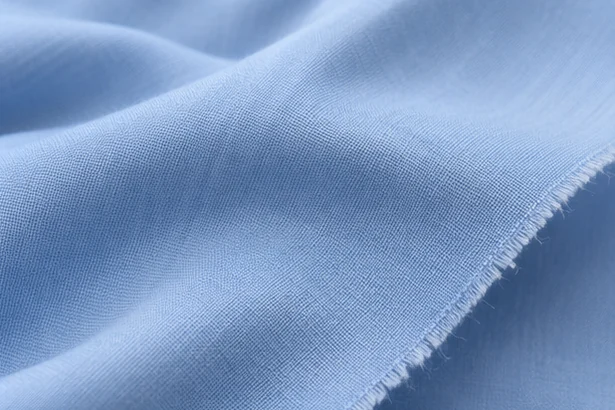
Composition details
We can check the proportions listed for the cotton or cotton blend you choose.
Ask for fabric details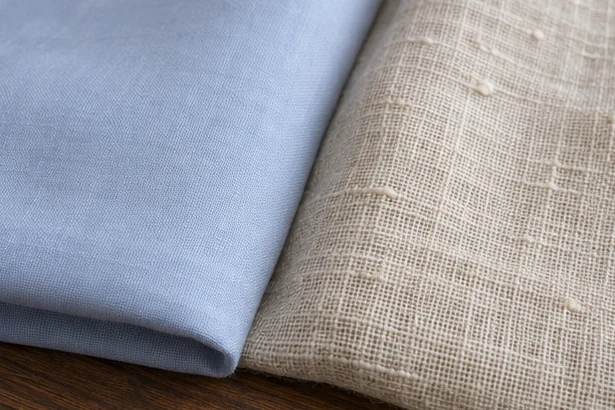
A cotton or linen hand
Try the two in similar weights if you want to judge softness against a crisper feel.
Compare swatches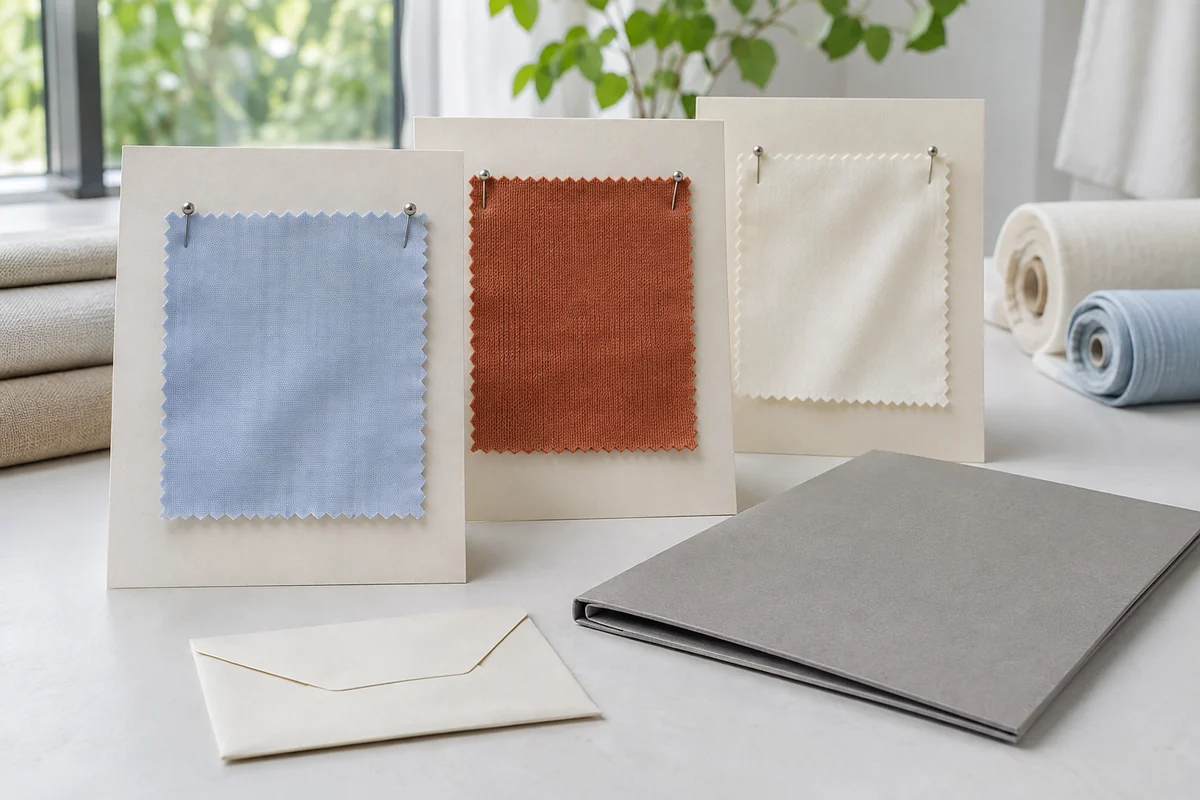
Material records
If a buyer needs a report, name it so we can check its availability for that supplier and cloth.
Request documentation
Receiving the cotton
Open the first roll alongside the signed cutting. Check its width, shade and reference before cutting fronts, cuffs and collars for the same batch.
Looking for a particular cotton?
Send the style, target weight and color with your approximate yardage. A close-up of the surface helps if the weave is important.
Send your cotton inquiry