
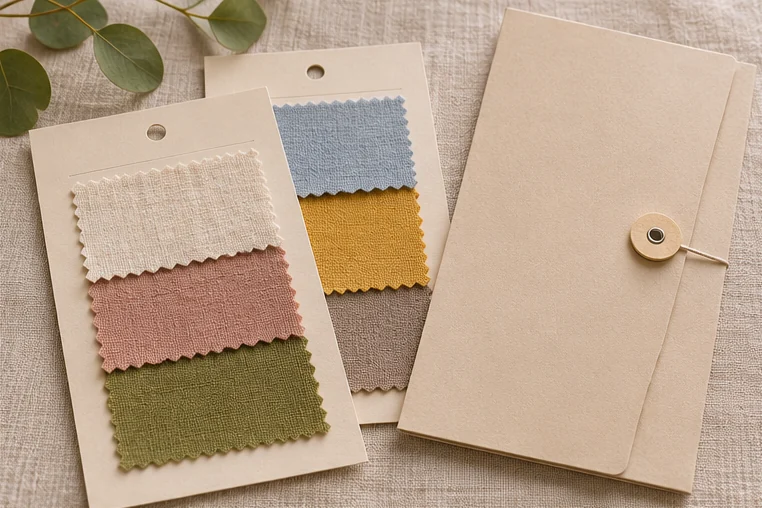
Shell, lining, interlining and pocket bags
Turn a sample inside out and find the pieces named on its material list. The shell is the main outer fabric. The lining is the layer inside. Interlining sits between layers, for instance inside a collar. A pocket bag is the piece that holds what you put in a pocket.
Fiber percentages describe a share by fiber weight. For a shell of 55% linen and 45% cotton, 100 g of the shell fibers contains 55 g of linen and 45 g of cotton. The calculation for a 100% cotton lining applies to that lining alone. The FTC gives examples of sectional descriptions. FTC guide to fiber content and garment sections
One dress, three fabric entries
| Dress component | Example composition | A question for the fitting |
|---|---|---|
| Outer bodice and skirt | 55% linen, 45% cotton | Does the cloth support the square neckline and fall cleanly below the waist seam? |
| Bodice lining | 100% cotton voile | Where does the lining end? Can you see its edge through the shell? |
| Side-entry pocket bags | 100% cotton poplin | Is the pocket outline visible against the thigh in daylight? |
Both inner fabrics are cotton, but a swatch of the voile won’t tell you how the poplin pocket will look. Request both cuttings and lay each under the actual shell color. For this dress, “cotton-lined bodice” also tells a customer where the lining stops.
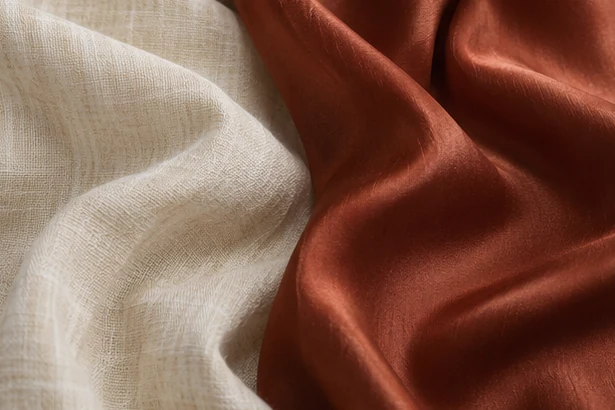
The 5% elastane in a T-shirt neckband
A T-shirt can have a 100% cotton jersey body and a rib neckband that is 95% cotton and 5% elastane. That 5% is the share of elastane in the neckband. Rib describes a knitted structure commonly used at cuffs and necklines. Look up the fiber composition separately. University of Kentucky on sewing with knit fabric
Pull the finished neckline over the head, take the shirt off and lay it flat again. Does the opening return to the approved measurement? Does it stand away from the neck when worn? If the body jersey changes, sew the neckband to a sample of the new jersey and repeat the fitting.
When the sketch is all you have
- “Silk satin skirt” identifies a weave and suggests a fiber. Ask for the shell’s actual fiber percentages and confirmation of its weave.
- For a wool-blend cardigan, give the body and separately knitted cuffs their own entries. Obtain the percentages and yarn or swatch code for each.
- A substitute lining for one color belongs on the sheet for that color. Mark the change on both the sample and the order’s bill of materials.
Take the component list and labeled swatches to the fitting. If two shells are still under consideration, their separate article codes let you request sample lengths of the right cloth. Fabric ordering guide and sample development.