
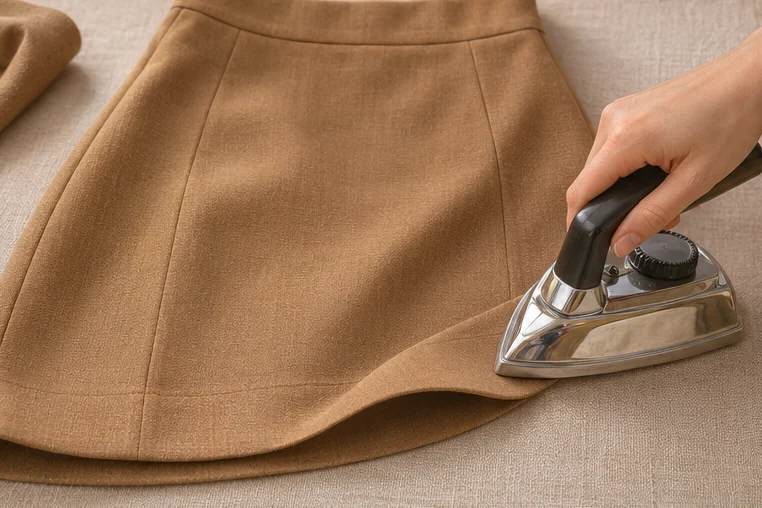
Washing, drying and ironing have separate instructions
Read the sewn-in label for the whole garment. Even when a dress can go in the washing machine, it may need to dry on a line. On an iron symbol, dots indicate the permitted heat. A crossed-out iron means to skip ironing. Linings, bonded details and trims can limit the treatment a garment will take. GINETEX guide to care symbols
Five garments, five care routines
Each example assumes the finished garment’s label permits the treatment described.
| Garment | Washing and drying | Pressing and storage |
|---|---|---|
| Cotton poplin shirt | Wash with similar colors on the permitted cycle. Many shirts can take a cool wash and line drying. Check the label before using a heated dryer. | Press the collar at the labeled setting. Hang the dry shirt with room around the collar. |
| Linen shift dress | If washable, use a gentle cycle. Smooth the seams by hand and hang in the shade to dry. | Leave the natural creases or steam gently if permitted. Hang the dress loosely to avoid a fold line across the skirt. |
| Wool pullover | A wool cycle is an option when the label permits machine washing. Use a mild wool detergent, reshape and dry flat away from direct heat. | Press lightly at the permitted heat if needed. Fold when dry to preserve the shape at the shoulders. |
| Silk blouse | For hand-washable silk, use cool water and mild detergent. Support the wet blouse, remove water without twisting and air dry in the shade. | If pressing is allowed, try a low setting on an inside area first. Store on a padded hanger out of direct light. |
| Cashmere cardigan | For a cardigan labeled for hand washing, use lukewarm water and a wash suitable for cashmere. Gently squeeze, reshape on a towel and dry flat. | If permitted, use a cool iron and pressing cloth. For off-season storage, fold clean, fully dry knitwear into a breathable bag. |
For examples by garment maker, see EILEEN FISHER on cotton and linen and silk, Woolmark on wool and Johnstons of Elgin on cashmere.
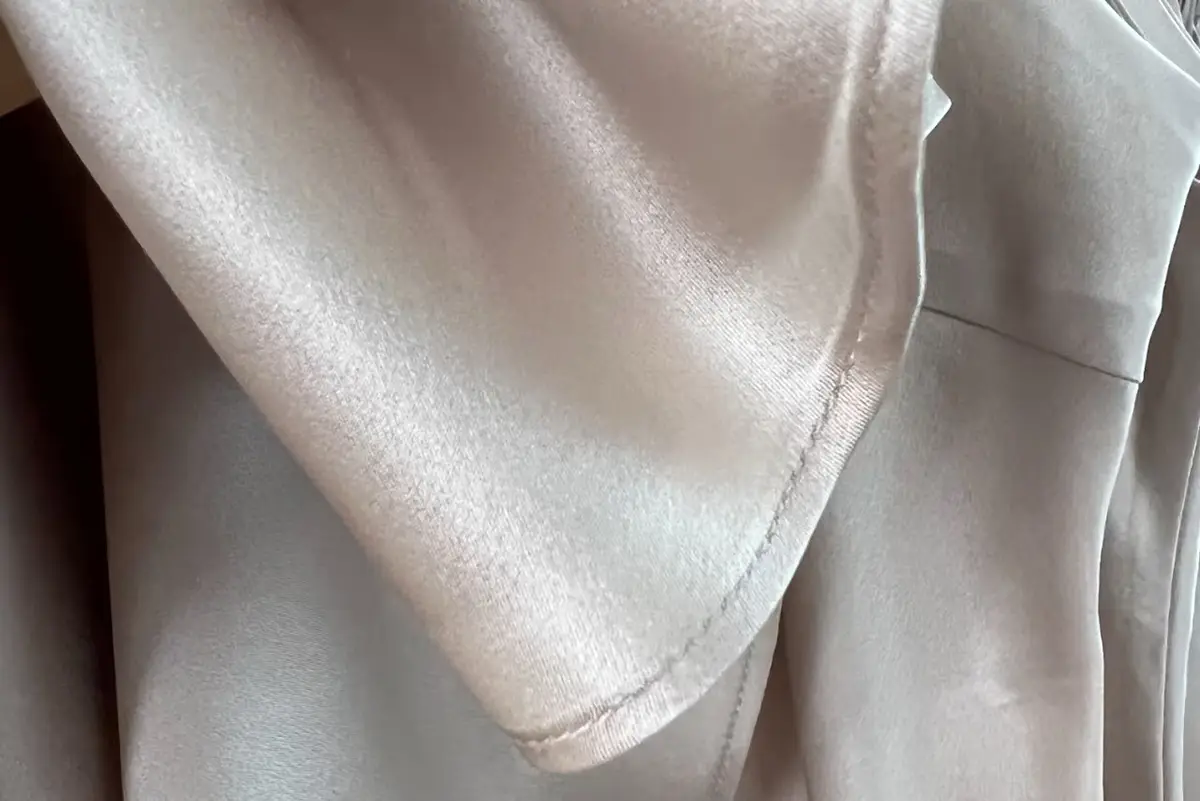
A black dress with an ivory lining
Photograph the shell, seams and lining together. Measure the black linen dress and its ivory lining from marked points. Have the supplier confirm the proposed care method and test a finished dress in that color combination.
When the dress has dried as directed, measure both layers again. Does the lining show below the hem? Has it picked up color at a seam or pulled the shell out of shape? File the method, observations and approved wording with this style and colorway. Review them again if the lining or trim changes. Sample development
What a swatch can tell you
Can I approve a care label from a swatch?
A swatch can reveal an early problem with a color or finish. To see what happens where the shell meets the lining, or where a fastening pulls on a seam, test the finished sample using the proposed method.
What goes on the customer instructions for a blend?
List its confirmed composition and give the care directions approved for that finished style. A cotton-rich cardigan knitted with fine cashmere may need different care from a woven cotton shirt. Natural fabrics